Sanctuary owner 'devastated' after 29 swan deaths

 BBC
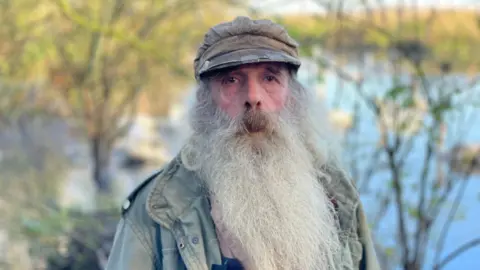
BBCThe owner of a swan rescue centre in Lincolnshire says he has been left "utterly devastated" after the deaths of 29 birds in the past month.
David Elston, 70, who runs the sanctuary near Boston, said he was "99% certain" bird flu was to blame and had sent carcasses to the Department for Environment, Food and Rural Affairs (Defra) for testing.
"I dread coming out in the mornings now because I never know what I am going to find," he said.
Several confirmed cases of the highly pathogenic avian influenza (HPAI) H5N1 have been confirmed in Lincolnshire and people who come across dead birds are being urged to report them via the Government's online reporting system.
Mr Elston said he noticed the first deaths on his land on 1 November and had buried 25 carcasses to prevent any infection from spreading.
He estimated he has around 90 birds at site with some being rescued and others flying in to swim or feed in the water.
"People keep calling and texting me to ask me to help with dead or dying swans," he said.
"There's very little I can do. I can't bring them here [to the sanctuary] because I don't want the disease to spread even further."
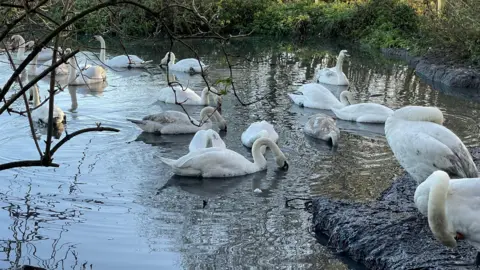
The British Trust for Ornithology (BTO) estimate there are 10,000 whooper swans currently wintering in the around the Fens and Wash of eastern England and about 50,000 mute swans already resident in the UK.
Dawn Balmer, the BTO head of surveys, said waterbirds in general are suffering from bird flu but swans are being "disproportionately" hit.
"Numbers are up and risk to wild birds is very high". she said.
Since 1 October the BTO said it had recorded 86 whooper swan deaths and 155 deaths in the mute swan population.
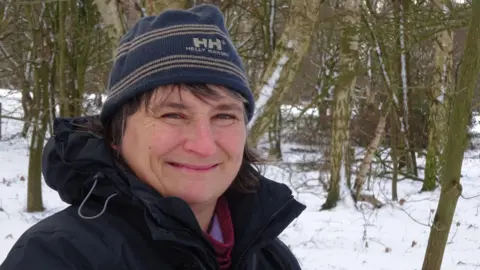 Dawn Balmer
Ms Balmer said it was important that data was collected and recorded so that "patterns of mortality" could be established.
"We are starting to see a considerable impact on our mute swan population," she added.
The Animal and Plant Health Agency, which is part of Defra is publishing weekly reports of bird flu deaths in wild birds.
Defra said monitoring was needed to help "understand how the disease is distributed geographically and in different types of wild bird".
Listen to highlights fromLincolnshire on BBC Sounds, watch thelatest episode of Look Northor tell us about a story you think we should be covering here.
Download the BBC News app from the App Store for iPhone and iPad or Google Play for Android devices
