Steelworks costing £1.3m a day to run

 PA Media
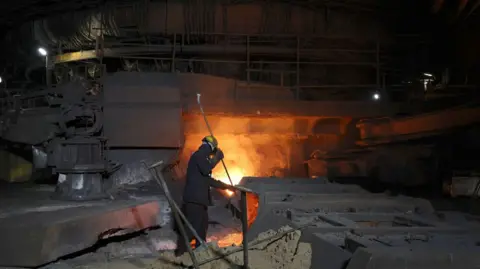
The government spent £377m in nine months to keep British Steel's Scunthorpe site operating, according to a report.
The National Audit Office (NAO) said ongoing operations were costing the department of Business and Trade (DBT) about £1.3m a day, with no set budget, repayment schedule or end date.
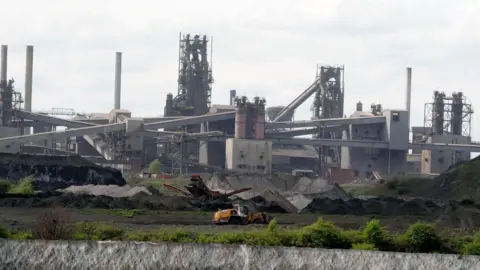
The government stepped in to prevent the closure of the last two remaining blast furnaces in the UK in April 2025, preventing job losses and serious impact on industry, the report said.
The government department is now considering options for the future of the site and a spokesperson said they were "determined to support British steelmaking now and for generations to come".
The NAO is the UK's independent public spending watchdog.
The report highlighted £15m was spent on advisers between 12 April 2025 and 31 January 2026, and £359m to British Steel for operating activities, such as paying for raw materials and payroll, while £3m was spent on legal and other costs at the North Lincolnshire plant.
The £377m was classified as a loan, the report said, but the DBT has no repayment schedule in place and it was not apparent that British Steel would be able to repay the loan.
The NAO said spending was expected to reach £615m by June and if it continued at current rates, it could exceed £1.5bn in 2028.
 PA Media
Before the government stepped in to save the plant, previous owner Jingye and DBT had been in talks about transitioning to electric arc furnaces between 2022 and 2025, but had not reached an agreement.
In March 2025, Jingye announced it was losing £700,000 a day due to challenging market conditions, tariffs and high environmental costs, and was considering the closure of the blast furnaces.
The report said this would have led to a large number of job losses at the Scunthorpe site and affect customers in the supply chain, such as Network Rail.
Emergency legislation was passed to allow DBT to issue formal instructions to British Steel to continue operating its blast furnaces, and the NAO said the Government department acted quickly to mobilise a team on site and secure raw materials.
A Government spokesperson said: "Last year we protected thousands of jobs by saving British Steel from collapse, and we are determined to support British steelmaking now and for generations to come.
"We update parliament on British Steel every four weeks, including spending, and we continue discussions with Jingye to find a pragmatic, realistic solution for its long-term future."
Alasdair McDiarmid, assistant general secretary of the Community union, said there could have been "catastrophic" financial and social impacts had the government "sat on its hands" and not stepped in so quickly.
He said: "The government made the right decision to invest now because local economies would have been decimated, our nation would have been less secure and we would have seen a massive and long-term increase to the welfare bill."
Listen to highlights fromLincolnshire on BBC Sounds, watch thelatest episode of Look North.
Download the BBC News app from the App Storefor iPhone and iPad orGoogle Play for Android devices
