Why is Ireland not taking part in this year's Eurovision?

 PA
PAFrom Johnny Logan and Dana to years of dominance in the early 1990s, Ireland has a storied history with the Eurovision Song Contest.
Ordinarily the country, which holds the joint record for most wins with Sweden, would join the rest of Europe in eagerly awaiting Saturday's grand final.
But not this year.
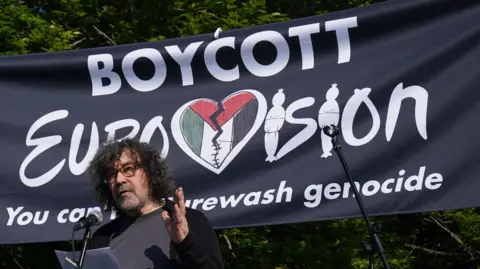
Ireland is one of five countries, with Iceland, the Netherlands, Slovenia and Spain, boycotting the contest over the European Broadcasting Union's (EBU's) decision to allow Israel to participate.
The competition features no Irish entrant and national broadcaster RTÉ will not be showing events from Austria, airing a Eurovision-themed episode of sitcom Father Ted instead.
Ireland's participation in the boycott is the latest in a series of moves that has seen the country at odds with Israel over its war in Gaza and led it to be viewed as one of the most pro-Palestine countries in Europe.
Israeli broadcaster Kan has described the absence of Ireland and other countries as a "cultural boycott" which "harms freedom of creation and freedom of expression".
But - for young people on the streets of Dublin and those in Ireland's Jewish community - what does the Eurovision boycott mean and why did it come about?
Why is Ireland part of a Eurovision boycott?
 Hannibal Hanschke/EPA
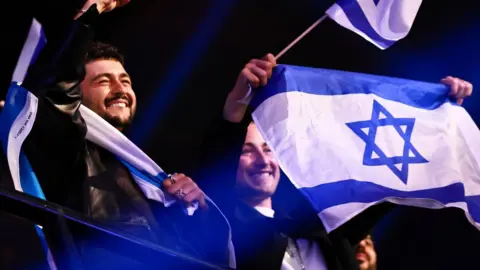
Israel's presence at Eurovision has been contentious since it began its war in Gaza in 2023.
That war came after armed Palestinian group Hamas attacked Israel on 7 October 2023, killing about 1,200 people and taking 251 hostages, according to Israeli authorities.
Israel's offensive has killed 72,628 people in Gaza, the Hamas-run health authority there says.
During the 2024 and 2025 Eurovision Song Contests, anti-Israeli protesters were prominent and the country's participants were given armed guards.
There was also controversy last year when Israel's entrant unexpectedly topped the public vote. Some countries claimed the tally was influenced by Israeli Prime Minister Benjamin Netanyahu and his government's social media channels, who had repeatedly urged followers to vote for the song.
Eurovision changed its rules around voting and promotion in the wake of the controversy but five countries including Ireland went ahead with the boycott.
The European Broadcasting Union (EBU), which organises the contest, has already issued a formal warning to Israeli broadcaster Kan after its contestant released videos instructing fans to "vote 10 times for Israel" last weekend.
Meanwhile, Israel's contestant, Noam Bettan, said he was surprised by protests that disrupted his semi-final performance.
What has RTÉ said?
Announcing the boycott, Irish public service broadcaster RTÉ said it felt Ireland's participation was "unconscionable given the appalling loss of lives in Gaza and the humanitarian crisis there".
"RTÉ remains deeply concerned by the targeted killing of journalists in Gaza during the conflict and the continued denial of access to international journalists to the territory," it added.
Taoiseach (Irish prime minister) Micheál Martin described Ireland's withdrawal from the contest as an "act of solidarity with those journalists who were killed in breach of international humanitarian law during the war in Gaza".
Former Irish government minister Alan Shatter, who is a member of the Jewish community, accused RTÉ of "moral bankruptcy" on Eurovision, saying it was responding to pressure.
What's the Father Ted row about?
 PA
PADuring the period when RTÉ would ordinarily be showing the Eurovision grand final, it will instead air Father Ted's Eurovision-themed episode A Song for Europe.
The episode, which originally aired in 1996 not long after Ireland won three contests in a row, sees the main characters' novelty song My Lovely Horse selected to represent Ireland as organisers attempt to scupper any chance of a win and having to once again pay to host Eurovision.
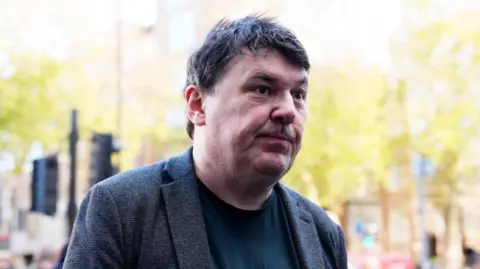
However the decision drew criticism from one of the show's creators Graham Linehan.
In a petition shared on social media, Linehan, who was born in Dublin and has been outspoken in his support of Israel, said he objected "in the strongest possible terms" to the broadcaster showing the episode.
He called for the resignation of RTÉ director general Kevin Bakhurst and described the broadcaster's position as "antisemitism".
RTÉ declined to comment in response to Linehan's comments.
What is Ireland's relationship with Israel?
The Irish government has condemned Israel several times over its actions in Gaza, and in 2024 recognised a Palestinian state.
Meanwhile, Dublin has been branded as "the capital of antisemitism" by Israel's Foreign Minister Gideon Sa'ar.
In December, 2024, it was announced that Israel's Embassy in Ireland would close due to "the extreme anti-Israel policies of the Irish government".
This followed Ireland's announcement of support for South Africa's legal action against Israel in the International Court of Justice (ICJ), accusing the country of genocide. Israel has rejected the accusation as baseless.
There was further criticism last year around plans to rename Herzog Park in south Dublin.
The park is named after former Israeli president Chaim Herzog, who was born in Belfast and raised in Dublin. Taoiseach Micheál Martin described the proposal as "overtly divisive and wrong".
Beyond Eurovision, further potential controversy is on the horizon with Republic of Ireland due to play Israel in Uefa's Nations League in the autumn.
An open letter from Irish Sport For Palestine, signed by 39 people including former Ireland manager Brian Kerr and music stars Paul Weller and Bobby Gillespie, called on Ireland's football authorities to boycott the games.
The Football Association of Ireland (FAI) has said it will fulfil the fixtures.
What do those on the streets of Dublin think?
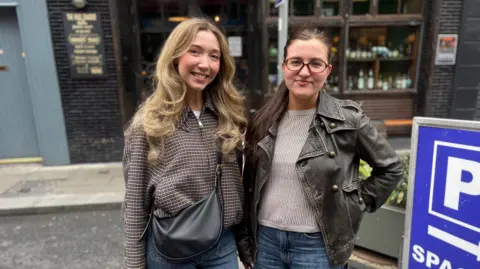
Young people on the streets of Dublin who spoke to BBC News NI were supportive of the boycott.
Niamh Worthington and Celine Flanagan, who were on a short trip from Manchester in Dublin, said the UK should also be boycotting the contest.
"I don't think anybody should be a part of it, I think you're just showing that you're standing by it," said Celine.
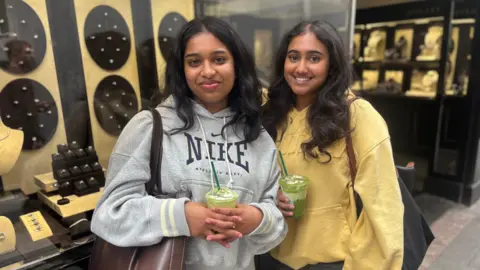
Neha Anna Joseph and Nidhy Anna Abraham said they will not be watching Eurovision because they have exams.
Neha said she has "an interest" in it and follows it on social media. She said it is "great" that Ireland are boycotting it.
"Good for them," she said.
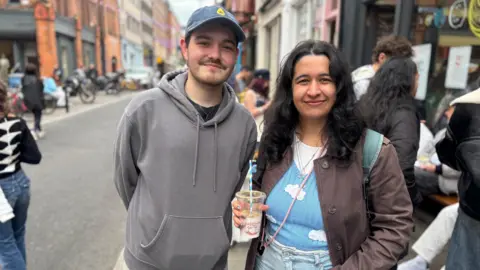
"I agree with Ireland boycotting it because there are some countries participating that shouldn't be," said Aline Capucho.
Augusto Neto said he also agrees with the boycott due to Israel's participation.
What about the Jewish community in Ireland?
About 2,500 Jewish people live in Ireland.
One of them is Oliver Sears, who has been in the country about 40 years and is the founder of Holocaust Awareness Ireland.
He said he has always been opposed to cultural boycott.
"[Jewish people in Ireland] have no power and we don't really count in retail politics and don't really count at all. That very much feeds into how we are feeling as a community, we feel dismissed, our concerns disbelieved and it's been horribly isolating," he told BBC News NI.
He questioned why any broadcaster would take "collective punishment".
"You are saying to a whole country, 20% of whom are Arab Muslims, that you are not good enough.
"I don't agree with it, it's not going to save a single Palestinian life."
Asked if he thinks Ireland is antisemitic, Sears said Jewish people have experienced a "whole plethora of antisemitic incidents, language" which represents "a chronic lack of knowledge and ignorance about Jews, about antisemitism itself, about Zionism".
"Those three words, Jews, antisemitism and Zionism have all been weaponised and distorted."
