How animal visits bring joy to hospice patients

 Severn Hospice
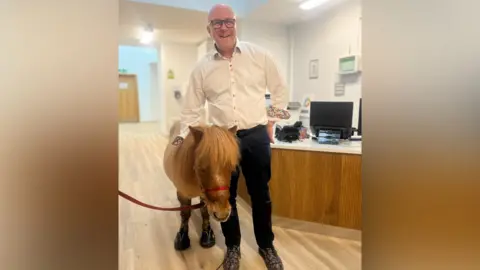
"I just love being part of a team that allows a Shetland pony to walk on the ward, and sees that as being something that's really valuable."
Seven Hospice gives specialist care to people with incurable illnesses across Shropshire, Telford & Wrekin and Mid Wales.
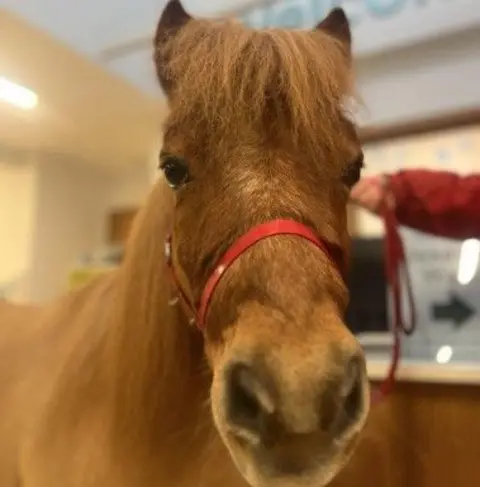
One of its hospice sites in Apley, Telford, recently welcomed a pony, called Crumpet, to one of its wards to bring a smile to the face of a patient - and it is experiences like this that medical director, Derek Willis, believes makes all the difference.
"Hospices aren't a place to be scared of, hospices are a places where actually what we're about is helping people live," he told the BBC.
"The Shetland pony was owned by a relative and [the patient] hadn't seen the pony, obviously because the pony is very small we were able to bring that directly into the room.
"I did my ward round and I turned the corner and saw Crumpet… just looking at the face of the lady that had seen it, it was a total surprise... it's beyond gold isn't it? Being able to do that for people."
 Severn Hospice
It is things like this - animal visits or bringing something that the patient deeply cares about to their bedside - that forms part of the way the hospice treats people in its care.
"It's not a stable of animals that we bring out, but if there are pets that people have who are very important, we will allow them to be in the room," Willis said.
"We've had other people who own horses who have not seen their horses for some time.
"[So] we've brought the horses round to the outside in the gardens so the patients can go out and see them there."
The hospice also has a therapy dog that regularly visits - called Rufus.
'Not everyone is admitted to die'
"One person wanted to go back to the beach and she couldn't, we got a sandpit and a donkey and an ice cream van, she was able to share that with her family," Willis added.
"We've had people who motorbikes have been their life, we've had people drive past the hospice on their bikes so the person has been able to see them."
"It's that kind of thing of trying to see the person rather than the disease," he explained.
He said that although the majority of patients the hospice looks after has cancer, the site treats a much broader range of conditions, such as neurological disorders, neuromuscular disease, heart failure and COPD (Chronic obstructive pulmonary disease).
"What we're trying to do is trying to help them live their life to the full whilst they're at a particular stage of their life," Willis said.
"Not everyone in a hospice is admitted to die, a lot of people come to the hospice to have their symptoms controlled and are discharged home."
Follow BBC Shropshire on BBC Sounds, Facebook, X and Instagram.
