Boeing 747: 50 years of the 'Jumbo Jet'

 Getty Images
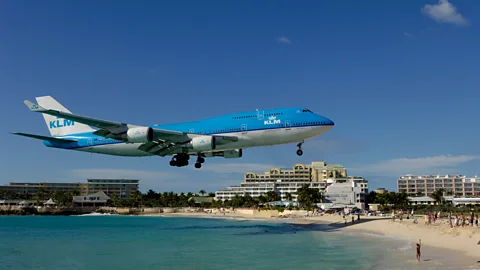
Fifty years ago, Boeing unveiled the 747 for the first time. BBC Future looks at the career of the plane that shrank the world.
 Boeing Corporation
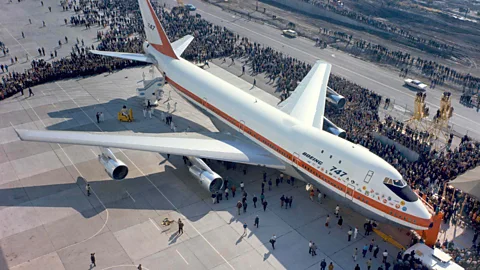
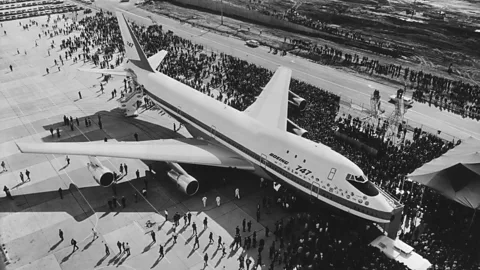
The Boeing 747 was unveiled to a crowd of thousands on 30 September 1968, at the new Everett factory near Seattle, constructed especially to build the new plane.
The age of the ‘jumbo jet’ had begun.
The new jet was designed to fly long-haul flights, such as New York to London, with twice as many passengers as Boeing’s pioneering 707.
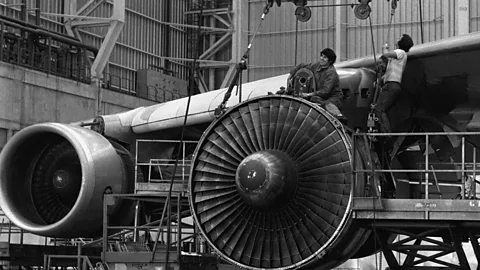
The plane would end up having a maximum take-off weight of more than 333 tonnes. To lift such a massive weight into the air, the plane 37,000lbs (16.8 tonnes) of thrust.
 Getty Images
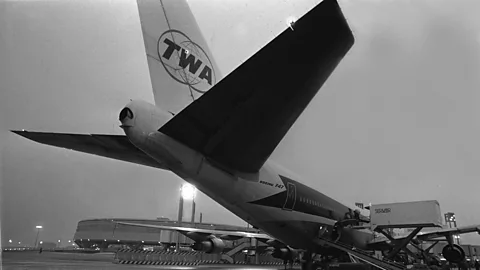
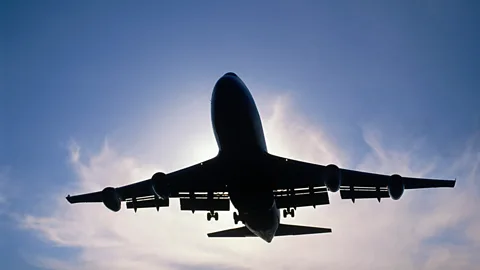
The 747 was significantly larger than any other airliner yet built.
It measured more than 210ft long (63.6m) and had a wingspan of 195ft (59m).
And airlines often had to work out where to store it – the top of the rudder towered six storeys above the ground.
 Getty Images
Airlines queued up to buy the giant airliner, which allowed them to fly up to 4,620 miles (8,560km) without refuelling. More than any other aircraft, the 747 pioneered long-haul flying.
The success was to Boeing’s immense relief – it had racked up debts of more than $1bn, much of it thanks to the 747 project, and had to seek funding from seven different banks.
 Getty Images
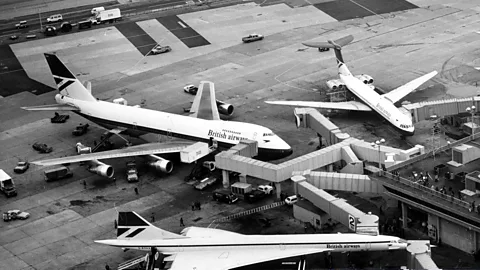
British Airways ended up becoming the biggest customer of the 747 over the years, flying 101 of various models in its fleet.
In 2018, BA remains the biggest current operator of the 747, flying 36 of the -400 model on long-haul routes.
Getty ImagesHow many passengers can be fitted on a 747 is up to the airlines themselves – most have a multi-class layout with extra space for first and business-class travellers.
With such a layout a 747-400 can carry around 416 passengers, but the absolute record for a 747 was in an operation carried out by the Israeli Air Force to airlift Ethiopian Jews in the early 1990s. One El-Al 747 took off with 1,122 people – and landed safely back in Israel.
 Getty Images
The 747 has become synonymous with long-haul travel and a huge success both as an airliner and a freighter – more than 1,500 have been built since 1968.
Fifty years after its unveiling, some 545 continue to fly, many of them freight aircraft converted from retired airliners.
 Getty Images
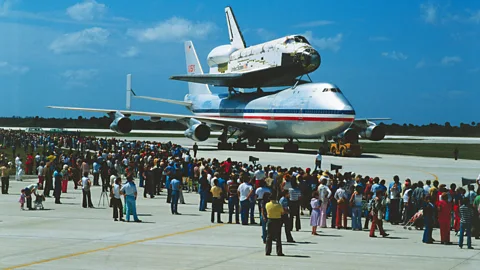
An especially strengthened and modified 747 was built to carry Nasa’s Space Shuttle. The space vehicle was placed on top of the fuselage at its landing base and then flown to the launch site at Cape Canaveral.
The Shuttle Carrier Aircraft remained in service until 2012, carrying out a last scenic flight with the Shuttle on board before delivering the spaceplane to a museum in Los Angeles.
 Getty Images
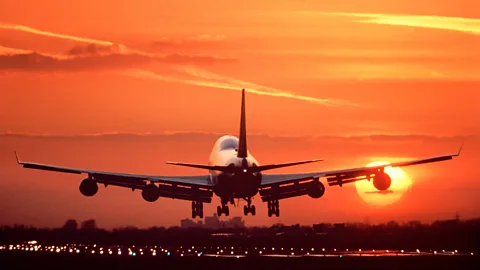
The advent of more powerful engines has let aircraft designers create twin-engined long-haul aircraft, like Boeing’s 777 and 787 and the Airbus A350. These can’t carry as many people as the 747 or its rival the Airbus A380 but are cheaper to fly.
This has meant many 747s have been withdrawn from passenger-carrying duty and converted to freighters. Joe Sutter’s original design incorporated a nose door to allow freight to be driven into the plane.
 Getty Images
Boeing 747s are thought to have flown 3.5bn passengers over the course of their lives – almost half of the current world population.
Boeing says it expects freight-carrying models to keep flying for at least another 20 years.
