From Mercury to Artemis: The evolution of mission control


 Getty Images
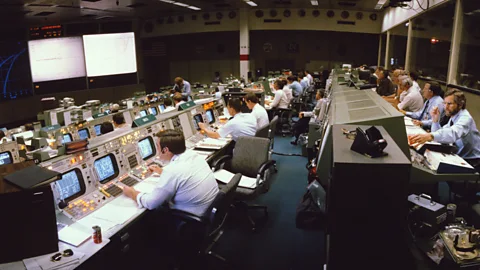
Space missions can succeed or fail from the support they get from mission control. Here, we look at the changing shape of Nasa's most important room in space.
Nasa's original mission control room was housed in Building 1385 at Cape Canaveral, Florida. Designed to oversee America's single-man Project Mercury flights and early two-man Gemini missions in the early 1960s, Mercury Control Center became the template for every mission control since.
Each console was responsible for a different spacecraft system, all decisions were overseen by a flight director sitting at the back, and all communication with the astronauts was through a capsule communicator (Capcom). The main screen featured a mechanical capsule, suspended on wires that mimicked the flight of the spacecraft. The circles on the screen represented the communications ground stations and ships dotted around the world.
 Nasa
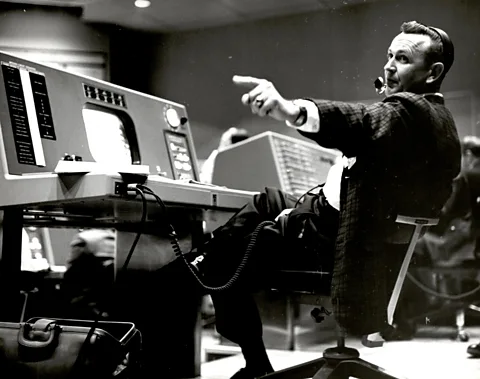
NasaChris Kraft
Chris Kraft developed the concept of mission control while working as a military aircraft test engineer. When he joined Nasa as one of its first employees in 1958, it had no rockets, spacecraft or astronauts. Ten years later, Kraft would oversee the first manned flight around the Moon. Much of this success was thanks to the systems and procedures he set in place.
While Kraft is rightly celebrated, it was unwise to get on the wrong side of him. When Mercury astronaut Scott Carpenter became distracted during his 1962 mission, it almost ended in disaster. Behind on his procedures, he was in danger of plummeting to Earth out of control. The astronaut's behaviour infuriated Kraft who swore Carpenter would never fly into space again. He didn't.
 Nasa
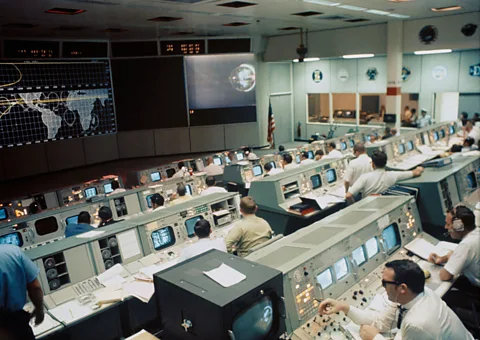
NasaApollo mission control
When two new mission control rooms were built at the new Manned Space Center (later renamed the Johnson Space Center) on the outskirts of Houston, Texas, for the Apollo missions to the Moon, they were at the cutting edge of technology. The mechanical spacecraft on the front screen was replaced by a back-projected, digitally generated representation of the flight, and the many consoles displayed reams of data alongside rows of brightly coloured buttons.
Behind all this was an advanced global communications system and five of the latest IBM 360 computers to analyse, in real time, every aspect of the spacecraft's speed, trajectory and health.
 Nasa
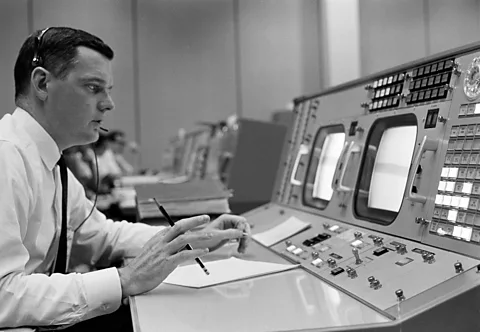
NasaGlynn Lunney
Glynn Lunney sits at his shiny new console during a simulation exercise shortly after the new mission control centre opened in 1965. Each workstation was responsible for a different system on the spacecraft. The handles either side of the monitors were so they could be easily replaced if they malfunctioned – a reasonably frequent occurrence with cathode ray tubes (before flatscreen technology, TV repair used to be a lucrative business).
Many of the switches are for communication and controllers could 'loop' into conversations with their own teams in other locations, speak directly to the flight director or everyone else in the room. Lunney would go on to become a flight director and ultimately oversee the Space Shuttle programme.
 Nasa
NasaLanding on the Moon
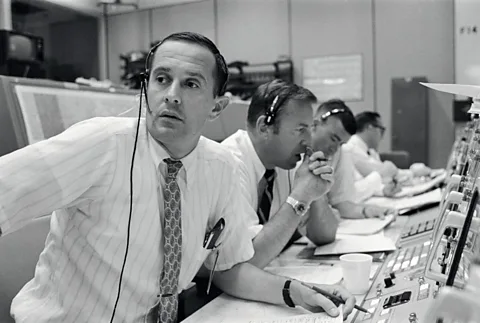
The capsule communicators are the only link between the ground and space. This means there is always a single voice speaking to the astronauts, avoiding any confusing or conflicting messages.
In the 1960s, the capcoms were astronauts themselves – known and trusted by their colleagues and familiar with the spacecraft. This picture of the capcom position was taken during the first Moon landing, Apollo 11, in 1969. Left to right, it shows astronauts Charlie Duke (who would later walk on the Moon during Apollo 16), Jim Lovell (Apollo 8 and Apollo 13) and Fred Haise (Apollo 13).
When Neil Armstrong reported "The Eagle has Landed", Duke's response from mission control is almost as famous: "You got a bunch of guys about to turn blue here," he said. "We're breathing again!"
 Nasa
NasaCelebration
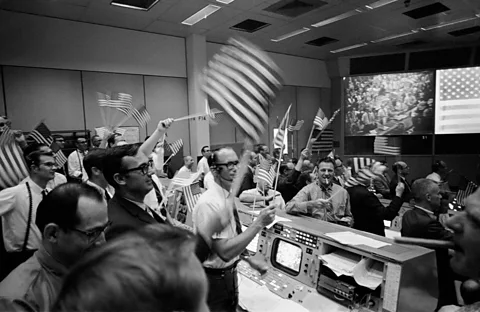
This is what American success looked like in 1969, as the mission controllers gathered to celebrate the end of Apollo 11. Many of these young white men were recruited straight out of college and were still only in their 20s (even the most senior were only in their 30s).
Most are dressed identically with short-sleeved white shirts, ties and pens in their top pockets. They used 'pocket protectors', plastic sleeves designed to prevent pens leaking into the fabric (still available today). The first woman to work in mission control was Poppy Northcutt, who joined in the mid-1960s.
 Nasa
NasaFailure is not an option
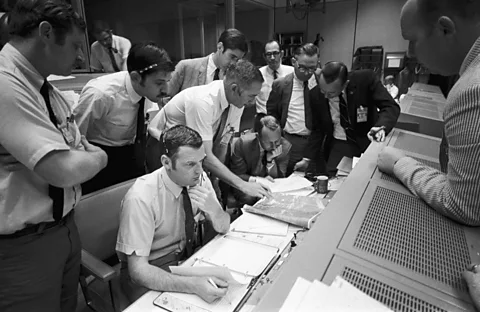
You can almost feel the tension. Captured during Apollo 13, mission controllers are studying a weather map of the proposed landing site in the South Pacific Ocean. Apollo 13 suffered an oxygen tank explosion on the way to the Moon, imperilling the lives of the three astronauts and leading flight director Gene Kranz to coin the phrase "failure is not an option".
When this picture was taken, mission controllers had already saved the spacecraft and kept the three astronauts alive for a return to Earth. Now, it seemed, the weather might be too dangerous for splashdown. Lunney, now a flight director, is seated at the centre of the picture. Among those looking on is Kraft, who appears to be holding a cigar. In the end, the weather held out and the astronauts were recovered without incident.
 Nasa
NasaSpace Shuttle
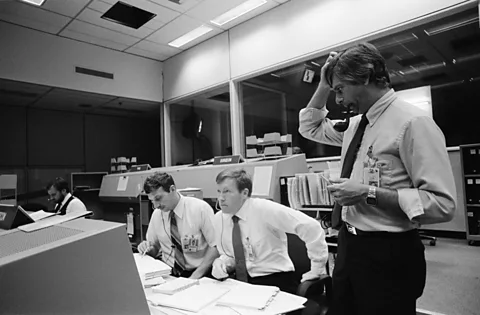
Little seems to have changed in this picture from 1984. Shirts, ties, pens in the pocket and smoking still very much de rigueur in mission control. Only the digital watch and haircuts give away the era. The man with the pipe is Jay Greene, one of the flight directors for space shuttle STS 51-A.
The ambitious mission involved retrieving two malfunctioning satellites from orbit. And although we only see men in this picture, the astronaut operating the robotic arm on the shuttle was one of Nasa's first female astronauts, Anna Fisher. Mission control itself had undergone a series of technology upgrades by this time – with new computers, colour monitors and improved communications.
 Nasa
NasaOrion
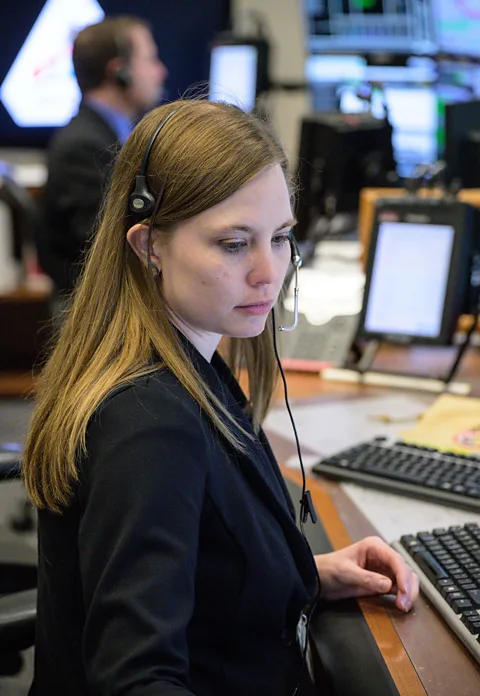
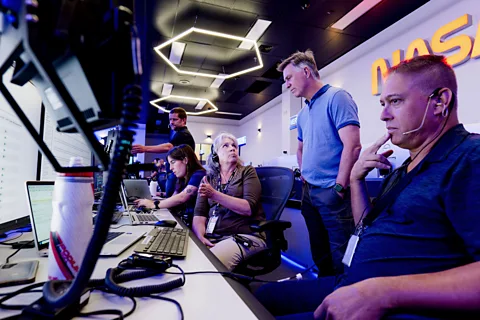
Mission control has come a long way in 60 years, but the essential concepts and layout created by Kraft still endure. This 2022 picture shows flight controller Julie Reed as the flight dynamics officer console during Artemis I, an uncrewed test flight of the Orion capsule.
The new mission control room features touchscreens, colour monitors and laptops. Although the occupants are more diverse and smoking is banned, the room is still dominated by display screens at the front, and the flight director occupies a desk overseeing the team.
 Nasa
NasaMission Evaluation Room (Mer)
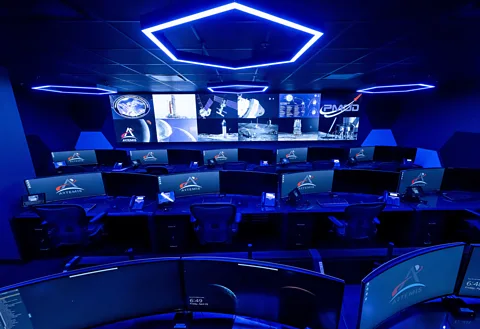
Since the very first launches, every mission controller has been supported by a team of experts. These are the engineers who understand the intricacies of software or systems and can support the mission when things don't go to plan. During the Apollo missions, the Mer team dealt with everything from minor computer glitches to saving the astronauts of Apollo 13.
Nasa recently commissioned the new Mer for Artemis, bringing together representatives for all the spacecraft together in one room. They include a European team overseeing the spacecraft service module, which makes up half the spacecraft.
 Nasa
NasaMeanwhile in Alabama…
The hexagonal lighting motif extends to control rooms at the Marshall Space Flight Center in Huntsville, Alabama. Already home to the International Space Station (ISS) science control room, this centre will be used to support science operations during lunar missions. Controllers will work with astronauts carrying out science experiments on the Moon and may, eventually, oversee operations on a future lunar base.
Restoring mission control
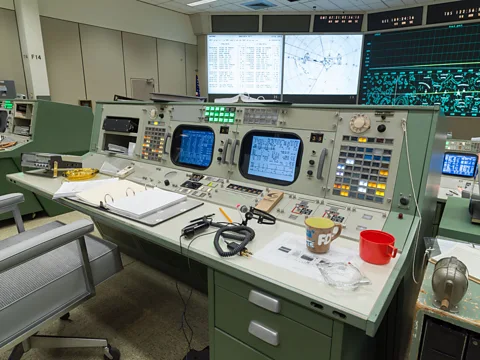
Today, Houston has two main operational control rooms – one for the ISS and the new one for Artemis. Of the two original Apollo control rooms, Mission Operations Control Room 2 (MOCR-2) was preserved as a National Historic Landmark in 1985. Visitors were able to go inside and even sit at the flight director's console. But over the years the room became increasingly shabby and worn.
In 2019, Nasa began a project to restore MOCR-2 to its former Apollo-era glory. Today, it is almost exactly as it was when men first landed on the Moon, as you can see below.
 Nasa
Nasa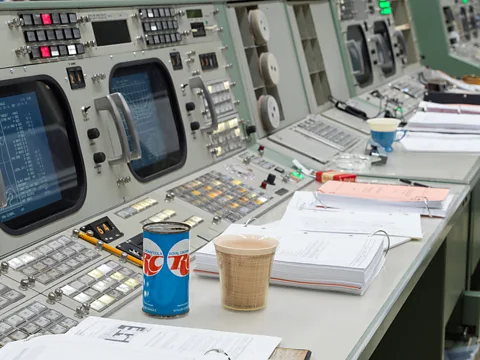 Nasa
Nasa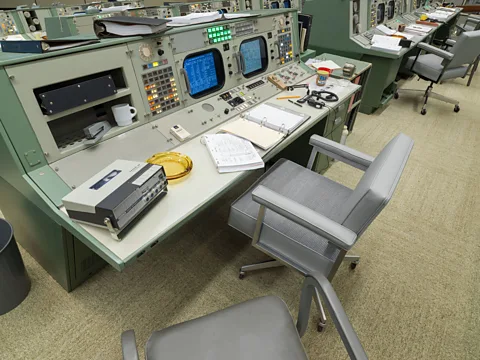 Nasa
Nasa--
If you liked this story, sign up for The Essential List newsletter – a handpicked selection of features, videos and can't-miss news, delivered to your inbox twice a week.
For more science, technology, environment and health stories from the BBC, follow us on Facebook and Instagram.
