Measles outbreaks and what parents need to know

 Getty Images
Measles cases are on the rise in many parts of the world, and experts say parents need to make sure their children are protected against the disease.
In the UK, clusters of measles cases have recently been reported in the West Midlands and London. In the US, hundreds of people were exposed to measles at a Sacramento hospital in early March, and this week, the Centers for Disease Control and Prevention (CDC) sent a team of infectious disease experts to Chicago, where an outbreak is now unfolding.
"Certainly, we're on pace to have a significant jump in measles cases this year compared to more recent years," says Frank Esper, paediatric infectious disease specialist at Cleveland Clinic Children's.
Though the virus that causes measles can affect anyone, it is more common in children. "It is a virus that predominantly affects children and is most commonly seen in children," says Esper. "In children, we see more severe infections." Measles can cause a range of complications, some of which are severe, and research suggests the disease also makes people more susceptible to other illnesses by suppressing the immune system.
The World Health Organization's (WHO) European Region saw more than a 30-fold increase in measles cases last year. The region encompasses 53 countries in Europe and Asia, including the UK.
The US had 58 reported cases in 2023, but there have already been 45 cases so far this year, according to the latest data from the CDC.
Vaccine hesitancy is chief among the reasons cases are rising. "I think it's pretty much safe to say that you're going to see measles in pockets of unvaccinated people," says Julie E. Mangino, professor emeritus in the department of internal medicine at The Ohio State University Wexner Medical Center.
Increased international travel also leads to more measles cases, and the Olympic Summer Games in Paris could trigger outbreaks, says Esper.
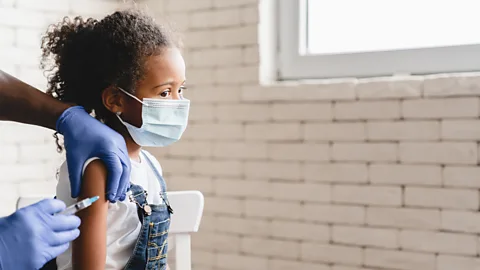
Given the potential for outbreaks, parents should make certain their children are up to date on vaccines, especially if their appointments were interrupted by Covid lockdowns, he adds.
 Getty Images
Measles symptoms parents should know
The incubation period for measles – or the time it takes for the infection to develop after a person has been exposed to it – is usually 11 to 12 days, according to the CDC.
Measles symptoms usually appear one to two weeks after exposure. Early warning signs include: cough; red, watery eyes; runny nose; and high fever.
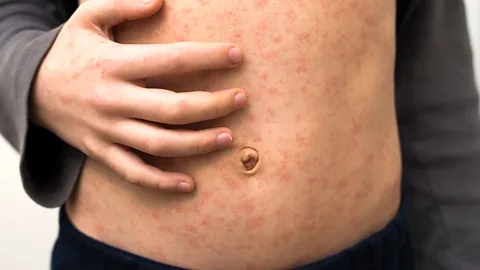
Two to three days after symptom onset, some children develop tiny white spots inside their mouth. Three to five days later, they may develop a rash. It starts as flat red spots at the hairline on the face, and can spread down a person's neck, arms, trunk, legs and feet.
Measles can lead to complications such as ear infections, diarrhoea, pneumonia and encephalitis (brain swelling). One to three of every 1,000 children infected with measles dies, per the CDC.
 Getty Images
How is measles spread?
Measles is an airborne viral illness, and it's very contagious, says Mangino. When a person coughs or sneezes, virus particles can stay in the air of the room they were in for up to two hours, putting anyone who enters that room at risk of infection, she explains.
"For most of these viruses –like flus and RSV – you really have to have fairly close proximity, basically be within coughing range [of an infected person], to get it," says Esper. "With measles, you don't have to be in the same three to six-foot distance. You just have to be in the same exposed area." A child can also get measles after touching an infected surface, then putting their hands on their face.
 Getty Images
How effective is the measles vaccine?
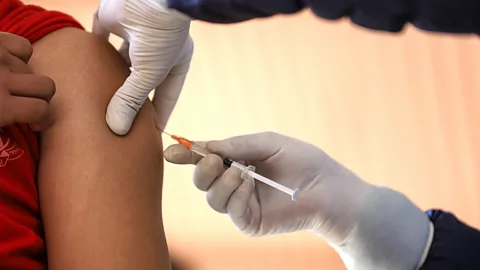
The measles vaccine is given in two doses: the first between 12 and 15 months of age, and the second at four to six years.
"We have data that says more than 97 percent of the people who have had their two shots of the vaccine never get measles," says Mangino. Adults usually don't have to be re-vaccinated, unless there's a large outbreak in their community, says Esper.
If you're unsure your child was vaccinated, you should ask a healthcare provider if they're able to locate their records, says Jennifer Duchon, a paediatric infectious disease and neonatology expert and hospital epidemiologist at the Mount Sinai Kravis Children's Hospital. If there are no records, experts recommend scheduling the measles vaccine for them to make sure they're protected. "There's no harm if a child gets an extra vaccine," says Duchon. "Your body reacts as if exposed to the virus."
Adults who have no way of knowing whether they received the measles vaccine should also consider vaccination, says Esper, especially if there is an outbreak in their community or if they have upcoming international travel plans.
--
Join more than three million BBC Travel fans by liking us on Facebook, or follow us on Twitter and Instagram.
If you liked this story, sign up for the weekly bbc.com features newsletter called "The Essential List". A handpicked selection of stories from BBC Future, Culture, Worklife and Travel, delivered to your inbox every Friday.