'It's felt like homework': Why Star Wars went so wrong

 Disney
The Mandalorian & Grogu is released this week and is set for the lowest opening weekend of any Star Wars film ever. With the TV shows also struggling, here's why interest is waning.
It's been seven years since the Star Wars franchise visited a galaxy far, far away on the big screen. In December 2019, The Rise of Skywalker, the third and final film in the franchise's sequel trilogy, was released, earning $1.077bn (£806m) worldwide. It pulled in only around half what the first film in the trilogy, 2015's The Force Awakens had made. This disappointing amount reflected the increasingly poor audience and critical response to the three films. A year earlier, in 2018, the standalone film Solo: A Star Wars Story had also bombed hard, earning just $393m (£294m) globally.
Since then, the film series has been on a lengthy hiatus, while Lucasfilm, bought by Disney for $4.05bn (£3.03bn) in 2012, has been busy expanding the Star Wars universe on TV with a whole host of live-action shows, starting with hit The Mandalorian. However, interest in these has declined as they have proliferated: the most recent new series, 2025's Skeleton Crew, recorded the lowest opening ratings for a Star Wars show yet, while 2024's The Acolyte was cancelled after one season.
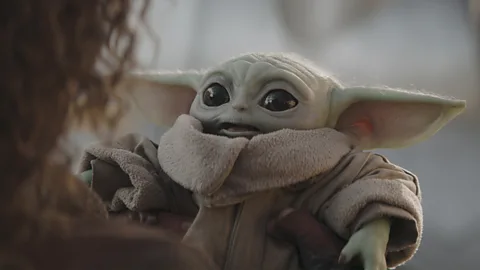
Now, finally, a new Star Wars cinematic era is beginning with this week's The Mandalorian & Grogu, the 10th film in the franchise and a spin-off from its small-screen counterpart. Co-written by The Mandalorian series co-creators Jon Favreau and new Lucasfilm president Dave Filoni with Noah Kloor, and directed by Favreau, it follows the further adventures of Pedro Pascal's helmet-wearing bounty hunter Din Djarin and his sidekick-in-training, aka "Baby Yoda". But the signs here, too, are not good. Prerelease tracking suggests it will score just $80 million domestically during its opening weekend – the lowest opening for a Star Wars film ever. So what exactly has gone wrong with the Star Wars universe?
When it comes to The Mandalorian & Grogu, Dr Rebecca Harrison, academic and author of BFI Film Classics' The Empire Strikes Back book, suggests that the subject matter might be too niche. The film is set immediately following the events of The Mandalorian season 3 – and several years after the fall of the dastardly, Darth Vader-led Galactic Empire at the hands of the Rebel Alliance, as seen in Return of the Jedi. It sees the titular pair embarking on a new mission to rescue iconic villain Jabba The Hut's son Rotta in exchange for information regarding a target of the newly established, far more democratic New Republic regime. Yet, as "it's a continuation of a story rather than a standalone movie," Harrison tells the BBC, "if you're not familiar with the TV shows, you've got such low investment in going to see it."
Too many storylines
Indeed, this might be a problem with the whole Star Wars universe, as it's developed over the past decade – while the interconnected web of storylines might be a boon for committed Star Wars fans, it's a burden for the casual viewer. The post-Empire narrative begun by The Mandalorian, and set to be continued by The Mandalorian & Grogu, has run across not only other live-action series The Book of Boba Fett, Ahsoka and Skeleton Crew, but also the acclaimed animated offerings Star Wars: The Clone Wars and Star Wars Rebels, also created by Filoni: these shows have 11 seasons combined. "It has felt like homework to try to keep up with everything, so I wonder if that might limit their audience," says Harrison, who is also the author of forthcoming book A Star Wars World.
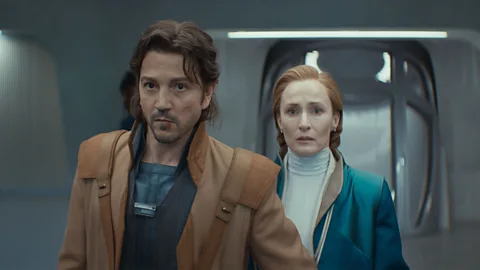
Clarisse Loughrey, chief film critic for The Independent, agrees, pointing by contrast to Tony Gilroy's critically-acclaimed series Andor, which consistently grew its viewership through its two season run, as a standalone Star Wars show you could enjoy on its own: "That could be your first piece of Star Wars that you've ever seen, and you're not going to feel like you've been thrown in the deep end."
Andor also stood out from the other series as a defiantly prescient critique of authoritarianism, offered "in terms you could legibly graft on to the world right outside your door", wrote Vulture's Nicholas Quah. It was a Star Wars saga that didn't require a single lightsaber, Jedi-Sith battle, or an abundance of fan service to entice viewers but instead wielded characters that "felt like flesh-and-blood beings whose lives extended beyond their service to the story", as he put it.
 Disney
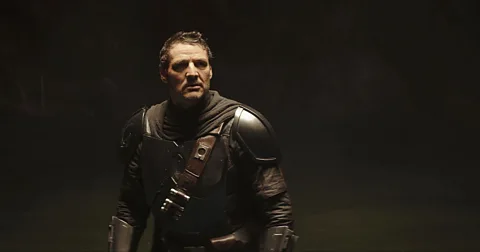
Yet where Andor succeeded, others have failed to capture its rejuvenating appeal. The Book of Boba Fett was criticised for being too much of a Mandalorian-linked mini-series, and reducing the beloved eponymous bounty hunter, who appeared in The Empire Strikes Back and Return of the Jedi, from a mysterious antagonist to what critics have described as a "superfluous bystander" in his own story. Meanwhile, critics suggested that Ahsoka, while visually appealing, relied too much on backstory from the two animated series Clone Wars and Rebels, in which its ex-Jedi lead character was a firm fixture.
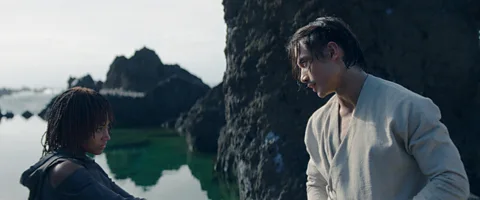
The female-centric Acolyte series, set approximately 100 years before The Phantom Menace and costing $187m (£140m) to make, earned generally favourable reviews from critics, comparing it to Crouching Tiger, Hidden Dragon and calling it "bold," "fun", and a "breath of fresh air". However, it was cancelled due to low viewership, according to Lucasfilm, while actress Amandla Stenberg publicly called out the "intolerable racism" she said she'd been subject to in the wake of starring in the show. "Had it been given more time and resource, maybe it would have been more successful," says Harrison. "If it wasn't part of this huge glut of other shows that you're somehow meant to keep up with."
Then there was Obi-Wan Kenobi's solo series which was an enjoyable enough return for Ewan McGregor's Jedi Knight. But also one that was indicative of post-George Lucas Star Wars, wrote The Guardian's Stuart Heritage, which "exists almost exclusively to bulk out thin gruel, joining various dots that didn’t need to be joined, for the delight of a quickly ageing fanbase."
As if pre-empting concerns about its comprehensibility beyond the hardcore following, however, Favreau has promised that The Mandalorian & Grogu does not "diminish the experience of watching it as a standalone" for filmgoers who aren't as familiar with the backstory. He told SFX magazine that while he had completed the scripts for a fourth season of The Mandalorian in February 2023, they had to "start from scratch" to pen the 132-minute movie: "You can't just take those scripts and turn them into a movie. There were a lot of characters; it assumed you'd watched the whole show. This is a completely different medium… but there's still a lot of Star Wars in there."
The use of 'bland' digital technology
In its favour, too, the film cost approximately $165m (£123m) to make – the smallest amount spent on any big-screen Star Wars instalment, which certainly puts its box-office prediction in a healthier light. Lucasfilm managed to keep costs low by shooting entirely in California rather than the far-flung locations used on previous, very expensive Star Wars films. It did this by deploying The Volume, a technology developed and owned by the Disney company, Industrial Light & Magic (ILM), and first used on The Mandalorian season 1 before being used across multiple Star Wars TV shows. It utilises a 270-degree wall of LED screens projecting photorealistic backdrops for actors to perform in front of.
 Disney
However, while more cost-effective, Harrison says the digital method might hinder the film's appeal. "People have tended not to get so on board with that virtual production approach," she says, pointing to the backlash against the "cartoonish" CGI of the prequel trilogy. "With the legacy sequels, they went back to narratives of authenticity, practically making things and going to locations, so this shift back into the digital space suggests there's very little at stake for Disney here."
Fans have increasingly shared their concerns about the technology, arguing that the shows that have used The Volume appear stifled by it – Andor, notably, is the only one that didn't. "It just feels very bland and empty," said one fan, while another complained. "It often makes the sets look minuscule, prevents movement."
As Star Wars tries now to reclaim its cinematic standing, it's clear The Mandalorian & Grogu may not have been the best title to come out of the blocks with. The first trailer was released last September, with further footage shown to fans and influencers after May 4th, the unofficial "Star Wars day", which has generally inspired positive reactions.
But Lucasfilm hasn't quite convinced early viewers that, as a spin-off from a TV show, the film qualifies as the kind of "event cinema" that is expected from summer blockbusters. "The 25 minutes felt like a first episode of a new season," wrote one fan, while another commented: "I wouldn’t say I didn’t like it, but something felt off when the opening credits rolled, it didn’t quite feel like a Star Wars movie. It came across more like a streaming TV film than a big-screen experience."
In today's increasingly challenged cinema landscape, Loughrey believes you need a "hook" more than ever to make a film seem essential for people to leave the house to see it. Yet with The Mandalorian & Grogu, she says, "there doesn't appear to be an epic battle happening or tons of characters teaming up, so it seems like a very low-stakes adventure."
What does the future hold?
Loughrey instead points to the next planned Star Wars film, Starfighter, due for release in May 2027 and starring Ryan Gosling, as the great new hope for the franchise. Its director, Shawn Levy, has confirmed that it will explore an untouched "period of time in the galaxy" where they are "inventing everything in the movie" and not relying on legacy characters to tap into fan nostalgia. "Starfighter is coming out of the gate with an original story and a major A-lister attached to it," Loughrey says. "It feels like the first chapter [of something new]; I don't know what they'll do with it afterwards, but that feels like a confident first step."
 Disney
Certainly, despite the knocks the Star Wars Universe has taken, Lucasfilm isn't showing any signs of slowing down its growth. Among other things, Filoni will be directing his first live-action film, which will conclude the interconnected storylines of The Mandalorian, Ahsoka, and The Book of Boba Fett. Screenwriter and filmmaker Simon Kinberg is developing a new trilogy, and Daisy Ridley will return as Rey in a post-Rise of Skywalker outing directed by Sharmeen Obaid-Chinoy – the first woman and person of colour to direct a Star Wars film. Interestingly, though, while Aksoka season two is currently in production, no other live-action series has been confirmed.
More like this:
Under the creative leadership of Filoni, Lucasfilm will be looking to return Star Wars to its cinematic greatness, and The Mandalorian & Grogu will be its first test – but is this new trajectory going to instil new hope in its fans and moviegoers alike?
"If it does better than expected, we might see more of the Mandalorian and Grogu," says Harrison. "If not, it's not going to be franchise-ending for them. My feeling is that they're throwing stuff out and seeing what sticks. They have such enormous economic resources to draw from that they can afford some losses."
Both Harrison and Loughrey agree that Lucasfilm might benefit from reducing speed and giving filmmakers more freedom to be "artistically daring" on a smaller budget. "There's been a lack of a distinct point of view, so let a Tony Gilroy type do what they want and have a strong artistic vision," Loughrey says. "Maybe it won't make a ton of money at the box office, but Star Wars would be cool again."
Star Wars: The Mandalorian & Grogu is released in US and UK cinemas on 22 May.
--
If you liked this story, sign up for The Essential List newsletter – a handpicked selection of features, videos and can't-miss news, delivered to your inbox twice a week.
