Ghostbusters Afterlife: Is nostalgia killing cinema?

 Alamy
AlamyThe new Ghostbusters film exemplifies Hollywood's current obsession with sending audiences down memory lane. Is this as detrimental to cinema as some would have it, asks Jack King.
That Hollywood is becoming lazier, and artistry ever-more sacrificed for maximum profitability, is an often-heard refrain. In 2019, all of the top 10 highest grossing films at the US box office were based on existing intellectual properties; just two decades ago, it was five. And in a lot of cases, these big-grossers – be they remakes of, spin-offs from, or long-awaited sequels to classics – play on one emotion in particular: nostalgia. They offer audiences the pleasure of past cinematic experiences, and the comfort of ensconcing themselves in something familiar.
More like this:
But if such cinema is inherently designed to be reassuring, it is also divisive. The polarised reaction to the latest film in the Ghostbusters franchise, Ghostbusters: Afterlife, released in cinemas in the UK and US today, exemplifies the debate that the servicing – or, or as some would have it, exploitation – of audiences' nostalgia can inspire. On the one hand, Empire Magazine's Olly Richards praised the film, above all, for capturing the essence of the original: "It's not quite the same as the Ghostbusters we know, but it entirely feels like Ghostbusters". And on the other, the Guardian's Charles Bramesco offered a particularly damning appraisal of it as a work that is content to trade off the original, and assume "that the automatic delight of knowing what things are will supersede the need for the humour or smart-ass charm that initially made Ghostbusters worth watching".
 Alamy
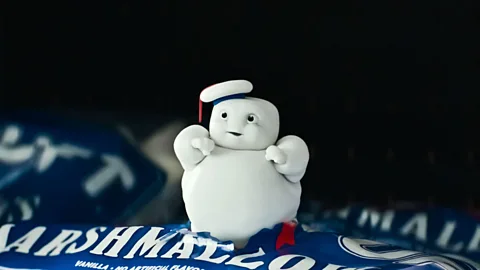
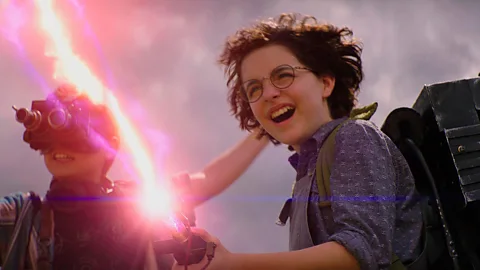
AlamyThe film follows the daughter and grandkids of original Ghostbuster Egon Spengler (the late Harold Ramis), as they relocate to his remote farmhouse, on the outskirts of golden-lit, cornfed Americana, after being evicted from their New York home. It just so happens to be located on top of a hotbed of supernatural activity, disturbed by quakes thought to be caused by fault lines – but of course, something altogether more sinister is at play. Directed by Jason Reitman, the son of original Ghostbusters (1984) director Ivan, it mostly feels well-meaning: there are myriad shots homaged, some quite cleverly, from his father's film, and it brims with recognisable Easter eggs for franchise fans: foreboding, baritone references to a baddie called "Zuul", for example. The Ghostbusters' iconic vehicle Ecto-1 shrieks with its quintessential siren, their ghost-busting proton packs cross streams, and even the cutely villainous Stay Puft marshmallow man makes a return, albeit in a much smaller form. And of course, there's the much speculated-upon and yet hardly surprising return of some familiar faces – including one, more surprisingly, who returns as a silent CGI ghost in a move that raises many ethical concerns around reanimating dead performers for the capital gains of studios. "This is a Frankenstein business where we really need to take a step back and think about where this technology goes," Bramesco tells BBC Culture. "This is so clearly an ethical violation of the rights of dead people – it starts off with corporate cheerleading, but where does it go from there?"
The queasiness of that appearance aside, the film arguably doesn't have much to offer in and of itself, separate from its references to its predecessors. That's because it doesn't have any tangible reality of its own: its backwards-looking stance extends beyond the details to encompass the film's whole mood. Despite it notionally being set in the present day, Summerville, the film's remote rural town, is itself a time capsule, a neon-lit drive-in diner being its central attraction. As Alison Willmore wrote in her review for Vulture, "Afterlife is assiduously apolitical in its content, yet it also instinctively understands the pop-culture nostalgia it's peddling is of a kind with that desire to restore some fabled idyllic period that haunts national discourse". It also instinctively understands that nostalgia is popular culture's most valuable commodity right now – which might explain its decision to ape the market leader, in this respect, Netflix series Stranger Things. Among other things, Afterlife refocuses the story on a group of adolescents in an imagined slice of cornfed Americana, and casts Stranger Things star Finn Wolfhard. Stranger Things is a show in thrall to 80s film references, the original Ghostbusters movies among them. The fact that the new Ghostbusters then feels the need to evoke it in turn, the copy of a copy, makes its nostalgia feel that much more contrived, not to mention convoluted.
Nostalgia and the 'content wars'
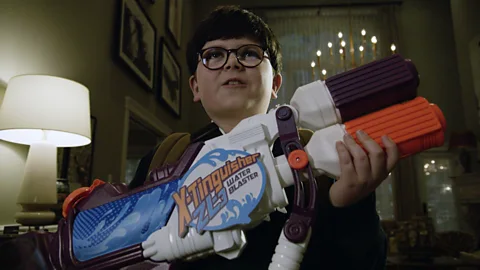
Those who are dispirited by these trips down memory lanes aren't going to find solace anytime soon. One recent development is that studios and conglomerates are making it their modus operandi to build up their content libraries with shows and films based on classic titles that inspire nostalgic consumer recognition: Paramount's streaming platform Paramount Plus has series based on Love Story, The Parallax View, The Italian Job, Fatal Attraction, and Grease in the works, for example. Meanwhile Disney Plus has been remaking and rebooting everything from Mighty Ducks to Turner and Hooch, and, latterly, Home Alone. Released last week to a host of terrible reviews, Home Sweet Home Alone showed how pandering to nostalgia can end up serving no one very well, neither new audiences nor old ones. "It all comes back to the question of why the film was made in the first place," as Radio Times' Patrick Cremona puts it. "It's certainly not for kids, who I can't imagine enjoying much about this. No, it's pretty clear that the target audience for this is adults who retain a nostalgic fondness for the original Home Alone – which explains why there are several clumsy references to the film throughout, including a cameo from Devin Ratray as Buzz McCallister. But regrettably, I imagine even the most hardcore fans of that film will struggle to find much to enjoy in this turkey."
 Alamy
AlamyThis kind of cultural reproduction is nothing new. In a 2016 article for The Atlantic, film academics Amanda Ann Klein and R Barton Palmer argued that "cinema has always been rooted in the idea of multiplicities – that is, in texts that consciously repeat and exploit images, narratives, or characters found in previous texts". But if this retrospective inclination has always been present within the film industry, some would argue that it has turned pathological. "The complaint that Hollywood is making too many sequels, too many remakes – drawing from a dry creative well – that is not a particularly recent development. The history of Hollywood is the history of studios repeating their successes," Bramesco says. "But I think [that nostalgia-driven cinema] kicked into high-gear, into this inescapable weekly thing, with the beginning of the Disney remake Renaissance." The Renaissance in question refers to the studio's mining of its extensive animated back catalogue for a second box-office hit, by rendering them into a series of live-action remakes with appeal for both children, potentially coming to them fresh, and their parents, who grew up on the originals and can enjoy a reminder of their own childhoods.
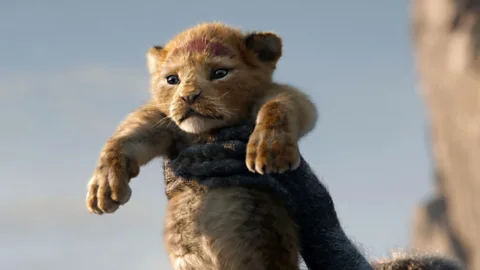
Bramesco cites Tim Burton's Alice in Wonderland (2010) as the real beginning of this so-called Renaissance. It wasn't actually the first live-action remake of a canonised Disney cartoon – lest we forget Stephen Sommers' 1994 adaptation of The Jungle Book and the subsequent 101 Dalmatians live-action films (1996 & 2000). But, Bramesco believes, its billion-dollar global box office conclusively asserted "that there are some movies – regardless of what it is, how good it is – people will go and see [because it is based on] something they remember". Subsequently, Disney’s production of these live-action remakes and spin-offs has sky-rocketed: Robert Stromberg's Maleficent came in 2014, with one or two additional titles per year, until 2019 brought with it four. It has been a largely winning formula for Disney, with one of the aforementioned 2019 titles, The Lion King – albeit not live-action but rather photorealistic animation sold as real – raking in $1.65 billion (£1.23 billion) at the global box office.
Where the situation is leading
And there's the rub: if it's easy to criticise the studios' appeal to nostalgia as cynical, then it's clear, from the box-office results, that it's hitting the spot – and really is there anything ignoble about fans' desire to be reminded of the things they love? The problem is, however: where does the nostalgia obsession end? Reitman, for example, has suggested that he would like to see Afterlife as the first in an expanded Ghostbusters "Universe". A post-credit scene in the film certainly signposts this intent, as did the formation of the Ghostbusters-specific production company Ghost Corps prior to the 2016 Ghostbusters reboot (which was dogged by misogynistic criticism of its all-women lead quartet, and has been casually stricken from the canon in Afterlife).
From Marvel to Star Wars, shared-story universes are of course very much in vogue. But until recently, the Ghostbusters "universe" was compromised of two fun comedies in the 80s with a lewd ensemble of SNL alumnus; arguably, it doesn't seem the most natural material for some grand interconnected saga. Equally, some have faith it could work. "Part of me thinks, why has it taken so long?" says editor of sci-fi magazine SFX and Ghostbusters fan Darren Scott. "There's a new series based on the Child's Play films called Chucky, which just hits the mark. It's fantastically queer, it's horrific. It's so cleverly done – you don't get the sense they're being cynical about it, that they're out to get a quick buck. They're actually pouring love into it. And if Jason Reitman is going to pour love into Ghostbusters, and do huge spin-offs and TV shows, then brilliant."
 Alamy
AlamyBut aside from assessing the quality of the franchise titles at hand, it feels as though there is a greater, more existential point for Hollywood cinema to contend with. The desire to appeal to nostalgic instincts is part of a bigger issue, that studios are seemingly becoming less and less likely to take a risk on films without existing brand recognition; indeed, there is a real irony in the fact that much of this nostalgia-driven content is capitalising on once-original titles that simply wouldn't be made today. This summer's Free Guy (2021), acquired by Disney with their controversial takeover of Fox, was the studio's first live-action release not based on an existing intellectual property in three years. Asked whether he thought a studio would bank on an original idea like Free Guy again – which, relatedly, has been lined up for a sequel – director Shawn Levy said: "I'm going through a mental Rolodex of the studios – Sony, Warners, Paramount, Disney, Lionsgate – the truth is those studios are predominantly if not exclusively betting the big money on franchise titles [...] Someone referred to Free Guy as the last chopper out of Saigon, and I do think about that. I hope it's not the case." And even then, Free Guy itself is not free of nostalgic impulses: it's notionally based on video games like Grand Theft Auto, and its third act chucks out $40-billion worth of recognisable props from the Disney stable, a benefit of said takeover, from lightsabers to Captain America's shield – recognition, again, seemingly being offered up as a great cinematic pleasure in itself.
It is this debatable idea – that the overwhelming drive of mainstream Hollywood cinema is now to offer the dopamine hit of familiarity – that leaves some critics so deflated."It's hard not to talk about this in apocalyptic, end of history type language," Bramesco says. "Not to get existential, but this makes me feel alienated from people, just realising that my value systems as art goes are not only removed from other people's, but almost diametrically opposed." For while some might view the current nostalgia-fuelled entertainment model as apocalyptic, others welcome it with open arms."I don't care how many times they remake Batman, I will go and see every version of it," Scott says. "That's a good thing about the sort of market that SFX speaks to – we love a thing, and we'll go and see it. If we don't like the new version, that's fine. We'll go to the next one, too. We never let go of our childhood loves."
Indeed, for most people, formative cinematic experiences – whatever their artistic merit – are hard to shake from the soul. And whether or not you find the glut of nostalgic product agreeable, it manifestly speaks to a deeply held impulse towards the familiar. When we only have time to go to the movies a handful of times a year, after all, we'll likely spend our money on experiences we think we can trust. The nostalgia mill – even if it cannot maintain the momentum with which it current spins – is unlikely to lose its grip any time soon. But that might just be what audiences want.
Love film and TV? Join BBC Culture Film and TV Club on Facebook, a community for cinephiles all over the world.
If you would like to comment on this story or anything else you have seen on BBC Culture, head over to our Facebook page or message us onTwitter.
And if you liked this story, sign up for the weekly bbc.com features newsletter, called The Essential List. A handpicked selection of stories from BBC Future, Culture, Worklife and Travel, delivered to your inbox every Friday.
