To Kill a Mockingbird: The first YA novel?


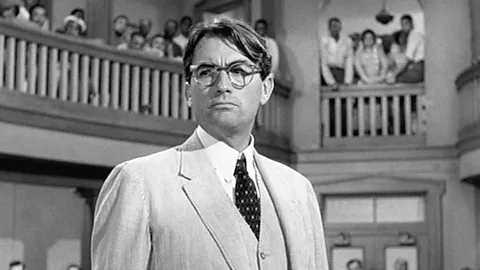
A poll once revealed Harper Lee’s book rivals The Bible in popularity in the US. University student Henry Knight explores why the young especially love it.
Editor's Note: This story was originally published on 3 February 2015. We are reposting it as a tribute to Harper Lee, who died 19 February at age 89.
The news of Harper Lee’s impending second novel broke the internet. A flurry of tweets from anyone who has ever attended an American ‘middle school’ followed Harper Collins’ announcement that Lee’s Go Set a Watchman would be released in July. Lee became a recluse after the publication of her first book, To Kill a Mockingbird, in 1960. Although the author has been out of the public eye for more than 50 years, the wave of sentiment that followed the announcement reaffirmed her novel’s beloved place in the American literary canon.
In 1991, The Book of the Month Club and the Library of Congress conducted a survey that prompted readers to identify books that had “made a difference” in their lives. The result? Lee’s book trailed only The Bible. Alongside the works of Shakespeare and Twain, To Kill a Mockingbird remains one of the most widely taught books nationwide, reaching an estimated 70% of American public schools. What makes it such a quintessential read for young people?
English class is a place where young Americans come to know themselves. In the folds of dusty books, students can make contact with humanity beyond the superficial discourse of the school hallways. Roiled by hormones and angst, teenagers navigate school with confusion and frustration. Literature is a safety valve – it promises relief, a place to figure out one’s problems and get to know oneself better.
BBC News report on the new Harper Lee novel
To Kill a Mockingbird particularly distinguishes itself in this regard. It speaks in a child’s voice without treating its readership as children. Some critics have called it an ‘impossible’ achievement, a children’s book penned in the prose of a well-educated adult – it's unlikely a child like Scout could exist in the real world. But that’s exactly what makes it such a charming, seductive read for young people. It alludes to the consciousness of a well-educated adult confronting difficult realities, but filters it through the light and playful voice of a curious little girl.
Gaby Hick, a third-year student focused on English literature at Brown University, calls it “one of the first books that kids and young adults read that deals with serious issues – rape, race, mental issues”. She’s one of several peers of mine at Brown I interviewed about our shared experience of the book. Gaby adds, “The story makes [these adult themes] accessible because of Scout [Lee’s six-year old protagonist and a semi-autobiographical stand-in].” In that sense To Kill a Mockingbird may have been the first YA novel – it gives young people a familiar lens through which to grasp concepts that might otherwise feel overly adult or abstract. The book’s setting, a small town in Alabama gripped by the Great Depression of the 1930s, may appear far removed from the experience of most kids reading it today. But Lee’s words make her story – Scout witnesses her lawyer father, Atticus Finch, defend an African-American man unfairly accused of raping a white woman – feel alive and present.
The golden rule
In 2006, however, critic Thomas Mallon lamented the book’s aversion to moral complexity in The New Yorker, calling it “moral Ritalin, an ungainsayable endorser of the obvious”. Lee may indeed reduce the struggles of African-Americans against the racist Jim Crow laws of the American South into a cocktail of empathy and the ‘golden rule’. But her novel makes a great teaching tool for teenagers precisely because its moral view is as clear as that of one of Aesop’s fables.
That absence of ambiguity in To Kill a Mockingbird doesn’t mean the novel is free of challenging ideas, either. Will Serratelli, another literature student at Brown says, “There aren’t many hard moral questions being asked… [but] it opens up all these other questions that I hadn’t thought about before. [Before I read To Kill a Mockingbird], my English teachers always asked: ‘Do you sympathise with this character? Do you like them? Would you want to hang out with them?’ When you give a kid a book where those questions don’t even need to be asked, it forces them to delve deeper.”
Mallon’s criticism is accurate in that To Kill a Mockingbird may present too limited a view of racism in America. That’s especially problematic because it is one of the only books consistently assigned to American students that acknowledges racial discrimination at all. The moral force of the ‘golden rule’ by itself can’t unravel a history of institutionalised prejudice as long and as deeply rooted as that in the US.
To Kill a Mockingbird may owe some of its popularity as a teaching text to the fact that the narrative voice is a white one. Naomi Varnis, an African Studies student at Brown, doesn’t believe the novel is a groundbreaking commentary on race. “It’s another practice of filtering stories about black people through white central characters,” she says. “Scout’s major realisations about prejudice, sympathy and understanding, through Atticus’ defense of Tom Robinson, feel infantile when placed in the context of systematic violence against black bodies.”
While To Kill a Mockingbird undoubtedly deserves its place in the classroom, English teachers may do well to consider that it is a white author’s perspective – and ought to be the mere beginning of a dialogue about race and never the final word. But as a gateway to more mature ideas, and as a YA distillation of complex notions young people may not have grappled with before, Lee’s novel is invaluable. Today’s YA novels deal primarily with dystopian or supernatural themes, but it’s To Kill a Mockingbird, with its deeply felt, autobiographical evocation of a real-life time and place that has proven timeless.
If you would like to comment on this story or anything else you have seen on BBC Culture, head over to our Facebook page or message us on Twitter.