Why pansexuality is so often misunderstood

 Getty
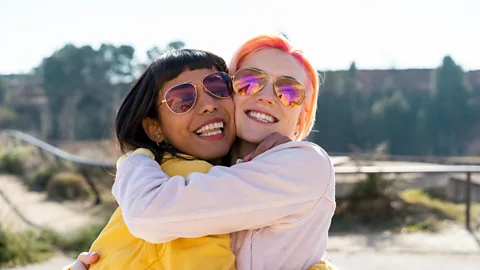
GettyFor people who identify as pansexual, gender doesn’t factor into the attraction equation.
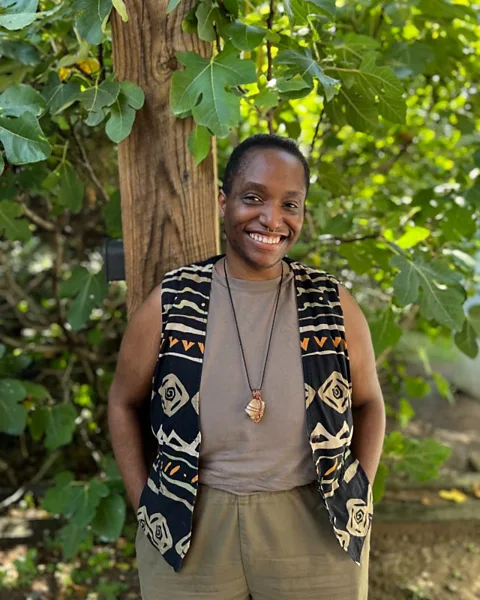
Mariel Eaves, 34, long knew they were attracted to “people of various genders”, but hadn’t thought too much about what that meant for their identity until about six years ago. Then, as a clinical social worker providing therapy for “trans and queer folk” in North Carolina, US, they began learning new terms for describing sexual orientations, like ‘pansexual’, that they hadn’t considered using before.
Around the same time, Eaves, who uses ‘they/them’ pronouns, was also realising that their gender identity was non-binary (in other words, not female or male). For them, that realisation went hand-in-hand with identifying as pansexual. “I feel like my gender changes, [and] because of that I’ve been able to think of more things as a spectrum,” they explain. “It allowed me to get out of the binaries that, in US culture, we’re kind of indoctrinated into.”
These days, instead of thinking much about their partners’ or potential partners’ genders, identifying as pansexual for Eaves means focusing on other aspects of their partners’ identities, like “their values, their demeanours, the way they treat me, whether we have shared interests or goals”, they say. “Gender is at the bottom of the list.”
Having emerged as a concept roughly a century ago to more broadly describe the role sexuality plays in people’s lives, the meaning of pansexuality has shifted significantly over the years. It’s surfaced more recently in popular culture, with celebrities like singer-songwriter Janelle Monae using it to describe their sexual orientations.
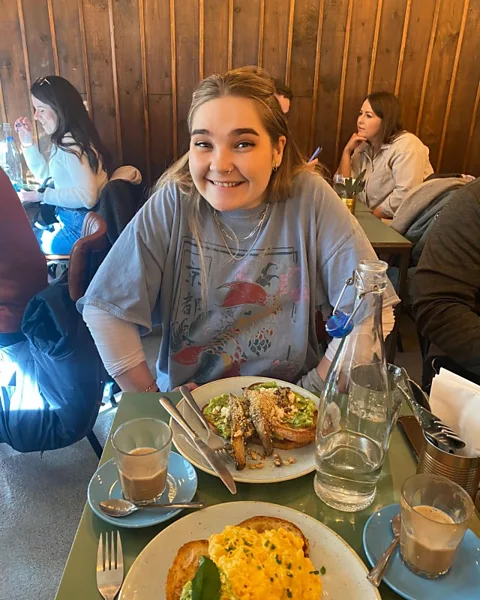
A volunteer and youth ambassador for the LGBTQ+ charity Just Like Us, based in London, Ella Deregowska, 23, sees pansexuality as “almost the most open term I can find with regards to explaining sexual attraction”, she says. “It is synonymous with the feeling of ‘I am attracted to humans because of who they are and nothing else’.”
Of course, not everyone who identifies as pansexual defines it in the same way, and some also use other words such as bisexual to describe their orientation in addition to pansexual. Overall, though, the term serves the purpose of removing the importance of gender from the attraction equation. Like with Eaves, it lets people put gender at the “bottom of the list” when it comes to what matters most about their romantic and sexual partners.
 Sondi Stachowski
The complicated history of pansexuality
While de-emphasising the role of gender in attraction and relationships lies at the core of pansexuality, there are some nuances to what it means for pansexual folks in practice.
Actor Dan Levy’s character, David Rose, in Canadian television series Schitt’s Creek, uses wine as an analogy to describe what pansexuality means to him. “I do drink red wine, but I also drink white wine, and I've been known to sample the occasional rosé, and a couple summers back I tried a merlot that used to be a chardonnay which got a bit complicated,” Levy’s character explains. “I like the wine and not the label, does that make sense?”
For Eaves, identifying as pansexual has “meant that not only do I not take gender identity too much into account when figuring out whether I’m attracted to or want to date someone, but should their gender identity change or they learn new things about themselves, that doesn’t change how I feel about people, either”.
In Deregowska’s view, pansexual just describes the way she experiences attraction better than other terms. “I have previously used other labels, such as bisexual or lesbian, but these felt too limiting,” she says. “For example, I may be attracted to a woman in one instance and then, in another, someone who is non-binary.”
However, about a century before people like Eaves and Deregowska began defining pansexuality this way, it had a very different connotation. Back then, it appeared in the Journal of Abnormal Psychology, where J Victor Haberman critically summarised psychoanalyst Sigmund Freud’s thinking about how sex motivated all human actions. Haberman defined Freud’s viewpoint with the word “pan-sexualism”: the idea that instincts related to sexuality play a central role in everything humans do. In other words, “pan-sexualism” didn’t describe a sexual orientation, but rather the outsized influence sexuality had on people’s lives.
It wasn’t until years later that this changed. Helping pave the way for a shift was the work of sex researcher Alfred Kinsey, around the 1940s. He suggested that sexuality existed on a spectrum, indicating that people could use labels beyond “heterosexual” or “homosexual” to describe their orientations, opening the door to additional terminology.
It was around the 1970s that people began publicly using the term “pansexual” more like how it’s used today. In 1974, for instance, American rock musician Alice Cooper said in an interview; “The prefix ‘pan’ means that you’re open to all kinds of sexual experiences, with all kinds of people. It means an end to restrictions; it means you could relate sexually to any human being.”
What does it mean to identify as pansexual today?
There’s not a vast amount of information about the demographics of people who currently identify as pansexual. “There are still not many papers written about [pansexuality],” says April Callis, the associate director of LGBTQ+ Initiatives at the Center for Student Diversity and Inclusion at Miami University in Ohio, US, who’s studied bisexuality and pansexuality.
In Callis’s experience, there’s always been “a real struggle to get research around even bisexuality seen and understood as something that was legitimate”. With all the other terms about sexuality newly coming into wider use, from demisexuality to pansexuality, “there just hasn't quite yet been that appetite to start exploring them”, she says, from a more formal research perspective. After all, these identities have only entered the mainstream discourse over the past few years.
In 2016, however, researchers in Sydney, Australia surveyed 2,220 people who didn’t identify as heterosexual; 146 of the participants identified as pansexual. The survey showed the participants who identified as pansexual skewed younger than those who identified as gay, lesbian or bisexual, and were also more likely to not identify as cisgender (someone whose gender identity corresponds with that assigned to them at birth).
That may be because older participants didn’t have the word “pansexual” as readily available to describe their orientations, suggests Callis. Older generations might have conflated bisexuality and pansexuality, since the latter term wasn’t commonly used when they were speaking about their identities. More recently, adds Callis, pansexuality has been used to differentiate from bisexuality, which implies a focus on gender when it comes to attraction. ‘Bi’ can refer to attraction to both binary genders, male and female, or it can be mean attraction to those who share someone’s gender and those who don’t.
To Richard Sprott, research director for the non-profit Alternative Sexualities Health Research Alliance in California, who’s written about the prevalence of pansexuality in kink and BDSM communities, pansexuality conveys more of a sense of stability than broader terms like "queer", because it communicates a more static attraction towards people regardless of their gender.
“There’s still a lot of flexibility in pansexuality, but at the same time, it’s not necessarily trying to communicate that things might change in a fluid way,” he says.
 Ella Deregowska
However, identifying as pansexual isn’t necessarily mutually exclusive to identifying with other sexual orientations. Eaves uses pansexual, bisexual and queer to describe themselves, and they consider all these terms to be fairly similar. The context often dictates which one they choose to use at a given moment.
“In a space that I know is predominantly other people in the LGBTQIA+ community, I will probably just say that I’m queer, because unless I’m trying to date someone specifically, it’s less important to know exactly how I have relationships than to know that I’m in the community,” they say. “Primarily I identify as pansexual, but I will use bisexual as an alternate definition for people who aren’t as familiar with pansexual, since it’s a newer term.”
Identifying with a “newer” term also comes with its challenges. Callis says misconceptions about pansexuality include people assuming those who identify as pan can’t be monogamous (since they’ll have sex with anybody!) and that they’re embracing a “fad identity”—in other words, describing themselves as pan because it’s in vogue to do so.
Eaves says they tend to come up against “run of the mill invalidation”, such as straight people asking them questions like, “If you’re dating a man, why do you identify as pansexual?” Because they are an educator, Eaves sometimes feels compelled to do more teaching than they’d like to in those scenarios. “I have difficulty figuring out where those boundaries should be, in terms of if I’m willing to educate someone in the moment or just want to be able to be who I am,” they say.
Deregowska, for one, is tired of hearing the same old joke repeatedly – the one where people learn she’s pansexual and say, “So you’re attracted to pans, then?” She says, “There can be some sensitivity when it comes to coming out to new people or sharing your labels, so responses in the form of jokes don’t sit well with me.”
Freedom from a gender binary
While identifying as pansexual comes down to a personal choice on an individual level, the term has wider societal implications.
“The idea that what people find attractive in other people might have nothing to do with their gender is still kind of a radical idea,” says Sprott. “Our current society, and frankly our current theories of sexual orientation, all assume that one of the most important things we’re attracted to is someone’s gender. Pansexuality is one of those ways in which that idea is challenged both in terms of science and society.”
Challenging that idea has led to more people speaking openly about pansexuality, which has given others the language to finally express how they experience attraction.
Though using the label ‘pan’ hasn’t changed who they’ve dated, it has changed how Eaves communicates with the people they date. In the past, when Eaves dated cis men, those men “maybe assumed I was straight”, they say, and would have felt threatened to learn that wasn’t the case. Now, Eaves tells people they’re dating that they’re pansexual upfront.
This straightforwardness has also been a boon for Eaves’s partners. Because Eaves doesn’t date people based on their gender, it gives the people they date more space to explore their own gender identities – they don’t feel pressure to remain static to fit into Eaves’s parameters of attraction. “It doesn’t feel threatening [for them],” says Eaves, “to consider their identity might not be what they defaulted to for a long time.”
Identifying as pansexual has removed a certain degree of stress from Deregowska’s experiences. As she puts it, “I can fluidly move and accept each attraction I feel without feeling like I need to reconsider my identity or label in order to explain it.”
