PLPs: The platonic partnerships that pair up friends for life

 Getty Images
Do all primary-partner relationships have to be romantic and sexual? People choosing platonic life partnerships say a resounding no.
Deena Lilygren, a mother in her 40s, has been living with her best friend Maggie Brown for years in Kentucky, US. During the time they’ve been co-habiting, Brown met her future husband. He moved in with the pair of best friends, proposed to Brown, they got married and eventually, all three of them bought a house together.
When he moved in with them – and again when he proposed – Brown told him she and Deena “were a package deal”, says Lilygren. “She wanted to be sure he didn’t have the expectation that so many people seem to have – that marriage is the time when you let go of your friends.”
Brown and Lilygren have a relationship that goes beyond most friendships. Lilygren considers them “platonic life partners”, meaning they are each other’s primary partners – the way people often relate to spouses or romantic partners, only romance and sex don’t factor into their relationship.
Barely uttered in the past, the phrase ‘platonic life partners’ has been popularised lately by two women in their 20s from Singapore, April Lee and Renee Wong. The pair discuss their platonic life partnership (PLP) on TikTok, where Lee has more than 51,000 followers. They cemented their friendship as a PLP when Wong moved from Singapore to Los Angeles to live with Lee in September 2021. As Lee put it in a piece about their partnership for Refinery29, they were not just best friends but “supportive financial partners”, helped each other reach their life goals more effectively and wanted to be together not just temporarily as roommates, but for the long haul.
The popularity of their story elicited a string of coverage on this type of committed friendship, including among men. But relationships like these aren’t wholesale new – in some cases, they have roots back to the 18th Century. While some of those were certainly queer relationships in disguise, it’s quite possible many were just like Lee and Wong – the term ‘PLP’ just wasn’t around to describe them.
For some who are currently in PLPs, like Lilygren, the phrase is an important way to not just define their living situations, but also stress the value of non-romantic partnerships. “As a culture, we really devalue friendship when compared to relationships like marriage – we're expected to have transient, secondary friendships that become marginalised when one friend gets married,” says Lilygren, “and there really isn't a word for a friend who is a partner in life.” ‘PLP’ fills that void.
 British Museum
‘Boston Marriages’
From colonial times up until about 1850, people entered life partnerships – marriages – for “pragmatic” reasons, says Eli Finkel, professor at Northwestern University, Illinois, US, and author of The All-Or-Nothing Marriage: How the Best Marriages Work. “The distinct functions of marriage during this era revolved around basic survival – literally things like food, clothing and shelter,” he says. For women – who were kept out of the workforce and unable to make a living independently – having a husband was key to getting by.
This changed for many in places like the US and Britain by the late 1800s, however. There, middle class women could attend college, paving the way for them to enter the workforce, explains US-based LGBTQ historian Lillian Faderman. Women no longer had to rely on husbands for income, and some chose to live with other women instead.
Around this time, the term ‘Boston Marriage’ popped up to describe “two women living together in a long-term, committed relationship”, says Faderman. (While she adds that no one knows for sure where the term came from, some suspect it could have originated with the 1866 Henry James novel The Bostonians, which featured a possibly romantic relationship between two women.) “Whether those were lesbian relationships or how many of those were lesbian relationships… we’ll never know,” she says, “because that sort of thing was not committed to paper – people didn’t talk openly about sex between women.”
Family Tree
This story is part of BBC's Family Tree series, which examines the issues and opportunities parents, children and families face today – and how they'll shape the world tomorrow. Coverage continues on BBC Future.
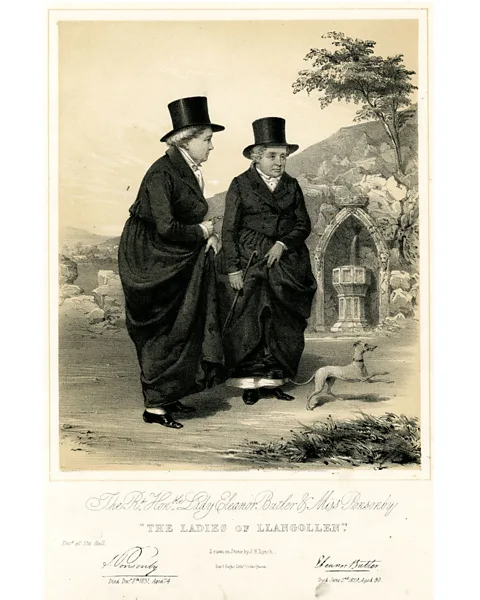
What was committed to paper were the musings of Eleanor Butler, half a couple known as the Ladies of Llangollen, two wealthy women who had the financial resources in the late 1700s to run away from their families in Ireland and live together in what was often referred to as a “romantic friendship”. Butler referred to her life partner and cohabitator, Sarah Ponsonby, as her “beloved”, and detailed their days together in her diary, but never mentioned a sexual relationship.
Although it remains impossible to know the true nature of these historical relationships, as historians suggest, such “romantic friendships” were common enough at the time that it’s quite possible some were non-sexual, serving as the precursors to the PLPs of today.
‘It feels inextricable’
From the mid-1800s up through the 1960s, Finkel says marriage had left the “pragmatic era” and landed in the “love-based era”, meaning people formed lifelong partnerships for love and intimacy, rather than survival. Industrialisation brought young people to cities, making them, “for the first time ever… geographically and economically independent of their families”, says Finkel. With this freedom came an emphasis on “emotional fulfilment” in lifetime matches.
The 1960s, he adds, brought another shift in what people largely looked for in life partners in the Western world. “Love and intimacy remain necessary, but they’re no longer sufficient,” he says. Marriages today also must “afford the ability for people to be authentic and pursue personal growth”.
In other words, marriages and life partnerships have evolved to a point at which many expect their significant other to be their everything, fulfilling multiple roles including sexual partner, cohabitator, co-parent, emotional support system and financial partner, among other things. That can be a lot to ask of one person, and “many relationships are buckling under the strain”, adds Finkel.
PLPs offer an alternative way to engage in long-term relationships. A platonic partner isn’t expected to fulfil sexual and romantic needs, and those with a PLP don’t see their romantic partners as their primary emotional support system. Some merge finances with their PLP, as many might expect from a married couple, and others don’t, or do partially. Lilygren and Brown don't have joint checking accounts, says Lilygren, “but at this point, we've all gone in together on so many items for the house, including furniture, that it feels inextricable”.
Overall, entering a PLP has a lot in common with entering a marriage. Some even do get married, in part for the legal rights that come with the arrangement (like ensuring their partners will be considered their ‘next of kin’), or to show their commitment to each other to family members and friends who may not otherwise understand. The practical discussions about how to share a life still apply, along with added negotiations about how to incorporate each member’s romantic partners into the relationship and/or living arrangement.
 Getty Images
People who aren’t familiar with PLPs often struggle with the idea two people can share such deep intimacy and not have a sexual relationship. It took Florida-based Jay and Krystle, who talked about their PLP to The Cut, going viral on TikTok about their relationship for their family and friends to finally grasp that they were totally platonic, in spite of their marriage. For Lilygren, writing about her relationship with Brown is what ultimately helped explain the trio’s arrangement to Brown and her husband’s families.
“They started taking us more seriously as a family unit, which is beautiful,” says Lilygren. But the article also received some backlash. “There were a lot of negative comments online because people cannot imagine that our situation isn't sexual, which is too bad.”
These days, while stigma against those who identify as LGBTQ+ hasn’t been eradicated, and some queer couples haven’t come out or don’t publicly identify that way, it's less likely that people living with platonic partners are doing so to conceal romance. Increased acceptance of queer sexual orientations has made it easier for many people to be in openly queer relationships. Instead, as more young people talk publicly about their decisions to enter PLPs, they’re spreading the word that it’s an option for lifelong partnership. Lilygren wrote openly about dating women in her HuffPost article, and her PLP is married to a man. They plan to stay platonically devoted for the long run.
“I definitely don't see a time ever living apart from Maggie,” says Lilygren. “I've been seeing someone for two years now, and while I'm committed to our relationship, my living arrangement makes me happy, and I don't want to do anything to disrupt it.”
