The many faces of Vietnam

 Réhahn
For the last eight years, travel photographer Réhahn has been working on an ambitious project to photograph members from all 54 of Vietnam’s recognised ethnic groups.
 Réhahn
“I started thinking deeply about the word ‘heritage’ after I became a father,” said travel photographer Réhahn. “Like all parents, I asked myself what my children would learn from me, what I could pass down to them.”
Originally from Bayeux in Normandy, France, Réhahn has been living in the Vietnamese city of Hoi An since 2011. For the last eight years, he’s been working on Precious Heritage, an ambitious project to photograph members from all 54 of Vietnam’s recognised ethnic groups.
“In the midst of my self-questioning when I became a father, I was voyaging throughout Vietnam as a travel portrait photographer,” Réhahn explained. “I met people from different cultures who expressed regrets that their children were no longer learning their ancestral languages or handicrafts. The more I discovered about these tribal groups, the more I realised how fleeting heritage can be. Unwritten languages cannot survive if no-one speaks them. Songs that are not sung are eventually forgotten. I realised how important it is to try to keep some of this precious heritage alive.”
 Réhahn
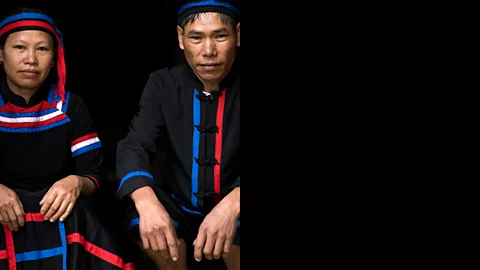
Réhahn hopes to meet and photograph members of the final ethnic group, the Chut, this summer. But Vietnam’s ethnic groups go beyond the 54 currently officially registered by the government. On a recent expedition to Tuyen Quang province in North Vietnam to visit the Pà Thẻn ethnic group, Réhahn met members of the Thuy (pictured), an unregistered group in Vietnam that’s yet to be officially recognised.
“The Precious Heritage project will never really be over,” Réhahn said. “Yes, I’ll soon finish my initial goal of documenting the 54 registered ethnic groups, but there are many other subgroups not included in that list. And over the course of my travels, I’ve gained new friends and adopted family. I won’t stop seeing them simply because I’ve met my starting goal. I’ll continue to update their portraits, collect artefacts and costumes, and maintain my relationships and commitments to the people I’ve had the honour to meet over the last eight years.
“Before coming to Vietnam, I couldn’t imagine a country where so many languages, traditions and separate cultural identities could exist side by side. I’m not an ethnologist, so I can’t comment on the complicated relationships that exist within different countries. But, personally, I do believe that there’s much to be learned from the indigenous groups around the world, and that these rich and ancient cultures certainly deserve respect or, at the very least, to be allowed to live peacefully in their own way.”
Here, Réhahn presents a few of his favourite images from the Precious Heritage project, along with his memories of meeting and photographing the members of Vietnam’s ethnic groups.
 Réhahn
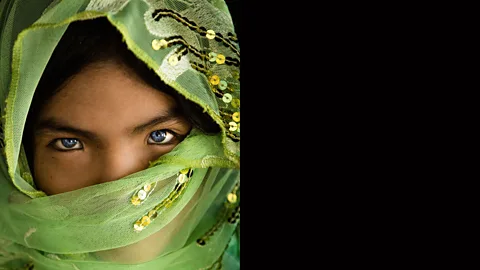
“When I first met An Phuoc, she was only seven years old. A small Chăm girl with intriguing blue eyes, she has become one of the most recognisable faces in Vietnam over the last few years because of my photographs.
An Phuoc’s ethnic group resides in and around southern Vietnam’s Binh Thuan province, which was formerly known as the Kingdom of Champa. The Chăm are the indigenous group that have always lived in this portion of Vietnam. This photo is especially personal to me because it was part of the impetus for my Giving Back project, where I always try to give something back to the people I photograph. I’ve helped to fund the education for several children I’ve photographed, and have bought boats, cows and cameras for my subjects, or helped with medical bills or home repairs. I believe it’s important to give something back to the people I photograph.
I’ve returned numerous times to visit with An Phuoc, her sister and her family. I now fund the education for both sisters so that they can have all the life opportunities that they deserve.”
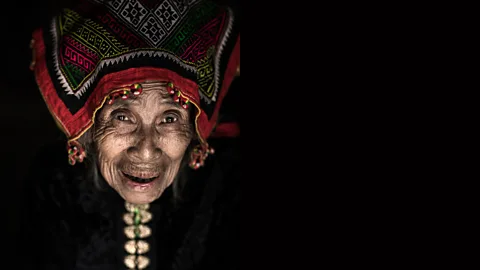 Réhahn
“Madame Vi Thi Inh from the Xinh-Mun tribe in northern Vietnam was born in 1916, and at 103 years old she was busy cooking for herself and her grandson when I arrived.
When she saw me, she said ‘Vao trong nha’ (‘Come in’) right away, and seemed to take meeting a foreigner in stride. I loved this picturesque and authentic village tucked into the dense jungle on the border of Laos.”
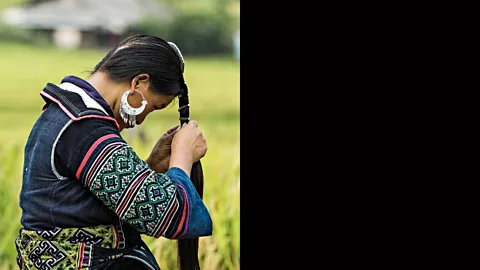 Réhahn
“I’ve been to northern Vietnam to visit the H’Mông in the hills around Sapa at least 10 times since 2012.
The H’Mông have numerous subgroups, such as the Black H’Mông, the tribe that the woman in this photo, Lồ Thị Si, is from. Yet the thing that links all of them is their incredible textile skills. H'Mông girls learn to make their costumes from the age of seven. Each one is made from hemp, then dyed with indigo, before undergoing hours of custom embroidery.”
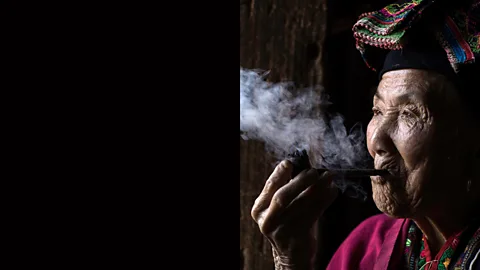 Réhahn
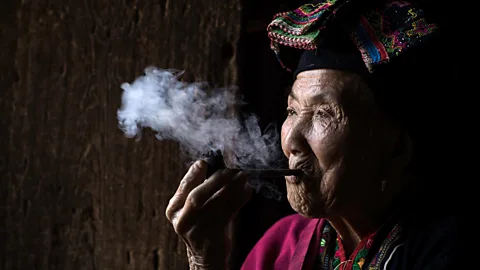
“Madame Lo Thi Banh, who is 95 years old, was one of my favourite models, laughing at the novelty of being photographed as she smoked. Like other women of her generation, she wore small, silver earrings to stretch her ears.
The Lao tribe originates from Laos and continues to speak a form of Laotian. However, much of their culture and costumes have changed over the years. The village that I photographed (Na Sang 1) was one of the last where costumes are still made in the traditional Lao fashion.”
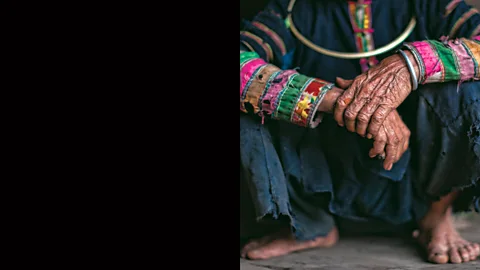 Réhahn
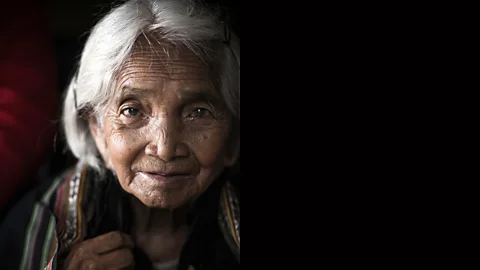
“My first visit with the Black Lȏ Lȏ ethnic group back in 2013, led me to Bao Lac in northern Vietnam’s Cao Bang province. There, I saw many women wearing traditional costumes. Two years later, it was already obvious that fewer people there were wearing them.
I took this photo of Ka Thị Nhánh, who is 75 years old, in her tattered and worn, but still beautiful, traditional dress, to represent the fact that the old traditions are being left behind and forgotten.”
 Réhahn
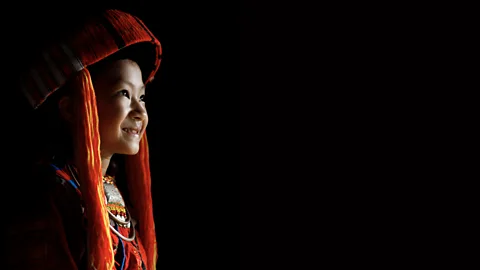
“I was intrigued to learn that Pà Thẻn children are required to wear their traditional costumes to school every Monday as a way of keeping their cultural traditions alive in the northern Vietnamese province of Tuyen Quang.
Far from being a chore, Xin Thi Huong, the eight-year-old girl in this photograph, was delighted to dress up in her outfit. Compared to what I had seen before, the Pà Thẻn village of Nà Nghè has a vibrant living culture, probably because the children wear their costumes regularly. I think this makes a real difference in preserving this part of their heritage.”
 Réhahn
“The Co-Ho, or K’Ho as they’re known, originate from the Lam Dong province in Vietnam’s Central Highlands. This photograph is of a woman named K’Long K’Ê. She’s 101 years old and the regal matriarch of 11 children and 165 grandchildren and great-grandchildren. She was a living link between the past and the future of the Co Ho people.
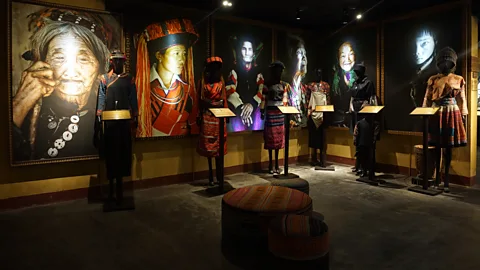
When she passed away, her family gave me her handcrafted blanket so that it would be preserved in my Precious Heritage Museum in Hoi An alongside her portrait.”
 Réhahn
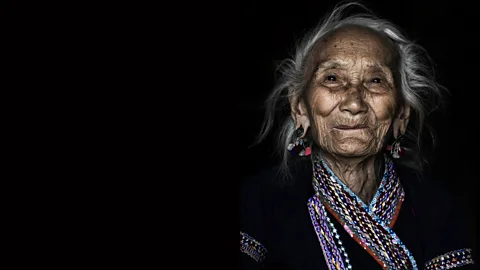
“Lò Vân Báu from the Lự ethnic group in the Lai Chau area in the far north of Vietnam was surprised when I asked to photograph her. ‘Why didn't you come when I was still young and beautiful?’ she asked me. These words are part of what inspired me to start my Ageless Beauty series of photographs, focusing on older people in Vietnam, because the beauty that was so invisible to her is so utterly obvious to me.
Her village, called Nậm Tăm, helps to maintain its cultural identity through ecotourism, and remains one of the most peaceful and best-preserved villages of all those I have visited.”
 Réhahn
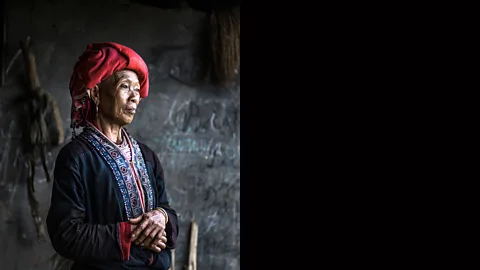
“I particularly love this photo of Ly Lo May from the Red Dao ethnic group. She has an enviable dignity, which is highlighted by her elaborate costume.
Meeting the Dao and seeing their rich textile traditions was part of what inspired me to start the Precious Heritage Project. I will continue to explore the nine local subgroups that make up the Dao ethnic group in the far north of Vietnam to add their stories to the museum in Hoi An.”
 Réhahn
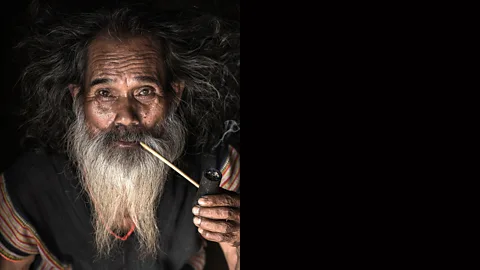
“A Dip is 76 years old and lives around 50km from Kon Tum in the Central Highland mountains of Vietnam. He belongs to the To Dra ethnic group, which is a subgroup of the Xơ-đăng ethnic group.
A Dip is one of my most beautiful encounters of the last two years. When I last visited him in 2018, I discovered his many talents: he’s the only artisan in the village who still makes traditional bamboo baskets and the last one to play the traditional instruments of the To Dra people.”
 Réhahn
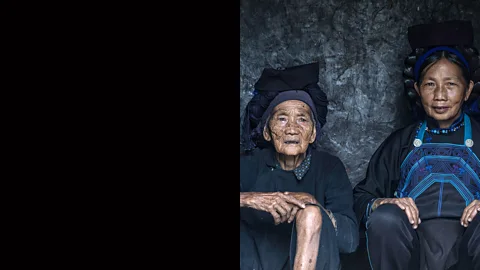
“I met 89-year-old Pu Lo Ma and her 60-year-old daughter from the Black Hà Nhì ethnic group while travelling through the Lai Chau and Lao Cai provinces in 2017. I was impressed by the intricacy of the Black Ha Nhi costumes, which can take up to six months to make, including the stunning large braids that they make out of real human hair.”
Réhahn’s books include Vietnam: Mosaic of Contrasts (Vol 1 and 2) and The Collection: 10 years of photography. Follow him on Instagram.
