Madfouna: Morocco’s surprising take on pizza

 Chris Griffiths
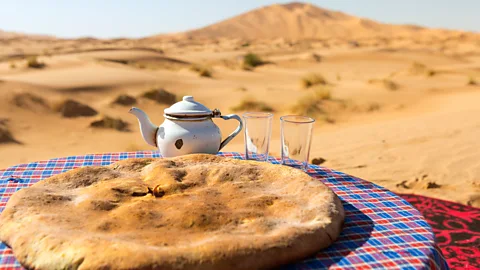
Traditionally baked in the sands of the Sahara, Moroccan madfouna is locally joked as being the Berber take on pizza and is sliced into pieces to be shared among many.
 Chris Griffiths
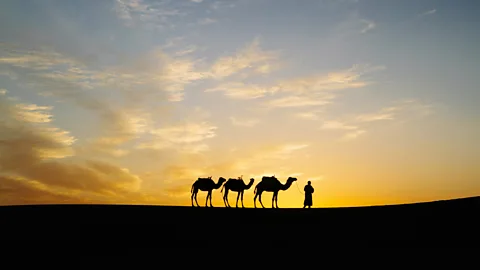
The Saharan regions of Morocco are home to ancient culinary practices that provide the means for the Amazigh (as known as Berbers), an ethnic group indigenous to North Africa, to survive in otherwise inhospitable environments. The quality of food lends itself not to the sophistication of modern machinery, but to the skill and determination of the people.
 Chris Griffiths
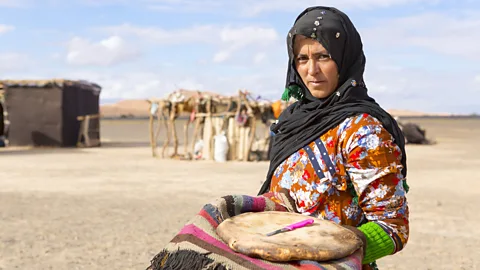
Madfouna – a stuffed flatbread prepared using a handful of staple ingredients – is traditionally baked in a fire pit in the sand or a mud oven, and has long served as a wholesome meal for many families who live on the fringes of the Erg Chebbi dunes near the Algerian border. Once baked, the bread so closely resembles a pizza that it is locally nicknamed ‘the Berber pizza’.
 Chris Griffiths
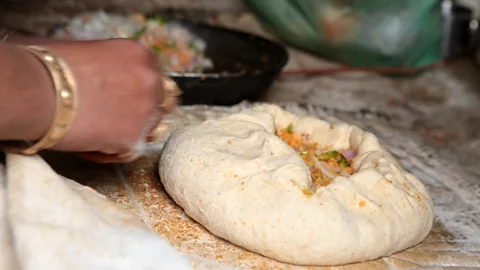
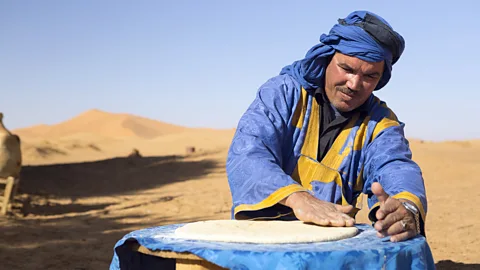
Using an ancient Saharan bread recipe incorporating flour, yeast, salt, olive oil and water, the dough is kneaded to an elastic consistency and then rolled into to a round shape before being stretched over fillings – including beef, eggs, nuts, onions and garlic, and herbs and spices such as cumin, paprika, turmeric, ginger and parsley – and pinched closed.
 Chris Griffiths
With limited resources in the Sahara’s arid terrains, food needs to be easy to prepare. When an oven is not available, people use more rustic methods for cooking the stuffed bread by working with the elements available, such as fire.
 Chris Griffiths
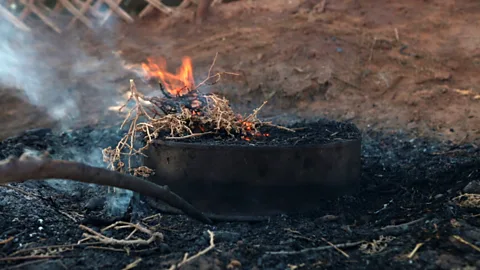
The people dig a hole in the sand and then light a small fire to heat stones placed at the base. Madfouna dough is added directly on top of the hot stones and covered with a metal tin or with the sand itself.
 Chris Griffiths
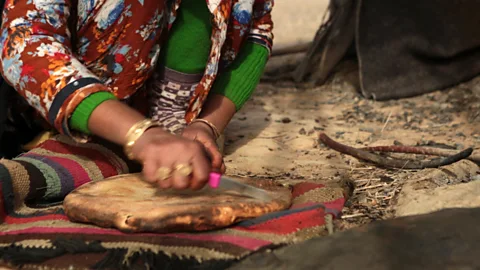
A charred-black crust forms where the bread has directly touched the open flames and hot stones, and must be beaten off with a cloth and scraped away with a knife before eating.
 Chris Griffiths
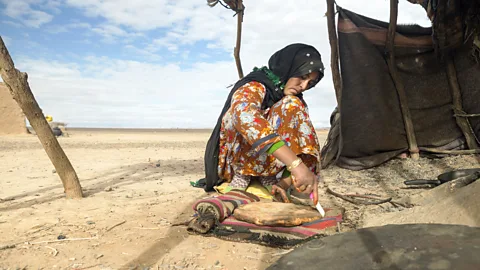
Finally, the madfouna is sliced into pieces to be shared among many.
 Chris Griffiths
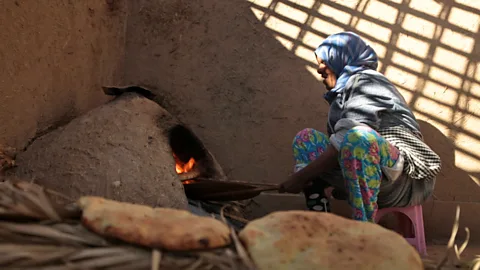
Although the recipe stems from ancient cooking techniques, not all madfouna is prepared in a fire pit. The traditional practice of cooking in a mud oven remains common for many families living in small towns dotted across the Sahara. Their rammed-earth homes often allocate a well-ventilated room or an outdoor space for preparing food with this method.
 Chris Griffiths
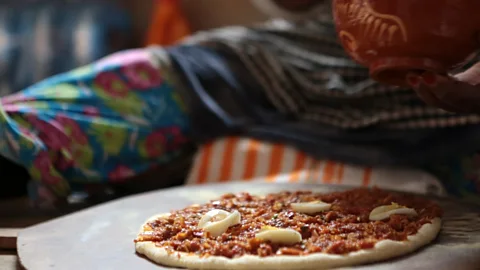
Every family has their own version of madfouna. Some use more basic ingredients such as eggs, tomatoes and sunflower or poppy seeds, while others add almonds, cashews, olives, lamb, chicken, minced beef or slices of cooked steak. The options are virtually endless.
 Chris Griffiths
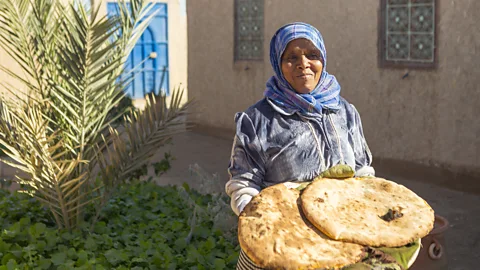
Whichever ingredients make up the filling, one thing is agreed upon across the region: the authentic methods of cooking madfouna in desert sands or using a mud oven undoubtedly leads to the most delicious version, complete with an unrivalled smoky taste that cannot be replicated by a modern, conventional oven.
 Chris Griffiths
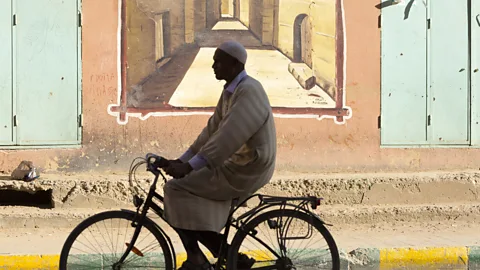
Today, madfouna can mostly be found in small Berber pizza takeaway joints in Rissani, a sleepy Saharan town famed for the dish. Adjacent to the crumbling ruins of Sijilmasa, a medieval Saharan city that served as a trading stronghold along the caravan routes transporting goods to sub-Saharan Africa, the modern-day town humbly stands as a gateway to the dunes.
 Chris Griffiths
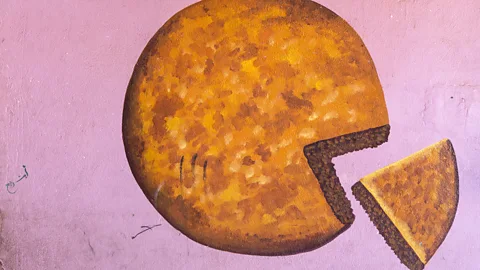
In Rissani, a slightly faster pace of life than in the desert leads to a greater demand for fast food. Tucked within the narrow streets of the market and conveniently placed near the taxi stands lie small ‘hole in the wall’ takeaway joints with ‘pizza’ symbols to mark where you can order a takeaway madfouna, the primary dish on the menu.
 Chris Griffiths
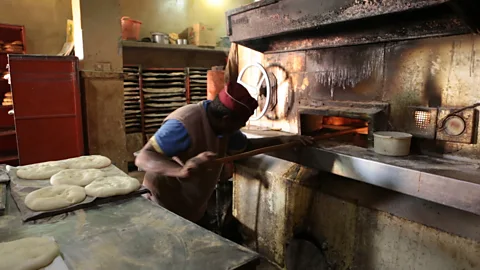
It’s not uncommon for these eateries to get so busy that people queue for more than an hour as the chefs rotate their orders in the large fire ovens, which are also used to bake fresh bread and slow roast lamb, beef and whole chickens.
 Chris Griffiths
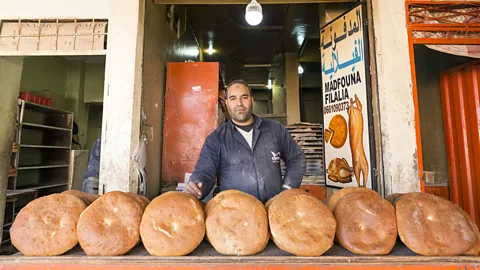
Each madfouna is so particular to each individual’s tastes that locals often bring their own fillings – sourced from trusted butchers or prepared at home by family members – which they ask the chefs to bake into their orders.
 Chris Griffiths
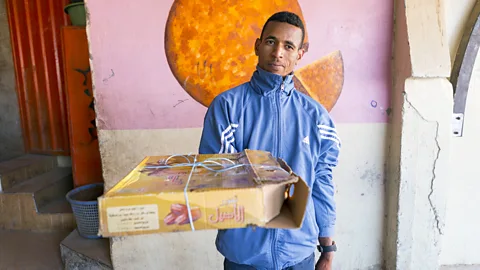
The hole-in-the-wall eateries so closely resemble fast food pizza takeaways that the freshly baked Berber-style flatbreads are even served to go in a cardboard box.
 Chris Griffiths
It’s the perfect shareable food to grab before heading on a journey through the Moroccan Sahara.
