The barely visited US national park that requires a passport

 Alamy
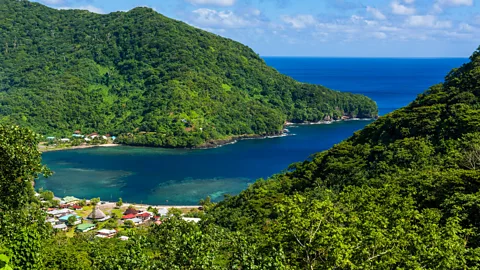
AlamyWith the astronomical growth in US national park visitation in the last few years, the National Park of American Samoa is a literal breath of fresh air.
After 15 hours of flying, I finally reached my destination. I'd started my journey in Boulder, Colorado, and three flights later, I had somehow still landed in a US territory – albeit one thousands of miles from any other, and closer to Australia than the mainland US.
Landing on the small island of Tutuila in American Samoa, the only inhabited US territory south of the equator that covers seven South Pacific islands and atolls, I walked down the airstairs onto the tarmac. The warm island air immediately welcomed me to a place I couldn't have found on a map until recently.
Despite being a US citizen travelling from the mainland to a US territory, I was still herded through passport control and customs: here, all travellers must go through immigration and present their passports – unique from other US territories where US citizens can travel without them.
As I looked around, it felt as if I was in middle of a family reunion rather than an airport. Everyone seemed to know or be related to everyone else, with the few visitors from outside the islands, me included, standing out.
With just two flights in and out of the island per week – Monday and Thursday – at an average cost of around $1,000 to travel the 2,600 miles from Honolulu, the trip isn't often taken casually. In fact, most travellers who venture here come for a specific reason, as I had: to explore one of the most remote and least visited national parks in the US: the National Park of American Samoa.
I've spent nearly the last decade travelling alone to the major US national parks, intending to visit all 63 entirely independently. While some explorers aspire to visit every country in the world, a small – but growing – group of intrepid travellers aim to see all the officially designated US national parks. Due to its remoteness and cost to reach, the National Park of American Samoa is generally one of, if not the last, park visited on the quest to explore all 63.
 Alamy
AlamyFive unmissable experiences
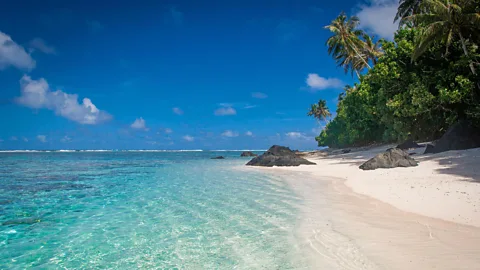
• Pola Island Trail: Perfect for an accessible dose of nature, this easy 1km out-and-back trail culminates at a scenic beach where you admire stunning views of Pola Island, one of the primary sanctuaries for nesting seabirds on Tutuila.
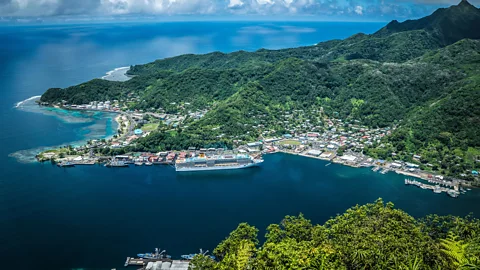
• Mount 'Alava Trail: This 7.3-mile round-trip on Tutuila Island takes you up a ridgeline through the rainforest and offers panoramic views of Pago Pago Harbor. At 491m, Mount 'Alava is the island's highest peak.
• Tuafanua Trail: This short but challenging 1.2-mile out-and-back trek on Tutuila Island leads you through dense rainforest, with a chance to spot colourful birds and hermit crabs. Hikers are rewarded with coastline views and a secluded beach after tackling steep switchbacks and sections with ladders.
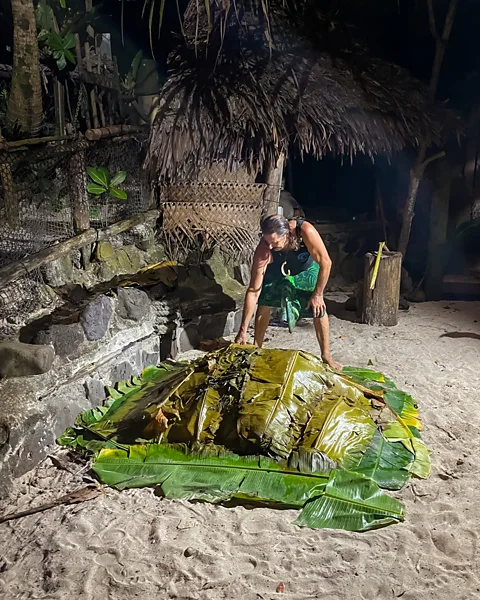
• Tisa's Barefoot Bar Samoan Feast: At this weekly experience, starting at 19:00 every Wednesday, witness the preparation of a traditional Umu feast, a Samoan style of cooking in a hot, aboveground stone oven, then gather around a communal table to connect with fellow travellers and learn about Fa'asamoa, the Samoan way of life.
• Snorkel on Ofu Island: Teeming with life, the coral reefs surrounding Ofu Island offer a kaleidoscope of colour and the best snorkelling in American Samoa just a short boat ride from shore.
This journey was my 59th solo park visit, and to say I was intimidated was a gross understatement. During my trip planning, I'd found little up-to-date logistical information. Still, I was comforted by the oft-mentioned "Fa'asamoa", or the Samoan Way, which distinguishes the island's accepting nature. Part of Polynesia's oldest culture, the Samoan Way is the set of traditional family and community values woven throughout the island's customs and traditions.
I felt that strong sense of community instantly when stepping outside the terminal into the thick and fragrant air. From families embracing, smiling strangers offering to help me with my luggage and the many friendly offers for a lift to my hotel, I immediately felt comfortable as a solo female traveller.
"For everybody who lands on the island, the first thing you see is the airport swarmed [with people] welcoming their families home," said Tisa Fa'amuli, the owner of the famous Tisa's Barefoot Bar in Eastern Tutuila and founder of Alega Marine Sanctuary, where she has led efforts to restore the local coral reefs and maintain the protected marine area. "A lot of people find that very touching. You know, to think the whole family comes to the airport. It's a big event to receive our family coming home."
It was dark when I arrived, and I could only imagine the crystal blue waters, lush verdant rainforests and steep volcanic mountains that would greet me at sunrise. So, early the next morning, I eagerly set out for the national park that covers 13,500 acres of land and sea across three islands: Tutuila, Ta'ū and Ofu.
I rented a car from my hotel – one of just three on the island – driving through several small settlements to the coastal village of Vatia to hike the stunning Pola Island Trail, a popular entry point to the national park for most visitors who arrive and stay on Tutuila.
The 1km hike is one of the shortest you’ll find in this – or any other – national park, but the payoff is indescribable. I was immediately struck by the sense of peace and almost eerie quiet as I hiked along the lush, often steep and muddy forest trail – each step a walking meditation more than a hike – eventually finding myself under a canopy of banyan trees softly swaying in the breeze. I finally made my way to the star of the show: the dramatic coastline I’d only seen in guidebooks, witha view of Pola Island in the distance, a dramatic jungle-draped rock rising sharply out of the sea.
 Emily Hart
I'd expected to find other hikers at the secluded beach at the trail’s end, but I was alone, with just the dramatic crashing of waves on the rocky shore to greet me. I sat down on a smooth rock and stared out water, finding a peace that I hadn’t felt on my visits to other US national parks.
Fa'amuli wasn't surprised by my near-spiritual experience, later noting that many visitors to the national park feel the same wonder that I did. "Right now, they need to come to American Samoa. Why? Because it's peaceful. It's a place where they feel they can go and sit and be peaceful, and it's really hard to do in the busy world," she said.
I’m no stranger to the crowds that can often come with natural wonders, specifically national parks. Over the past several years, the steep growth in park visitation in the United States has frequently meant battling traffic jams, securing reservation tickets and timed entry permits, endless parking searches and full campgrounds. But here I found a stark contrast – and it wasn’t just my luck or imagination. Since its establishment in 1988, National Park of American Samoa has remained one of the least visited parks in the system, seeing just 12,135 visitors in 2023, according to National Park Service visitation statistics for its 400+ sites, with many of those cruise travellers who were driven through portions of the park on day excursions.
In fact, the only national park with fewer visitors is Gates of the Arctic, a remote national park in the Alaskan wilderness with no roads, trails or campsites that had 11,045 recreational visits in 2023. To put these numbers into context, the Great Smoky Mountains National Park that straddles the border of Tennessee and North Carolina – the most visited on the list – saw a jaw-dropping 13.29 million visitors last year.
 Alamy
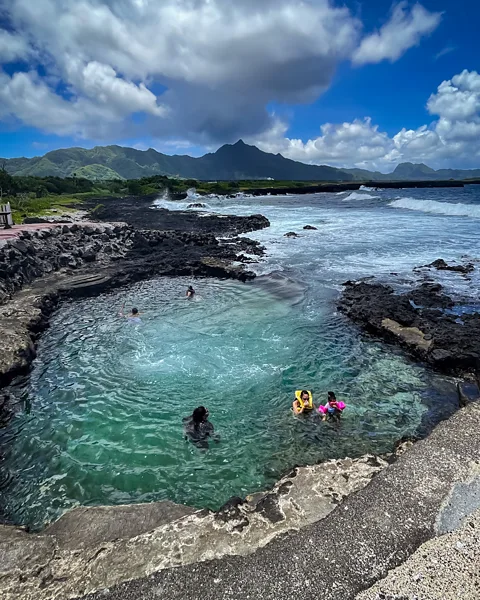
AlamyHowever, while few travellers make it here, this under-the-radar national park is endlessly fascinating, whether you're hiking through tropical rainforest or snorkelling in the 4,000 acres of the park that are underwater. I didn't find the traditional national park visitor services; there's just one small visitor centre on Tutuila but no other established entrance gates, campgrounds or structures. Yet each view was just as striking as the last, from the view of Pago Pago Harbor from the summit of Mount 'Alava Trail to the isolated stretch of lava-rock beach at the end of Tuafanua Trail.
However, although hiking and beach walking are magnificent here, it's the history and culture that truly set the park apart.
More like this:
American Samoans are proud of the national park status, which is unique in that it was designated with a land ownership agreement, where in 1993, the government entered into a land lease (rather than outright ownership) with Samoan villages. This has worked to safeguard American Samoans' communal traditions and ownership of their land while providing resources for protecting the vibrant ecosystem of tropical rainforests, coral reefs and wildlife – like the Samoan flying fox (fruit bat).
And it's not just the park that safeguards tradition. With more than 90% of the land in American Samoa communally owned by aiga (families) and controlled by chiefs (with the remaining freehold land restricted to those who are at least one-half Samoan), the island maintains a strong cultural identity. This unique heritage can be seen in Sa, the village-wide daily prayer time, to the widespread donning of traditional lavalavas (sarongs), to the near complete shutdown of the islands each Sunday for religious services and family time.
Unlike other unincorporated US territories, such as Puerto Rico or the US Virgin Islands, American Samoa exists as a land of "US nationals" rather than "US citizens". Residents are US passport holders who can travel freely throughout the US, but this differentiation allows the territory to maintain its cultural identity in part by restricting land ownership (there is no current concern of the islands "becoming the next Hawaii") and controlling their own borders and immigration.
 Emily Hart
That is not to say that the island is leery of outsiders. Fa'amuli notes that the "people of this island are so happy to receive visitors", something that she is well versed in as the only eco-tourism operator on Tutuila.
During my visit, I also tackled the challenging ascent of 1,700ft Mount 'Alava and marvelled at the archaeological site of an ancient star mound at the end of Lower Sauma Ridge Trail. With more time, I'd get out onto the water, renting a kayak in Pago Pago to view the park from a different vantage point.
Due to communal land ownership, public beach access is nearly non-existent, with local customs requiring any visitor to ask permission from the villagers before accessing most of the shoreline. Still, the National Park Service notes that "permission will almost certainly be granted" – and I found this same kindness in every interaction.
It's often said that the journey is the destination, but I experienced something different at the National Park of American Samoa. Here, the destination is truly the event – and the difficult journey to reach it only works to keep it that way.
Slowcomotion is a BBC Travel series that celebrates slow, self-propelled travel and invites readers to get outside and reconnect with the world in a safe and sustainable way.
--
For the best of BBC.com in your inbox every Friday, sign up to The Essential List newsletter for a handpicked selection of features, videos and can't-miss news.
