Tasseography: The Turkish tradition that's 'as big as Tinder'

 Alamy
AlamyThe Turkish art of telling fortunes from coffee grounds can be traced back at least 500 years – and is newly beloved by the country's Gen Z-ers.
Every day, millions of people rely on a caffeine kick to drag them out of bed in the morning, increase their concentration at work or boost their energy levels.
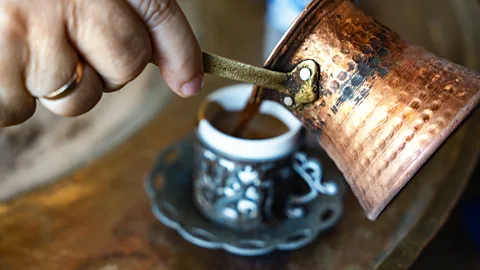
Although it's widely believed that coffee beans were first cultivated in the highlands of Ethiopia, it was thanks to the Ottoman Empire that the earliest method for brewing coffee was popularised. Brought by a 16th-Century governor from Yemen to Sultan Suleiman's palace in Istanbul, then called Constantinople, cherry-like coffee beans were roasted, ground and added to water. This mixture was boiled with sugar in a copper pot, known as a cezve, over a hot sand fire.
The very first coffee house in history opened in Istanbul in 1554, and by the first half of the 17th Century approximately 600 coffeehouses had sprung up across the city. It was then that coffee culture, as we know it, was born.
But this was no Starbucks, says Gizem Salcigil White, who has been working for more than a decade to introduce Turkey's unique customs and reverence for coffee to the United States through her business, the Turkish Coffee Lady.
"Turkish coffee is not a to-go kind of coffee," she said. "It's where you savour the moment. It symbolises hospitality, friendship and it brings people together."
 Getty Images
Steeped in tradition, Turkish coffee was inscribed in Unesco's Intangible Cultural Heritage List in 2013. Here, coffee is a mainstay at social occasions, playing a part in engagement ceremonies, family gatherings and holidays. However, one of the most confounding rituals is kahve fali, or fal, the ancient art of reading fortunes from coffee grounds.
The tradition can be traced back to Sultan Suleiman's harem, as the women were excluded from public coffee houses. Instead, falcı, or fortune tellers, were permitted into the harem to read the patterns lingering in their coffee grounds. In other cultures, divination was practised with tea leaves or wine sediments, but in Istanbul coffee grounds quickly became the preferred communication tool. The ritual was a way of trading news and gossip, including which wives were favoured by the Sultan, explained Salcigil White.
More than 500 years later, tasseography (the practice of fortune telling from coffee grounds or tea leaves) is still going strong in Turkey. Fortune tellers offer spiritual guidance from some traditional coffee houses, butfalhas also evolved for modern audiences. Millions of Turks now subscribe to apps offering AI-generated coffee readings or that connect them with virtual fortune tellers.
A shortcut to conversation
On a recent trip to Istanbul with my mother, I visited one of the city's traditional coffee houses in search of a glimpse into the future and a morning pick-me-up.
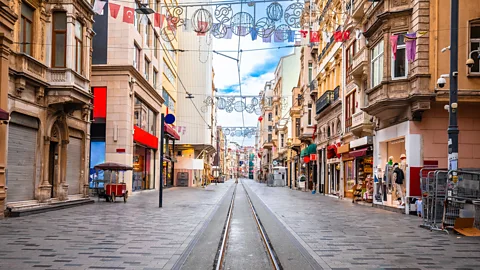
Most visitors seeking fortune tellers head to the bright lights of İstiklal Avenue, where neon signs display tarot cards and archangels, and clairvoyants with winged eyeliner and velvet shawls wait in shadowy rooms.
 Getty Images
Instead, I'd arranged to meet Roza Mutlu, who reads visitor's fortunes while demystifying the intricate rules and rituals surrounding Turkish coffee. Dressed down in jeans and a hoodie, she led my mother and I to a classic cafe in Beyoğlu where other customers were enjoying breakfast, catching up on work and socialising with friends.
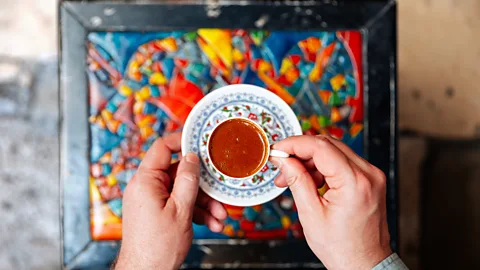
She ordered several simple cups of coffee, which had no latte art or fancy syrups, but were brimming with symbolism. Coffee reading is matriarchal, typically passed down from grandmothers to mothers, she said, and Mutlu became popular at high school when she discovered her knack for interpreting the future.
A waiter brought over our coffees and Mutlu immediately passed the foamiest cup to the eldest at the table, my mother, as a gesture of respect. We sipped our coffees, smiling despite the intense, bitter taste, until just the muddy sediment was left.
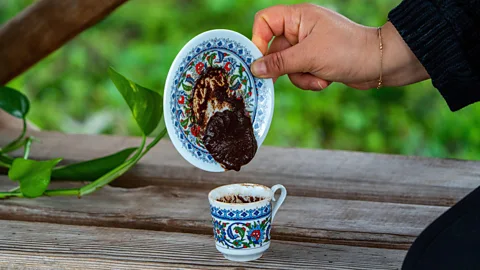
Then we made a wish, swirled the cup three times, and placed it face down on the saucer for five minutes so the grounds could settle. We placed a ring or coin on top of the cup, depending on whether we wanted to focus on relationships or business. Finally, we repeated the phrase neyse halim çiksin falim ("whatever I am, let it be in my cup") and lifted the cup to reveal the saucer.
 Getty Images
I sighed with relief that my grounds hadn't formed a lump, which Mutlu warned is the mark of the evil eye. But sadly, my cup didn't stick to the saucer, which is the lucky prophet's cup, a sign that all your wishes will come true.
With her finger, Mutlu traced one side of the cup to indicate the past and the other side, the future. She ran through a glossary of patterns and shapes, trying to decode animals, numbers, icons and letters. A bird, for example, is an omen of good news, a horse a prince or princess, a fish is good luck and a snake an enemy.
Readings, she told us, are not just about symbols, but the shading, sizes of shapes and, vitally, the energy of the coffee drinker.
"We don't exaggerate our readings, but they help guide us," said Mutlu. In other words, people should not take prophecies of divorces, pregnancies or career changes as gospel, although Mutlu says many of her visitors have contacted her afterwards to confirm the uncanniness of her readings.
Fal is also a way to forge deeper and faster connections, she said. For instance, when Mutlu reconnects with close friends after several years, she says she can sidestep the small talk, getting straight to matters of the heart. "I have closer relationships thanks to these coffee grounds. We can talk about everything, from our fathers to our worries. It's a shortcut in conversation."
 Getty Images
I, too, found that I was suddenly opening up about my troubles and tensions, my life experiences and aspirations for the future.
Virtual fortune tellers
Boldened, perhaps, by Turkish coffee as a talking point, I turned to a stranger in a cafe later that day and asked if she has her fortunes read. Yonca Oğuz, in her early 20s, confirmed the ritual is still very popular among Turkish women. "When one of our friends is having a crisis, we get together and we find a falcı," she said.
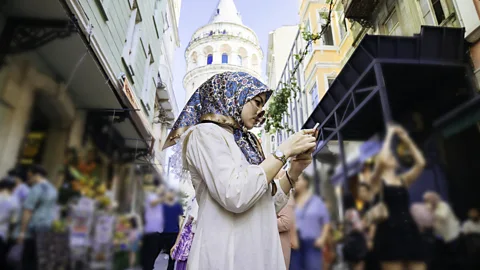
However, for her generation, this is also shifting to virtual readings.
In 2017, Faladdin – a play on "fal" and "Aladdin" – was created by model and influencer Sertac Tasdelen, who grew up with a mother who could read coffee fortunes. In 2010, his friends began sending photographs of their drained coffee cups to his mother, who would respond with fortunes via email. Eventually, this evolved into the app, which automatically generates coffee cup fortunes. Now, Faladdin has more than five million active users worldwide and is as big in Turkey as Tinder, said Oğuz.
More like this:
In the US, clairvoyance is also booming among Gen Z-ers, with astrology apps such as Co-Star pinging users with daily horoscopes. A 2021 study found that younger Americans are doubling down on divination practices, with 51% of its sample population, aged 13-25, engaging in "tarot cards or fortune telling".
"Lots of us need guidance, and sometimes it's easier to talk to a stranger," suggested Salcigil White.
In 2023, a TikTok video went viral featuring her coffee shop in Alexandria, Virginia. The clip racked up more than 30,000 likes, as the cafe's in-house fortune teller gave a comically accurate coffee reading to a lifestyle influencer. Now, the cafe's fortune teller gets booked up months in advance by people of all ages and nationalities, Salcigil White said.
Although the backdrop may have changed – from harems to coffeehouses to phone screens – the demand for life's clues persists.
"Coffee fortune telling is a centuries-old ritual, it was popular 500 years ago and is still popular to this day," said Salcigil White. "We may be in a different stage of technological communication, but the basic logic is the same – everybody wants to know the future."
---
If you liked this story, sign up for The Essential List newsletter – a handpicked selection of features, videos and can't-miss news delivered to your inbox every Friday.
