Clearing another hurdle at the Arctic Winter Games

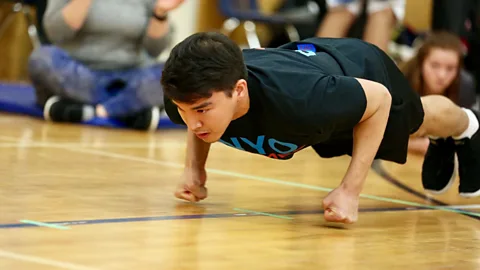 Photo courtesy of Kyle Ḵaayák'w Worl
In the face of climate change, Indigenous communities are uniting in Alaska to compete in centuries-old sports and keep traditions alive during "the Olympics of the North".
This March, Kyle Ḵaayák'w Worl will resume the push-up position and hop on his fists for an excruciating 60 yards (55m) to beat his personal best and the world record his father held for decades. But, he tells me, credit for the "knuckle hop" goes to his Indigenous ancestors who got on all fours disguised in animal skin to harpoon seals sunbathing on ice floes when the light eventually returned to the Arctic in the spring.
"There are only two creatures in the Arctic that walk on two feet and that's polar bears and humans, so the seals knew if they saw anything on two feet, they'd have to dive in the ocean and get out of there," said Worl, who lives in Juneau, Alaska.
The centuries-old hunting and fishing methods of the northern people of Alaska, Canada, Greenland and Scandinavia were passed down through sports and games. Today, the Arctic Winter Games, known as "the Olympics of the North", are held every two years to carry on those customs. This year, the event will take place in Mat-Su Borough near Anchorage, Alaska, from 10-16 March.
Here, athletes of all ages will compete in events like the knuckle hop and a two-person finger tug of war for hand strength before the fishing season, called the "finger pull". Teams will showcase ancient rituals like Inuit Yup'ik dancing and throat singing, while those under 21 will also go head-to-head in mainstream sports like hockey, skiing and table tennis.
Since the first Arctic Winter Games in Yellowknife, Northwest Territories, in 1970, the competition – which was nearly cancelled altogether after Covid – has allowed athletes to keep their northern traditions alive through extreme conditions, isolation and colonisation.
But the traditions in Canada's Northwest Territories, Yukon, Nunavut, Nunavik-Quebec and Alberta North; Kalaallit Nunaat (Greenland); the Sápmi region encompassing the northern parts of Finland, Norway and Sweden; and the Yamal delegation of Russia (sitting out this year) are arguably at greater risk than ever before.
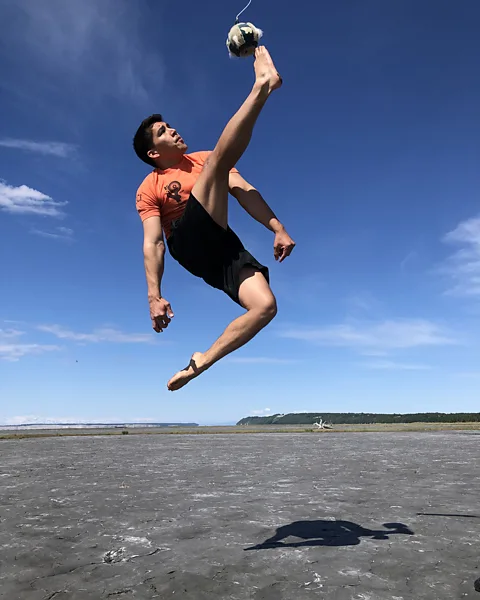 Photo courtesy of Kyle Ḵaayák'w Worl
The Arctic has been warming four times faster than the rest of the planet and summers here could be sea-ice free by 2030. More temperate, rainier weather is threatening subsistence living and traditions of northern people. Western Alaska, for example, is facing the collapse of salmon fishing runs, according to the US National Oceanic and Atmospheric Administration.
See the 2024 Arctic Winter Games
- When: 10-16 March 2024
- Where: Tickets are available at various locations in Mat-Su Borough near Anchorage, Alaska.
- Watch: Livestream the Games for free
- Don’t miss: The opening ceremony on 10 March
"Last year, outside in White Mountain [a western Alaska Inupiat village on the Bering Strait], our rivers didn't warm up enough because it rained all summer long, so we had no pink salmon run, a staple of our community along with moose, seal, caribou and beluga," said Nicole Johnson, president of Team Alaska and the head official for Arctic sports, who set a world record in the two foot high kick, once used as the universal sign to communicate a successful hunt from miles away on the tundra.
Already, climate change has phased out northern outdoor sports like dog mushing, last played at the Arctic Winter Games in 2018; and impacted traditional sports like speed skating and skiing, forcing snowmaking for the first time ever at a ski resort in the most northern town in the world, Longyearbyen in Norway.
And more rain and lack of snow continues to threaten the origin of Arctic sports like the sledge jump, derived from reindeer herding in the Sápmi region, as researchers explore the effects of climate change on traditions that could be lost to global warming.
But historically, the northern people have persevered. "The games became an example of the strength and ingenuity of our people," Worl said.
Just a few generations back, native Alaskans lost their traditional lifestyles and many are still finding their way back. "Indigenous children were put into boarding schools, forced to drop everything and assimilate into Euro-American culture from their native identity, " said Worl. "[They] eventually came home as adults with no connection to their cultural identity or sense of how to raise a family because they weren't raised in one."
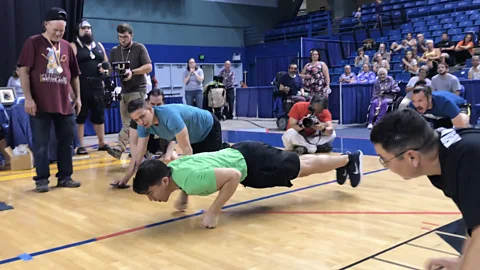 Photo courtesy of Kyle Ḵaayák'w Worl
He told me that the Games pulled him out of teenage depression and into his Tlingit language after feeling shame as a minority in Alaska. Now an Arctic Winter Games coach, he's a role model for young athletes in traditional sports – including Nick Hanson, an Iñupiaq from the village of Unalakleet on the Norton Sound of the Bering Sea, who is known as "Eskimo Ninja" on NBC's TV show American Ninja Warrior.
Keeping the games is crucial to maintaining collective social identity and communicating traditional culture and values to future generations," said Robert Thomsen, associate professor of Arctic Studies at Aalborg University in Denmark, who's researching the social and environmental sustainability of the Arctic Winter Games.
The Games are about working together, sometimes even with your opponent (coaches help athletes on opposite teams and players are judged on sportsmanship), to restore lost traditions and share their histories.
"We've endured harsh and cold environments, moving with the seasons and relying on our physical and mental strength to travel long distances. If you didn't pull your weight, your community wouldn't thrive," said Johnson. "We play and work together to create and build relationships between different communities so we never have to let somebody tell us what we can and can't do with our language, our games, our history and our dance again."
 Getty Images
Surviving beyond climate change
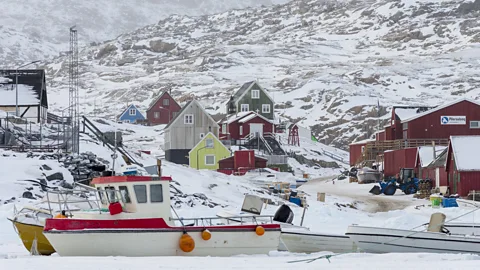
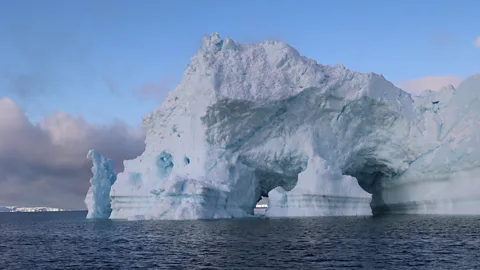
On the rocky edges of Greenland, where icebergs move away from one of the most active glaciers in the world at record speed, a small outcropping in Disko Bay is all that's left of the Sermermiut settlement. The original Paleo-Eskimo masters of hunting and fishing lived here 4,500 years ago until the 1850s (migrating from across the Arctic). On that land now sits the Icefjord Museum, dedicated to documenting how this spot shaped our current understanding of climate change and icecap glaciology, as scientists hurry to secure it from sliding into the water as a result of melting permafrost.
It was standing here that I first learned about the Arctic Winter Games from a local. His son had qualified for the 2016 Greenland games, and he said it changed his life – giving him something to work for.
If you have the stomach for it, from that Unesco settlement in Ilulissat's Disko Bay, an 18-hour ride north on the local Umiaq ferry will take you through the unforgiving bleak and endless Arctic Sea to Uummannaq's tiny island of Ikerasak, home to about 230 Inuit, including Mona Fleischer Markussen, who will compete in this year's two foot high kick competition and other Arctic sports in this year’s Arctic Winter Games.
More like this:
"I was born into and have lived the old Arctic traditions. We learn many things from our elders, and we take the traditions with us," said Fleischer Markussen, whose father and brother, like most living in Uummannaq, are fishermen who depend on solid ice cover to do their job in winter.
Near Fleischer Markussen's northern Greenland home, massive chunks fall from the ice sheet into the sea and melting permafrost led to a deadly landslide-induced tsunami in 2017. Here, sled dogs bark day and night and reindeer is served for lunch and dinner.
Greenland's head official for the Games, Aviaaja Geisler, who also grew up with sled dogs, believes that keeping the Arctic sports is vital to small villages "lacking infrastructure and jobs to buy traditional sporting equipment" and "where fishing and hunting are becoming more unpredictable".
 Anna Fiorentino
The US National Science Foundation is turning to the fishermen and hunters of Fleischer Markussen's island and seven nearby settlements in Uummannaq Bay to verify 20 years of remote-sensing records and help them continue to monitor the sea ice breakup. It's part of a new wave of research showing how traditional Indigenous knowledge of changes in local ice for effective travel and hunting can advance climate change research.
"Indigenous knowledge is indispensable for research into climate change and adaptation. Recognising [it is] an obligation on the part of Western scientists, governments and policymakers," said Andrey Petrov, professor and director of the ARCTICenter at University of Northern Iowa.
And that's exactly why it's important to forge bonds between Arctic communities.
On 10 March, Fleischer Markussen will join the opening ceremony with Worl, nomadic reindeer herders from Lapland and other young athletes who will have flown out of their Arctic homes for the very first time. They'll return with a new perspective in a different uniform. "Trading uniforms is a fun part of the Arctic Winter Games, and it helps us interact," Worl said. "Greenland always has such cool uniforms and it's a strong Indigenous country. I try to trade with them."
And while they may not speak the same language, they'll understand each other. "We look like each other. We are the Arctic. We are united," said Geisler.
---
If you liked this story, sign up for The Essential List newsletter – a handpicked selection of features, videos and can't-miss news delivered to your inbox every Friday.
