Biryani: The one-pot dish that reigns supreme for Ramadan in India

 Teja Lele
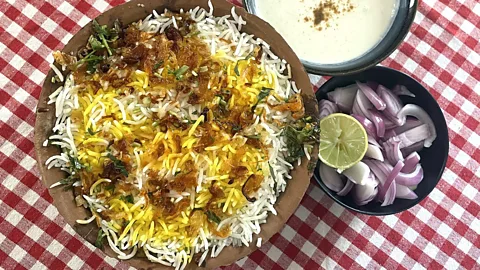
Chefs and homemakers rustle up a variety of dishes during Ramadan, but biryani – satisfying, filling and easy to make – may be the most popular dish in India.
Ramadan (or Ramzan), the ninth month of the Muslim calendar, is a month of piety. Beginning and ending with the appearance of the crescent moon, it's a period of reflection and introspection, communal prayer, self-analysis and self-restraint. Sawm (to refrain), one of the five basic tenets of Islam, means refraining from food, drink, sexual activity, unkind thoughts and immoral behaviour.
The fasting, which begins at sunrise each day, is broken after sunset prayers with iftar, a meal shared with friends and family, in homes and mosques. Chefs and homemakers prepare a variety of dishes during Ramadan, but one dish reigns supreme across the Indian sub-continent: biryani.
The fragrant, one-pot meal combines rice with meat (chicken, beef, goat, lamb, prawns or fish) and aromatic spices. Once prepared for royalty, biryani now reflects regional sensibilities and local traditions.
"Biryani is a complete one-pot meal that requires no accompaniment except maybe a mint raita [a curd-based condiment (yoghurt) with vegetables, mint and spices]. It's popular throughout the year and during celebrations, more so during Ramzan because we are looking for food that is filling and convenient to cook, eat and digest – and help the body cope with the long day," said Manzilat Fatima, a lawyer-turned-chef who descends from the erstwhile royal Awadh family and runs Manzilat's restaurant in Kolkata.
The history of biryani in India goes back centuries. In her 2017 cookbook, Biryani, Pratibha Karan writes that the dish is thought to have been brought from Persia by Muslim conquerors who settled and ruled India from the 16th Century, with the word derived from the Persian word for rice, birinj. The expensive, hard-to-come-by ingredients such as saffron and cream meant that biryani was a dish for the kings.
Another legend traces the origins of the dish to Empress Mumtaz Mahal, who inspired the construction of the Taj Mahal in the 17th Century. On finding soldiers under-nourished during a visit to the army barracks, she asked the chef to prepare a special dish to provide balanced nutrition and biryani was born. However, this seems to be local lore, as food researchers seem to agree that biryani originated in Iran.
 Manzilat Fatima
Hala Parveez, who runs Hala's Dastarkhaan, a catering business specialising in biryanis and kebabs in the US, said the name can be traced to the original Persian birinj biriyani, literally, fried rice. "The Indian subcontinent made the rich dish its own and grew to create as many as 500 variations cooked regionally," she said.
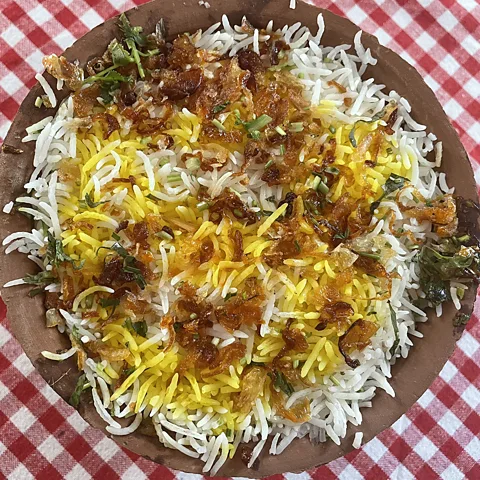
The Mughals introduced cooking techniques and ingredients that are now integral to biryani, like saffron, which lends biryani its distinct yellow colour and aroma, and yoghurt, which helps tenderise meat and add a tangy flavour. They also introduced the dum cooking technique, which involves cooking rice and meat in a sealed pot over a low flame.
By the 18th Century, it was in the royal kitchens of the kingdoms of Awadh and Hyderabad that the methods of preparing biryani were perfected, with the rest of India adding varied ingredients depending on local palate preferences and availability.
Awadhi Biryani is one of the most popular varieties of biryani across India. "Amid the terrible famine of 1784, Asaf ud Daulah, the nawab [a Muslim ruler, similar to a prince] of Awadh, announced the construction of Asafi Imambara [a Muslim shrine in Lucknow], with 20,000 workers given a heavy, rice-based meal to sustain the long working hours," said Fatima.
The nawab, who was surveying the construction site, couldn't stop himself from asking for a serving of the biryani when he got a whiff of the aroma emanating from the large cauldron. "Biryani gained royal status immediately. To befit the king's table, the vegetables were removed, and the dish was cooked with more refinement. Hence the addition of cream and saffron," she said.
More like this:
Decades later in 1856, when Wajid Ali Shah, the 10th Nawab of Awadh, came to Calcutta after the British banished him from Lucknow, he asked the cooks at his palace in Metiabruz to make the biryani more filling with the addition of potato, then a not-so-common vegetable in India.
Today, the dish is a year-round favourite in India. The online food-delivery platform Swiggy reported that biryani was the company's most-ordered dish for the eighth-straight year, with Indians ordering 150 biryanis per minute from the site in 2023.
Parveez believes there's a reason for biryani's popularity, especially during Ramadan. "It's a time when one wants to cook and serve something that's desirable, satisfying and pleases every kind of palate. The fuss-free biryani is the most popular choice."
 Teja Lele
By Manzilat Fatima
Serves 6
Ingredients
500g (1.1lb) long-grain rice
5 cloves
5 cardamom pods
2 whole blade mace
10g cinnamon stick
200g (7oz) ghee (2 tbsp melted and set aside)
2 tbsp refined oil
50g (about 2oz) onions, sliced
25g (1oz) ginger, grated
25g (1oz) garlic, grated
1kg (2.2lb) mutton, cleaned (leg, neck and chops)
125g (4½oz) yoghurt, whisked
1 tsp yellow chilli powder
salt, to taste
3-4 bay leaves
½ lime
1 tsp saffron
1 tsp kewra water (see Note)
Method
Step 1
Wash and soak the rice for over an hour. Grind half the spices (cloves, cardamoms, mace, cinnamon) and leave the other half whole.
Step 2
In a thick-bottomed frying pan, heat the oil. Add the onions, fry till brown, and remove from pan. In the same oil, add the unmelted ghee, the whole spices, ginger and garlic. Add the mutton pieces. Saute on medium heat till nicely fried. Add the whisked curd, yellow chilli powder and salt. Add 3 to 4 cups of water and simmer till the meat is nearly done. Separate the meat and strain the stock. Keep aside.
Step 3
In another thick-bottomed frying pan, boil about 5 cups of water with the bay leaves, ground cloves and cardamom. Once the water comes to a rolling boil, add salt to taste and squeeze in the lime juice. Add the drained rice, keeping the flame on high. Cook uncovered for 8 to 10 minutes; you want the rice cooked about three-fourths of the way through (it should still have a crunch). Strain.
Step 4
Gently spread the cooked rice over the mutton in the other frying pan and sprinkle the stock over it. In a bowl, mix the ground mace and cinnamon with the saffron and kewra water and sprinkle over the rice. Scatter the 2 tbsp of melted ghee over the mix. Cover the pan with a lid and top with a heavy item so steam doesn't escape. Simmer for 15-20 minutes, or till the rice is fully cooked and all flavours are released. Mix well before serving.
Notes
Kewra water is an extract distilled from pandanus flowers. It has a floral, slightly sweet aroma, with hints of vanilla and rose.
Biryani is best made with long grain rice and extremely well-cooked meat that falls off the bone.
BBC.com's World's Table "smashes the kitchen ceiling" by changing the way the world thinks about food, through the past, present and future.
---
If you liked this story, sign up for The Essential List newsletter – a handpicked selection of features, videos and can't-miss news delivered to your inbox every Friday.
