The jubilant revival of the British Sunday roast

 Cristian Barnett
Once the staple of local pubs or humble carveries, the Sunday roast can now be found at any number of chef-driven eateries, where the offerings go well beyond the usual.
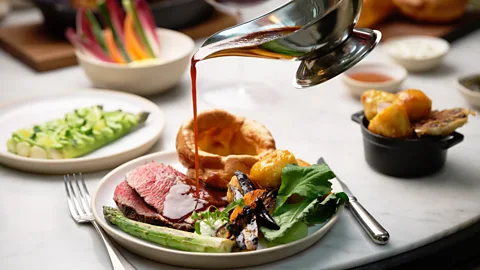
It was Sunday in London and I was sitting in the skylit atrium of the NoMad Restaurant in Covent Garden. A plate of rosy beef slices was placed before me. The meat reclined alongside a puffy, golden Yorkshire pudding (also known as a "Yorkie"), which happened to be stuffed with watercress and horseradish-tinged short rib. Trimmings followed: a cast iron pan containing charred carrots, turnips and brussels sprouts; a bowl of crispy, fat-roasted potatoes; and a small jug filled with thick brown gravy. With one bite of the tender meat, I felt a sense of jubliation set in. The Cure's In Between Days was on the sound system and I was reminded of 1986, when I first fell in love with London as a student abroad.
Since then, "hopping across the pond" has become a biennial event for me. And nothing says "welcome back" more than the British tradition of a Sunday roast.
As much as the music and the food took me back, the experience could not have been more different than the roasts I enjoyed circa 1986. The crowd around me was young and trendy – words that would never be spoken in the same breath as "roast" nearly 40 years ago, when a roast was regarded as a meaty, family affair rarely found beyond the local pub if not enjoyed at home.
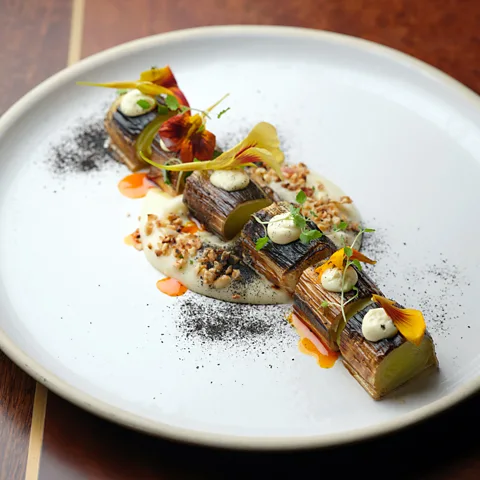
I noted my friend's plate, with a roasted monkfish at the centre amid the trimmings, proof that the roast has become more inclusive. As someone who doesn't eat meat, she could have also chosen the vegetarian or vegan options: miso-marinated celeriac in butter sauce, or plump wood-charred leeks with whipped almond and olive oil vichyssoise. There were starters, too, their preciousness a reminder that we were indeed in 2024: a neat rectangle of cured salmon topped with sea vegetable tempura, and a tiny Weck jar filled with pickled carrot tartare, topped with a raw quail's egg. That's when it really struck me that the roast, just like the city's skyline and the monarchy, has evolved over time.
 Cristian Barnett
According to Dr Polly Russell, food historian and curator at the British Museum, the British love of roasts dates to the 15th Century and King Henry VII's "beefeater" Yeoman Warders, the ceremonial guardians of the Tower of London who were so named due to the weekly beef rations they were given to eat. But the idea of a "Sunday" roast punctuating the week for the populace really took hold in the 19th Century, Russell explained. "By the time we were industrialised, and Sunday became a day of rest, people would go to church, put whatever food they might have in the oven to cook and be ready for when they came home." She pinpoints that era to when "the roast beef, particularly, became a symbol of Britishness".
"For me, Sunday roast always felt like a special occasion," said NoMad Restaurant executive chef Michael Yates. "It's when you try your best to come together with family and friends and really share a meal around the table." Though his execution of the roast is rather refined, Yates makes sure that the meal doesn't stray too far from tradition, with the communal and celebratory aspect best expressed by his signature lamb offering (for two): a succulent shoulder, slow-roasted for 12 hours, then shredded and scented with lavender.
Yates is but one London chef modernising the Sunday roast. Once the staple of local pubs or humble carveries, a Sunday roast can now be found at any number of chef-driven eateries, where the offerings go beyond the usual. The Michelin-starred The Harwood Arms in Fulham, for example, features a bacon-wrapped, slow-cooked deer shoulder, glazed with honey and mustard. The sustainably-minded Sussex in Soho touts a partridge with liver parfait, bread sauce and thyme jus.
The "new" face of the Sunday roast doesn't always need to be so exclusive, however. The Great Chase, a non-alcoholic fine-dining restaurant in Islington, prides itself on being inclusive, with halal meats and a vegan wellington. The roast can even pop up in the most unlikely spots, such as Camden's The Black Heart, a music venue known for showcasing metal bands. Their plant-based menu is a go-to for vegans, who clamour for the roast "pork tofu" belly marinated with maple mustard, or the signature "mocken" breast, made with tofu and jackfruit. All are served with eggless Yorkies.
 Kathleen Squires
Despite being a symbol of British culture, many roasts these days are influenced by flavours from around the globe, a testament to London becoming ever more multicultural. The Soho, Shoreditch and Paddington branches of the smokehouse Temper, for example, serve their roasts barbecue-style, showcasing pulled lamb or beef, smoked chicken or pork belly. Caribbean flavours, meanwhile, pervade the Sunday serving at Guanabana in Kentish Town, with a choice of jerked beef roast or jerk chicken, and trimmings including plantains and grilled cabbage. Asian influences distinguish the roast served at Ling Ling's, the pop-up at The Gun in Hackney, in dishes such as five-spiced braised pork belly and sesame Yorkshire pudding. The Sunday roast has proven so popular that the Ling Ling's team has promised the roast will live on when they find a new home after their residency at the Gun ends on 31 March.
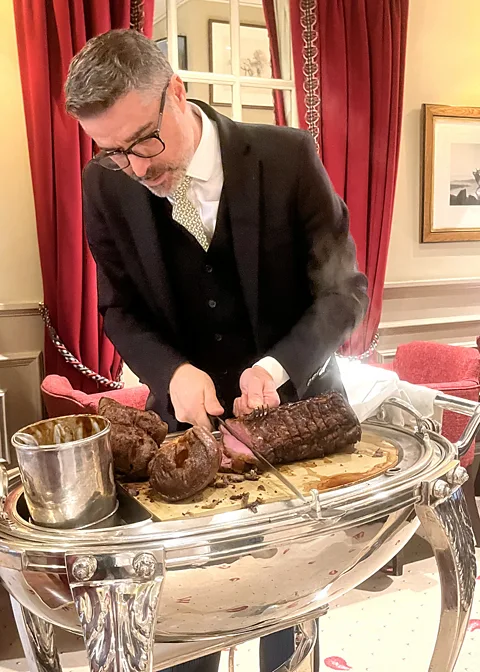
Even with the proliferation of new options, I found myself particularly grateful for Wilton's. Though it has been a London institution since 1742, the Jermyn Street restaurant breaks tradition by serving roasts on Wednesdays, allowing me the fortune to enjoy a second roast during my recent London visit. Despite the unconventional day of service, it was as classic as it comes: served from a gleaming silver trolley with a besuited server hand-slicing the beef tableside. The meat arrived with all of the trimmings, of course, triggering all the comforting memories of London visits, and delicious roasts, of years past.
NoMad's Yorkshire Pudding recipe
By Michael Yates
Makes 4 puddings
Though traditionally only served with roast beef, diners may now find "Yorkies" alongside any manner of meats, fish and vegetable mains. Here's chef Michael Yates's easy recipe for the timeless classic.
Ingredients
4 large eggs
100g milk
100g water
150g plain flour
8g salt
100ml garlic oil
Method
Step 1
In a bowl, mix the eggs, milk, water, flour and salt and leave to rest overnight in the fridge.
Step 2
Preheat the oven to 190C/375F. Divide the garlic oil into 4 moulds of a muffin/popover tray (or a Yorkshire pudding tin, if you have one), leaving space between each for the pudding to grow. Place in oven to heat for 10 minutes.
Step 3
Open the oven and carefully ladle ¼ cup/2oz of batter directly into the center of each of the oiled holes; the sides should start to bubble. Bake for 10 minutes. Lower the oven to 140C/285F and continue to bake until golden brown and crispy, about 10 minutes longer.
BBC.com's World's Table "smashes the kitchen ceiling" by changing the way the world thinks about food, through the past, present and future.
---
If you liked this story, sign up for The Essential List newsletter – a handpicked selection of features, videos and can't-miss news delivered to your inbox every Friday.
