The Guitar Route of the Andes

 Judy Dautovich-Ralf Hunsinger/Getty Images
A remote road in the Andes has been home to some of the world's most renowned guitar-makers for more than 200 years. But the tradition could be dwindling.
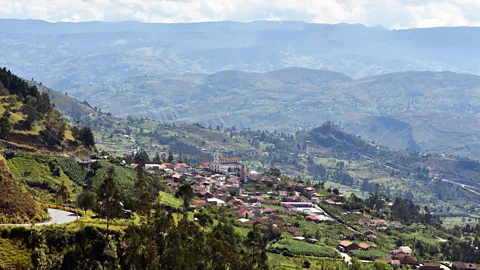
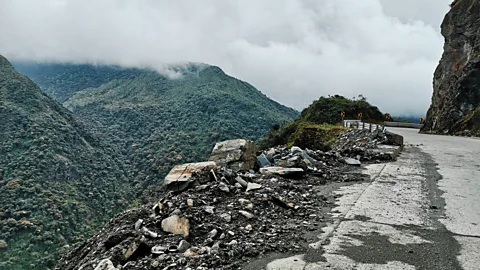
Bracing against the cold air at an altitude of 2,650m, I made my way down a foggy, narrow mountain road in the heart of the Ecuadorian Andes. Its switchbacks were slick with moisture from the mist, vegetation slowly creeping up the cracks in the pavement. A large, looming silhouette emerged from the fog – a lone cow wandering along the road in search of better pasture.
Other than roaming livestock and the occasional local, there was almost no traffic. It was hard to believe I'd only just left Cuenca, one of Ecuador's most vibrant cities, a mere 30km behind. Having rented a motorcycle, I wanted to explore the more far-off routes of the Andes heading east, where there are little tourist crowds – and plenty of local culture.
 Egle Gerulaityte
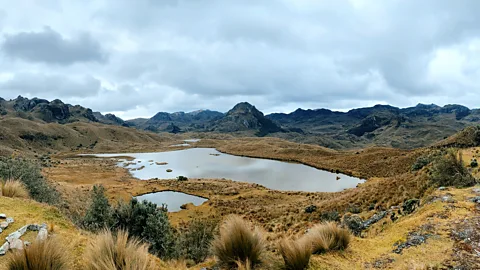
Soon, I found myself on the Via San Bartolome, a quiet, remote road with solitude and views unspoiled by human activity. With its villages few and far between, Via San Bartolome slowly unfurls across the eastern slopes of the Andes for 80km, merging with a network of other local roads leading down into the Amazon plains. Gone are Cuenca's busy streets and trendy cafes, replaced by sparse, tiny indigenous settlements, animal pastures and a mountain landscape weighed down by heavy clouds and undisturbed silence.
Musical traditions
As I entered the San Bartolome parish, home to a little more than 4,000 inhabitants, I started noticing something odd on the sides of the road. Here and there, a small workshop appeared, bearing a sign of a guitar. Sometimes, it was someone's house with a guitar frame hung outside; sometimes, a bigger workshop with instruments lined up on the porch or displayed on tables.
Just a few more miles up the road, a makeshift wooden sign declared this was the "Ruta de las Guitarras" – the Guitar Route.
For more than 200 years, the tradition of guitar-making has been strong in this region. Locals craft the instruments from the area's cedar, spruce and cherry trees, as well as from more exotic materials like armadillo shells. Luthiers along the Guitar Road are known for crafting guitars so exquisite that their clients include musicians across South America, the Caribbean and North America.
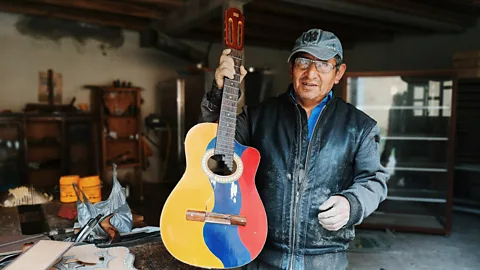
Intrigued, I stopped by one of the guitar workshops: a typical tin-roofed Andean house with wooden walls, but with a guitar displayed above the entrance. It belonged to Jose Homero Uyaguari, one of San Bartolome's most renowned guitar makers.
 Egle Gerulaityte
Parking my rental motorcycle on the side of the road, I tentatively asked if I could visit the workshop. While curious, I didn't want to intrude: the Guitar Route is far from a touristy place.
But Uyaguari nodded and ushered me inside. "Come, come," he said, opening the doors to the workshop. "Would you like to see the guitars?"
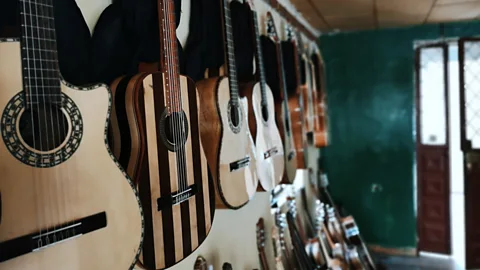
Inside, the walls were lined with finished guitars, charangos (small, five-stringed instruments loved by indigenous Andean musicians), ukuleles and cuatros (four-stringed guitars popular in Venezuela). The tables were covered in instruments in various states of finish, sawdust, and cow bone fragments and colourful ornaments used as adornments.
"Every guitar and charango are unique," Uyaguari explained, holding up a small charango. "We use local cherry wood, walnut and cedar trees most of the time, but some of the guitars are made from imported pine. Most of our walnut comes from right here, from our neighbours, and sometimes, we get things like armadillo shells from the rainforest – it's good for making smaller instruments, and people love the unusual finish."
Generations of guitar makers
As he showed me around the workshop, Uyaguari told me he learned the art of guitar making from his father – who, in turn, learned from his. "As a child, I remember some of the guitar masters were 70, 80 years old, and they'd tell us they learned from their fathers, too. It's a tradition passed down from father to son," he said. Although there are some women guitar makers in San Bartolome, for the most part, it is the dominion of men.
"I began learning to make guitars when I was 13 years old. Now, it's my trade, and I'm hoping to pass it down to my sons. Three of them already make guitars and work together with me," Uyaguari said.
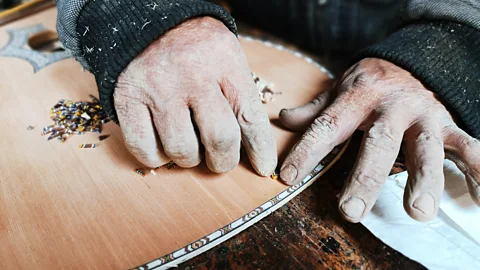
All of Uyaguari's instruments are made by hand. First, the wood is sent to be sawed. Next, the luthier works with chisels, saws and sandpaper to craft the frame and the neck of the guitar, decorating the sound hole with tiny wood fragments coloured by hand. Some of the ornaments are made of bovine bones.
 Egle Gerulaityte
From sanding and prepping the wood to a complete finish, it takes Uyaguari about two weeks to make one guitar. His cheaper instruments cost around $70 to $200 (£50 to £150), whereas a more exquisite guitar made from expensive wood may cost $2,000 (£1,500) and upwards.
Such is the reputation of San Bartolome's guitar makers that these instruments are being sought after by musicians in Europe, Colombia, Cuba and Puerto Rico. Uyaguari fondly remembers a rosewood and pine guitar he made for Enrique Bunbury, the lead singer of Spanish rock band Héroes del Silencio.
A fragile trade
Despite its past successes, after peaking around 2005-2010, the guitar-making trade in San Bartolome has been slowly dwindling. Due to an influx of imported guitars from China, locals are opting for cheaper instruments. Only 10 local families now make guitars full-time.
"Artisanal guitar making is now valued less and less. Younger people just want cheap guitars, and they ask us to make guitars for $15 or $20 (£10 or £15) – the price of the Chinese ones. We can't compete with that, as this wouldn't even cover the costs of the wood, let alone the labour," said Uyaguari.
 Egle Gerulaityte
Just 10 years ago, he and his sons would make 30 or 40 guitars a month; they'd all quickly sell out, with no instruments left at the shop, he said. Now, they sell 10 to 15 guitars a month.
As a result, many guitar makers in San Bartolome have to supplement their income with farming, making furniture or moving to the cities in search of jobs.
"Some of the workshops have been closed down or abandoned. I don't plan to stop, however – I'll take my trade to my grave," Uyaguari said.
But there's a potential new revenue stream for artisans like him, too. "Right now, our guitars are mostly bought either by travellers or professional musicians who value what we do," he said.
Thanking the luthier for his time, I jumped back on the bike and followed the Guitar Route eastward. Soon, the narrow mountain road dived down, turning and twisting in generous bends, sparse Andean grasses now replaced by the lush emerald green of the Amazon rainforest.
 Egle Gerulaityte
The temperature and humidity rose as the ribbon of road snaked down the slopes of the Andes, revealing the slow-moving waters of the Upano River and the endless green expanse below. Small farms and ramshackle houses gave way to fresh fruit stands and bare-bellied kids running around, the heavy clouds now broken apart by sunshine.
As the land changed, the cold Andean villages and the guitar makers of San Bartolome began to feel like a distant, dreamlike memory.
The Open Road is a celebration of the world's most remarkable highways and byways, and a reminder that some of the greatest travel adventures happen via wheels.
---
If you liked this story,sign up for the weekly bbc.com features newsletter called "The Essential List". A handpicked selection of stories from BBC Future, Culture, Worklife and Travel, delivered to your inbox every Friday.
