Victims of Abergele rail disaster remembered 150 years on

 Tony griffiths
The 150th anniversary of a Victorian rail disaster which claimed 33 lives will be remembered at a service.
Runaway carriage trucks carrying barrels of paraffin collided with the Holyhead Irish Mail train and exploded, in Conwy county, on 20 August 1868.
It happened just outside the town of Abergele.
Tony Griffiths, whose documentary of the disaster will be shown after the service, said: "It's something that should be remembered in the town."
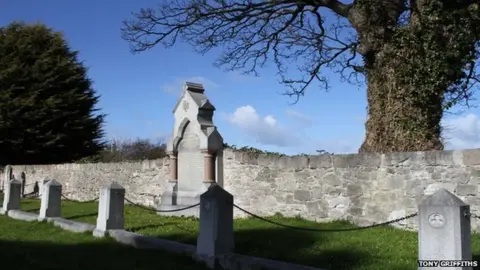
Most of the bodies were so badly burned they could not be identified. They were buried in a mass grave at St Michael's Church, in Abergele.
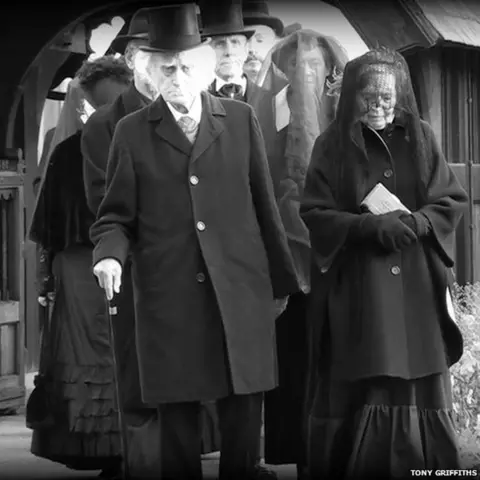
The Irish Mail train had the reputation of being the fastest in the country at the time and transported some of the wealthiest men and women in the country to their estates in Ireland via the Holyhead ferry.
 Tony Griffiths
After leaving Euston station in London it stopped at Chester. Some new passengers who joined headed to the front of the train and others went to the back.
Many of those who went to the front did not survive.
Mr Griffiths said: "There were a number of well-to-do people on board the train, lords, ladies, business people."
Among those on board, he said, was 23-year-old William Henry Owen, who was going to Dublin to work as an organist in a church.
Research for his documentary led Mr Griffiths to discover the young man's father was the poet and musician Owain Alaw, who had been an adjudicator in the 1858 Llangollen National Eisteddfod where he was impressed with the anthem Glan Rhondda.
"He thought it was so good, he published it in his Gems of Welsh Melody collection, where it became Hen Wlad Fy Nhadau (the Welsh national anthem)," Mr Griffiths said.
He said it was important for the town to continue remembering the disaster.
 Tony griffiths
"There's quite a significant memorial to the victims and people going there may wonder what it was all about," he said.
"It should be remembered and taught in schools.
"Lessons were learned from it because at the time railways were new and they were shunting goods wagons on the main line and didn't obey the rules."
Monday's service will start with a procession from the doors of the church to the site of the grave, where the victims will be remembered with a blessing.
This will be followed by an exhibition and a showing of the documentary. Those attending are encouraged to wear Victorian dress.
The service starts at 18:00 BST.
