Langholm grouse moor scheme 'successes and challenges' outlined

 Adam Smith
A final report has outlined the "successes and challenges" which faced a moorland management scheme in southern Scotland.
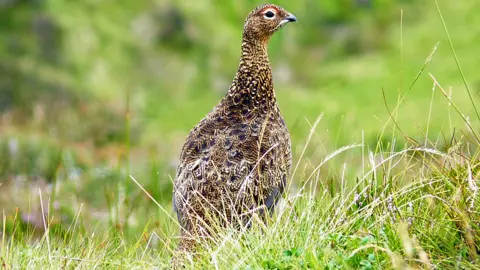
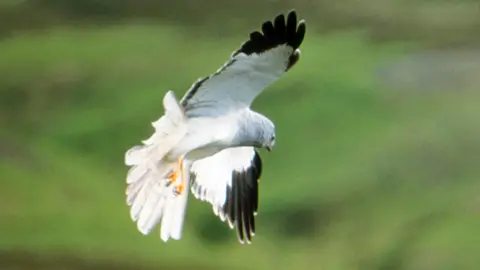
The Langholm Moor Demonstration Project aimed to see if a grouse moor could be commercially viable while protecting hen harriers and other raptors.
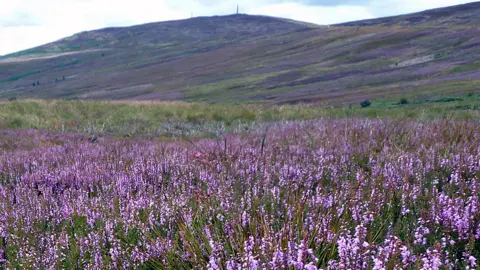
The partners involved said parts of it had been a success - including addressing decades of heather loss.
However, grouse numbers did not recover sufficiently for commercial shooting.
 Adam Smith
The project ran over a 10-year period up to 2017.
It hoped to find ways to allow birds of prey to flourish while at the same time running an economically-viable grouse shoot.
The partnership, between a wide range of groups, found that parts of the project had been "markedly successful".
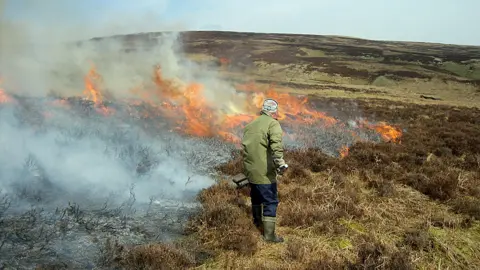
This included tackling heather loss, reduced predation of ground-nesting birds and giving thousands of visitors an insight into raptors' relationships with prey.
 Lorne Gill
Although the grouse population did recover - they did not breed sufficiently to allow shooting to "achieve the chosen economic return".
Mark Oddy, of project hosts Buccleuch, said it was clear there were "many challenges" ahead but the report showed moorland management had a "positive and substantial contribution" to make.
Ross Johnston, Scottish Natural Heritage's deputy director of sustainable development, added that it made clear driven grouse moor management was difficult in the face of "rising predation pressure".
A joint statement from a number of groups, including the Scottish Countryside Alliance and the Scottish Gamekeepers Association, called it a "watershed" report which showed the conservation value of grouse moor management.
 Peter Moore
"This project showed that gamekeepers using modern management techniques, including legal predator control, led to improved populations of curlew, golden plover and snipe at a time when they are declining nationally," it said.
Teresa Dent, chief executive of the Game and Wildlife Conservation Trust, said the report illustrated it was not a "binary choice of red grouse or birds of prey".
She said both were needed if "we value our moorlands and their ecosystems".
A Scottish government review of grouse moor management practices is expected to be published later this year.
Meanwhile, community groups are considering bids for a large slice of land being sold by Buccleuch which includes the Langholm Moor site.
