Highland Wildlife Park captive breeding rare hoverflies

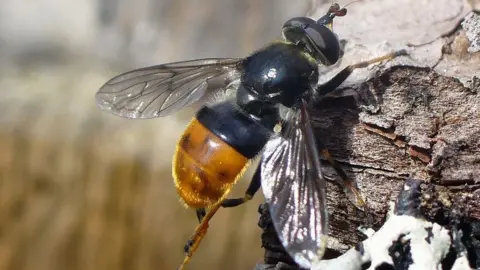 Ellie Rotheray
A Scottish captive breeding programme aims to boost numbers of one of the UK's rarest insects.
The pine hoverfly Blera fallax is currently known to only inhabit one forest site in the Cairngorms National Park.
Conservationists estimate there are fewer than 50 flies at the location.
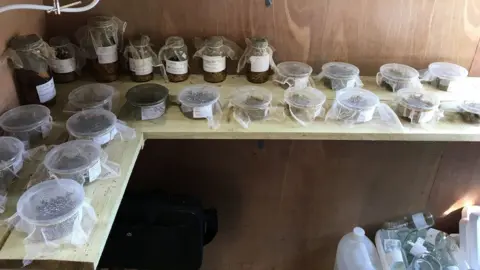
The Highland Wildlife Park at Kincraig, near Aviemore, is raising hoverflies in old jam jars and hummus pots. The first adult flies have just hatched.
 Helen Taylor/RZSS
 Helen Taylor/RZSS
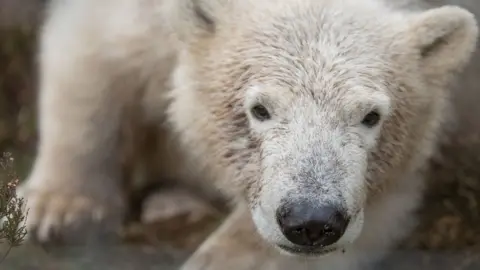
Owned by the Royal Zoological Society of Scotland (RZSS), the park is better known for its polar bears - two males, a female and her cub called Hamish.
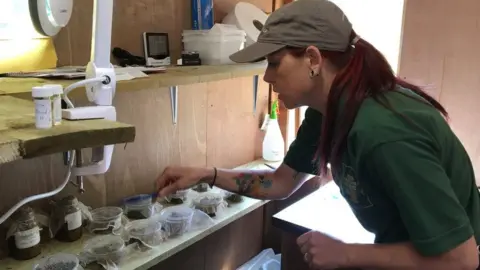
Captive breeding pine hoverflies, an important pollinator, takes place in a small wooden shed, with the larvae held in empty jars.
When they turn into pupae, they are transferred into hummus pots. When the adults emerge, they live in mesh flight cages.
But the captive breeding is far from simple.
 RZSS
RZSSIn the wild, the larvae live in small holes that have rotted into old pine trees. There, they feed on a "nutritious soup" of bacteria.
To make the soup in captivity, keepers mix pine wood chippings from the flies' natural habitat with rain water.
The temperature of the shed has to be regularly checked and moss used to plug the top of the jam jars has to be kept damp.
RZSS said it hopes to eventually raise enough flies for insects to be released in the wild.
