Old photos show Katrine aqueduct being built

 Scottish Water
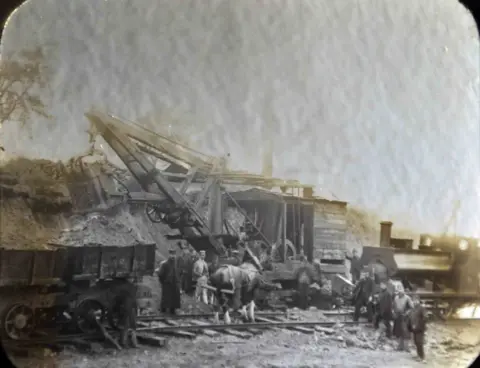
Old photographs showing one of Scotland's most important public works being built have been found in a skip.
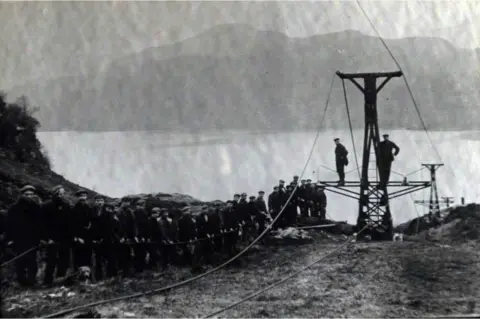
The photos show the construction of one of the Katrine Aqueducts, which take water to treatment works that supply 1.3 million people around Glasgow.
The aqueducts were part of a radical 19th Century plan to supply fresh water from Loch Katrine to Glasgow, 35 miles away.
 Scottish Water
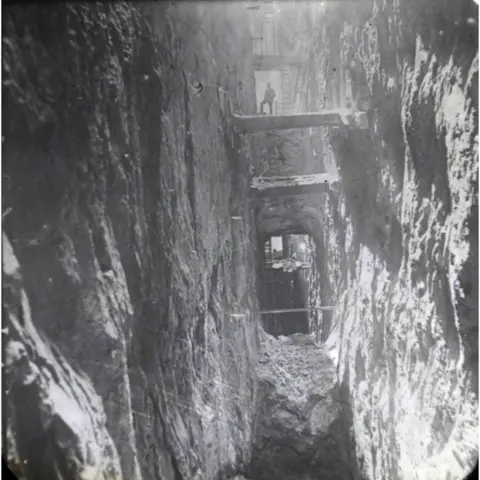
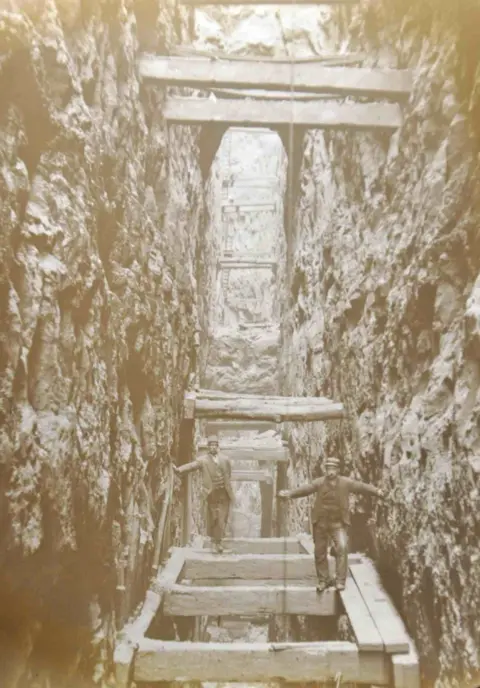
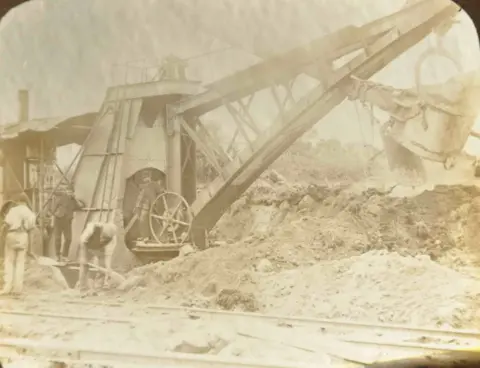
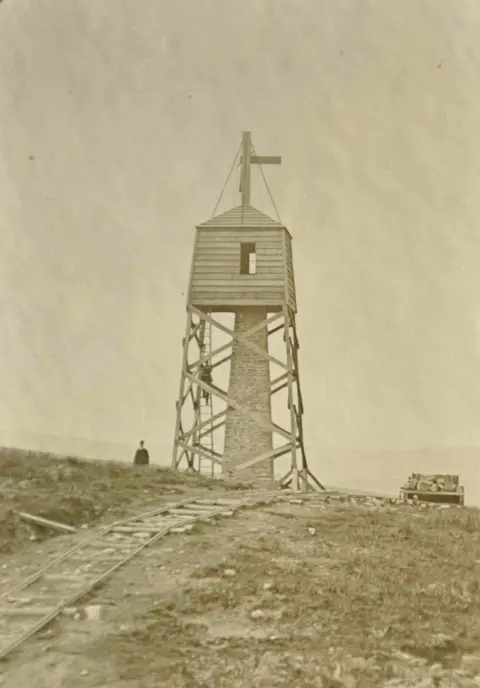
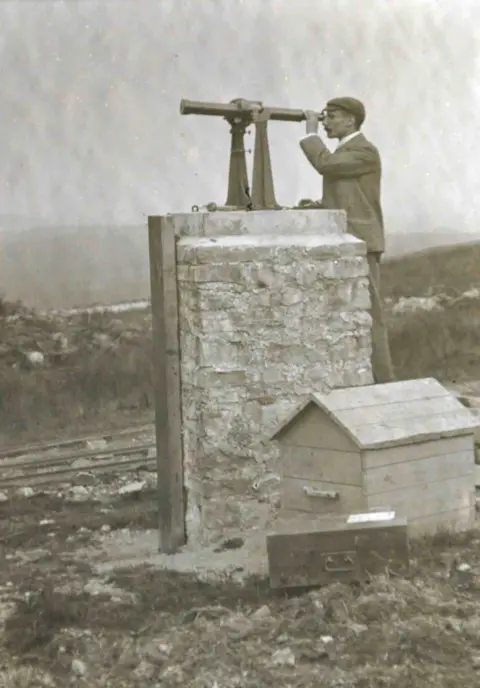
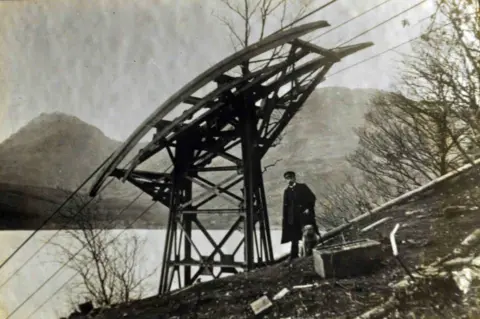
The glass photograph slides show work on the second phase of the project, which began in the 1880s.
The slides were thrown out when Scottish Water's former west of Scotland offices, at Balmore Road in Possilpark, Glasgow, were being closed.
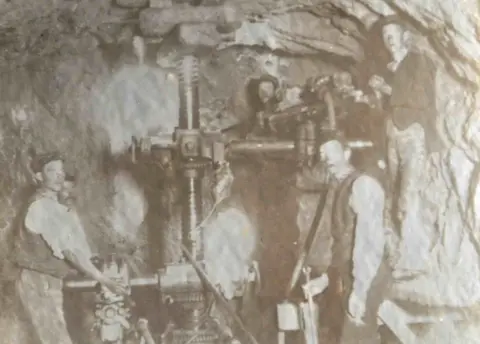
They include images of workers boring through rocky hillsides with drills during the construction of the 23.5 mile-long second aqueduct, which began in 1885 and was completed in 1901.
 Scottish Water
Before the construction of the water supply system in 1859, the majority of Scotland's largest city took its drinking water from a small number of public wells supplied by the River Clyde.
Water-borne disease such as cholera were rife and the city's rapidly expanding population needed a clean and safe water supply.
 Scottish Water
The decision was taken to bring in water from Loch Katrine, a massive project that involved the construction of a dam, 26 miles of aqueduct and miles of distribution pipes.
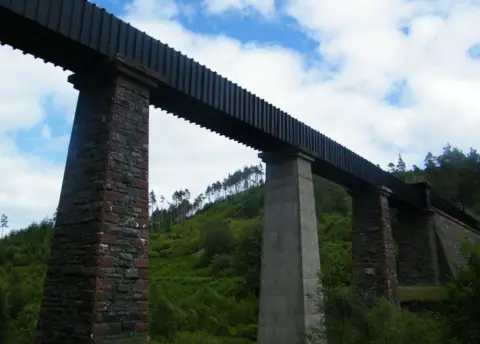
The first aqueduct includes tunnels through mountainous terrain in the shadow of Ben Lomond and bridges over the valleys.
 Scottish Water
 Scottish Water
 Scottish Water
A second aqueduct was constructed decades later to accommodate the rapid expansion of Glasgow.
Improved equipment, such as the pneumatic drill and gelignite, meant engineers on the second project were able to take make quicker progress and take a more direct line.
This straighter line through the hills meant only eight bridges were required on the second aqueduct compared with 22 on the first.
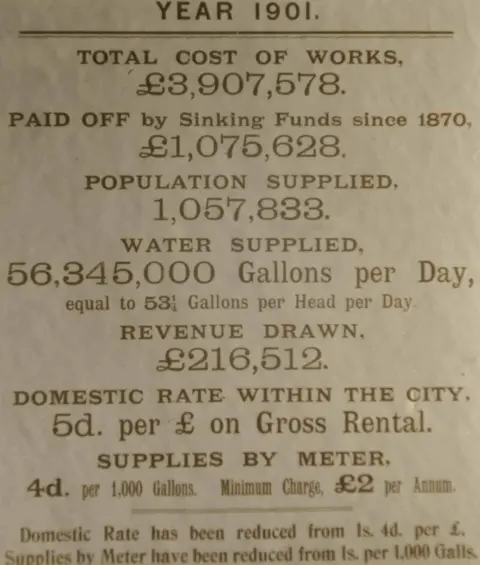
The entire Katrine Aqueduct scheme cost £3.2m to build which would be about £320m in today's prices.

Loch Katrine Water Supply System Timeline
 Scottish Water
1859 - Loch Katrine scheme opened by Queen Victoria
1885 - Second Act passed to increase the level of Loch Katrine, build a second aqueduct and create a new reservoir at Craigmaddie, east of Mugdock
1896 - Craigmaddie Reservoir completed
1901 - Second aqueduct completed
 Scottish Water
1902 - Loch Arklet bill passed to build a dam and divert the water to Loch Katrine via a tunnel.
1903 - Glen Finglas Act passed to allow the water from Glen Finglas to be diverted to Loch Katrine, not taken up until the 1950s.
1909 - Loch Arklet dam construction started.
1914 - Loch Arklet dam and associated works completed.
1919 - Act to further raise Loch Katrine level passed.
1929 - Level of Loch Katrine raised by increasing the height of Achray dam and the dam around the inlet for the aqueducts.
1958 - Glen Finglas tunnel to Loch Katrine completed.
1965 - Glen Finglas dam completed.
'Fascinating insight'
 Scottish Water
Steven Walker, a leakage field technician with Scottish Water, discovered the old photographs with a colleague when they were moving to new offices.
"They were in two boxes or cases among all sorts of items that were to be thrown out," he says.
"It's remarkable to think that the first aqueduct was so successful, and Glasgow grew so quickly, that within 30 years they had to repeat the process and build a second aqueduct to double the output.
"The pictures give a fascinating insight into the construction of the second aqueduct and some of the methods used which might appear archaic, and even dangerous, to us now but were the 'new technology of the day at that time."
 Scottish Water
The current £12.5m refurbishment project on the Katrine Aqueduct is expected to be completed in 2020.
It includes structural repairs of three stretches of tunnel and a bridge, improvements to the lining of tunnels and repairs and refurbishments of control valves.
The entire length of the second aqueduct and the entire length of the first will be closed at different times during the project to enable the work to progress.
However, Scottish Water said it would use cross-connections and pumping from elsewhere on the network to maintain normal supplies.
