Coronavirus: 'It was a blur of trying to breathe'

 BBC
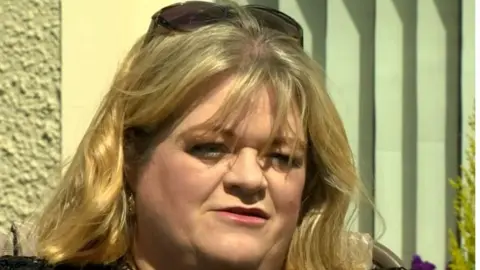
BBCA trainee ambulance worker who is recovering after fighting coronavirus says her experience is a "blur of trying to breathe".
Jennifer Cultra was one of many medical students drafted into the front line as the health service tackled the pandemic.
She said she had no underlying conditions and the virus for her was "nothing like the flu".
"I think my body is still just trying to come to terms with it," she said.
Ms Cultra told BBC News NI that she thinks she became infected when travelling with two suspected Covid cases in her ambulance.
Following that contact, she self-isolated for close to a week before she developed a cough, shortness of breath and a fever.
'Quite a shock'
A colleague advised her to go to the Ulster Hospital, where she was given oxygen and intravenous paracetamol.
She was then allowed to go home when her saturation levels improved and her fever dropped.
After a sleep, she went to the ambulance station in Derriaghy to be tested - driving herself because she was sure she would have a positive result.
She said: "It's a very quick test. It certainly doesn't hurt. It just is a bit of a shock to the system."

- A SIMPLE GUIDE: How do I protect myself?
- AVOIDING CONTACT: The rules on self-isolation and exercise
- LOOK-UP TOOL: Check cases in your area
- MAPS AND CHARTS: Visual guide to the outbreak
- STRESS: How to look after your mental health

They later phoned her and said the tests had been positive for coronavirus.
"I was quite relieved, because I thought, 'I can't be this ill with something that's not coronavirus and still have the possibility of getting coronavirus after this'.
"So I was quite relieved that it was actually what I thought it was, because by that stage, I was extremely dizzy, as well as the other symptoms."
The next few days were a "blur of nothing, very little fluids, just in the bed, trying to sleep, trying to breathe".
"You just spent all of your time concentrating on trying to get enough air into your lungs.
"A trip to the bathroom was like getting to base camp on Everest. It was just so difficult to get out of bed and to mobilise your body, your body is exhausted and you can't breathe."
Some days later, "almost continuous" vomiting started.
"It was absolutely exhausting because I wasn't eating anything…It was just not possible."
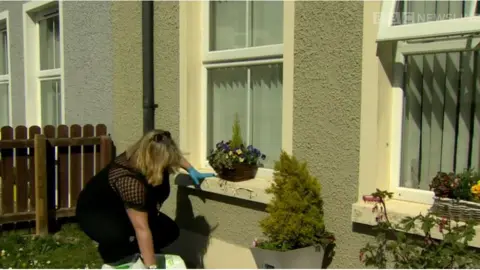
By Easter Sunday, her breathing was a little easier.
"But it's the inability to breathe is very frightening. And I mean, I was lucky. I knew what was happening to my body, I knew how to best try to breathe."
Jennifer is feeling a bit better now, but is still tired, and with no appetite.
And thoughts of returning to work are starting to cross her mind - but she will give herself time.
"I need to be 100% well before I return to work, so that my body is, heaven forbid, ready to fight a second time.
"My advice is, if you are genuinely frightened and your breathing is extremely poor and you're having to work hard, over a period of time with your breathing, just ring 999. You don't necessarily have to go to hospital. NIAS has lots of options.
"I think my body is still just trying to come to terms with it and use its energy to breathe, and to reconcile myself to what has been going on."
