Brighton hospital: Third of Covid deaths likely infected on wards

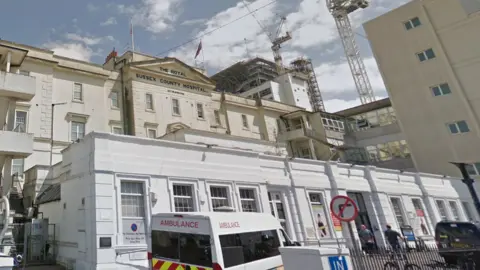 Google
A third of patients who died with Covid-19 at a Brighton hospital are likely to have contracted the virus on the wards, the BBC has found.
At least 173 people who died with the virus at Brighton and Sussex University Hospital first tested positive after more than a week on the ward.
A former cleaner alleged infection control at the hospital was inadequate.
The trust said hospital infection rates "reflect almost exactly the levels of Covid transmission in the community".
Figures released under freedom of information laws show that 106 people who died with Covid had definitely acquired the virus in hospital, first testing positive 15 days or more after admission.
A further 67 people were probably infected in the hospital, first testing positive between eight to 14 days after admission.

Armin Rudde, who worked as a cleaner at the hospital during the first wave, believes more could have been done to prevent infections.
He said staff were made to move between Covid-positive "red zones" into "green zones", where non-Covid patients were treated.
He fears staff may have been infected and were a "possible risk of transmission to patients".
Mr Rudde also alleged enhanced cleaning protocols were not followed on the elderly care wards, patient beds were spaced less than two metres apart and cleaning staff were not provided with adequate PPE.
He stopped working at the hospital in My 2020, after falling ill with Covid.
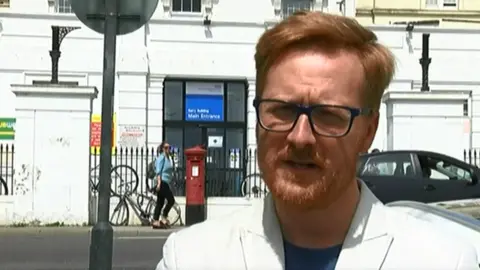
Brighton Kemptown MP Lloyd Russell-Moyle said the figures "seem to show that a much higher rate of people contracted Covid" at the hospital than in other hospitals in the region.
"That it deeply concerning," he said.
Former health secretary Jeremy Hunt said the figures were "devastating" but added that it was an issue affecting hospitals across the country.
"We think between 20 and 40% of the people who died from Covid across the country picked up the infection in their hospital," he said.
Brighton and Sussex University Hospital said it had looked at Mr Rudde's concerns and was "satisfied that we have taken the appropriate steps to protect the safety of our staff and patients".
It said it had "strengthened our infection prevention and control in line with national standards" as the pandemic developed and more was understood about the virus.
Asymptomatic testing of staff began in November, when kits were made available by government.

