Zainab Mughal: Nottingham woman donates blood for toddler with cancer

 OneBlood
A British blood donor says she feels "privileged" to help a two-year-old girl receive crucial cancer treatment in the United States.
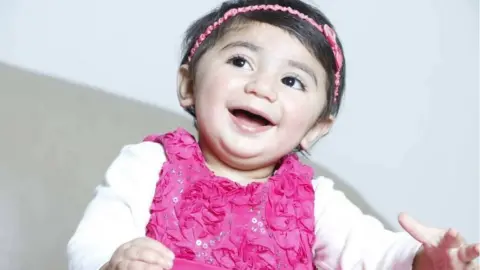
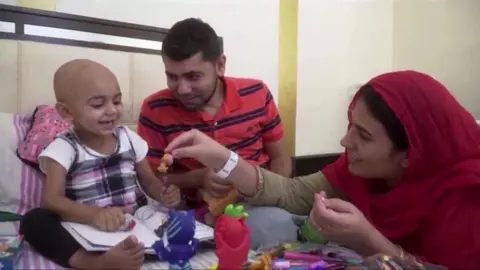
Zainab Mughal, who lives in Florida, suffers from neuroblastoma, a rare form of cancer that mostly affects babies and young children. She also has one of the rarest blood types in the world.
More than 1,000 people were tested in a global search to find a donor match.
The donor, a mother-of-two from Nottingham, has chosen to be anonymous.
 CBS
CBSZainab's blood is missing an antigen known as "Indian B". Most people carry the antigen in their red blood cells, non-profit organisation OneBlood said.
The only donors likely to be a match are people of exclusively Pakistani, Indian or Iranian descent with blood type O or A, and fewer than 4% of such people will be missing the Indian B antigen.
The Nottingham donor, who is aged 50 and of British-Indian origin, said she felt "very humbled" to play "a small part" in helping Zainab's treatment.
"I do hope the publicity encourages more people to donate, especially from the Asian community," she said.
"Even a single donation can make a massive difference to someone who needs it."
 PA
PATwo other donors have been found in the US, but doctors believe at least seven to 10 people will be needed to contribute throughout the course of Zainab's treatment.
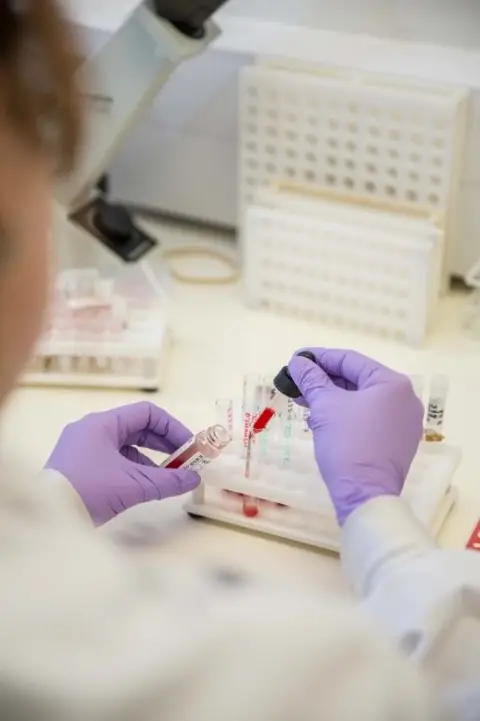
The British donor was traced after OneBlood and the American Rare Donor Programme contacted the International Blood Group Reference Laboratory (IBGRL), a specialist unit in Bristol run by NHS Blood and Transplant (NHSBT).
A match was found on the UK's rare donor panel, which was tested by NHSBT and given to the US.
NHSBT consultant haematologist Dr Rekha Anand, who manages the UK's rare donor panel, said: "The credit goes to all our British donors, whose altruism is the key."

Follow BBC East Midlands on Facebook, Twitter, or Instagram. Send your story ideas to eastmidsnews@bbc.co.uk.
