Body in the tree murder explored in BBC Sounds podcast

 BBC
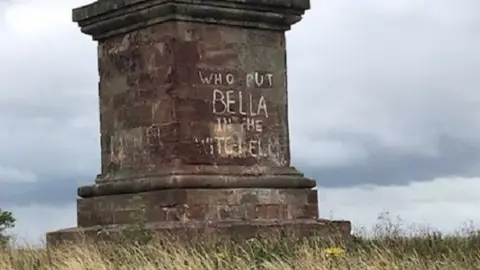
BBC"Who put Bella down the Wych Elm - Hagley Wood?"
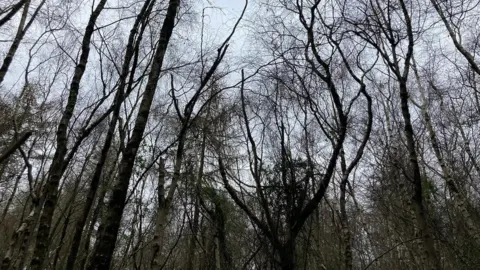
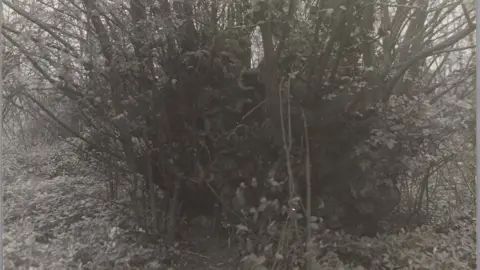
It was 1943, the middle of World War Two and four boys were looking for bird eggs when, in woods in Hagley, Worcestershire, they saw a bird fly in and out of a tree.
Intrigued, they investigated and found the skeletal remains of a woman.
Eighty years on, this unsolved murder has fascinated people across the world and is the subject of a new BBC Sounds series - The Body in the Tree.
The woman's identity remains unknown - all we know is how, when and where her body was found.
Warning - this article contains distressing content
The discovery on 18 April 1943 came when those boys wandered into Hagley Woods and, as one of them, Bob Farmer, told the BBC 20 years ago, they found her body.
"Just the head was on the surface and a bone protruding from the earth and I think you could see a shoe or a pair of shoes all scattered about with the rotting fabric of what was left of her dress," he said.
A forensic scientist, Prof James Webster, carried out a post-mortem examination and, while he could not be 100% sure how she died, he was sure she had not got into the tree by choice.
The verdict of an inquest into the death was "murder by person or persons unknown" and police investigated but after months of work their inquiries petered out.
Then in March 1944, graffiti began to appear across the West Midlands and began in Birmingham with the words "Hagley Wood Bella" and "Who put Bella down the Wych Elm - Hagley Wood" on two streets.
 Worcestershire Archive and Archaeology Service
 Speculation grew and people swapped stories which led to newspaper articles running claims she was a witch or the victim of an occult ceremony or a spy, parachuted from Nazi Germany.
Books have been written, plays, poems and even an opera about this woman's story.
But despite further police investigations she remained an enigma - we do not know her name, where she was from or who killed her.
We also do not know where her remains are.
I have tracked them to a police training centre in Birmingham where they were displayed until the late 1960s or early 1970s but the force has no further record of them.
A key aim of this BBC Sounds series is to try and find them as they could help towards identifying this woman - if you can help you can email us via: thebodyinthetree@bbc.co.uk
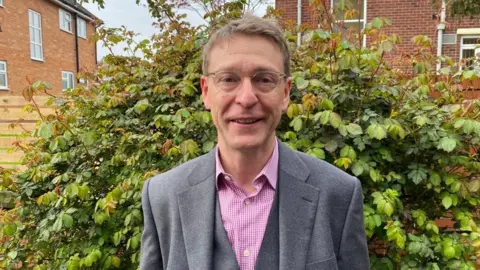
We have also examined the case through modern eyes and used science not available in 1943 including hearing from forensic psychiatrist Dr John Sandford.
Eighty years ago, he said forensic science was "in a much more primitive state, there's lots of things we can do these days which weren't open to them".
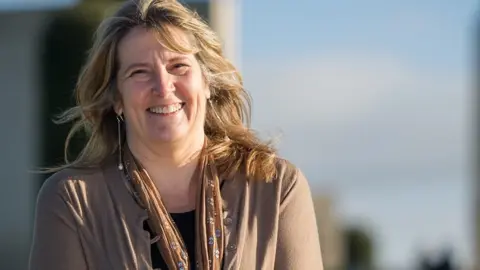
You will also hear from Prof Maggie Andrews, an expert in cultural history at the University of Worcester.
"Constraining them in a tree has a horrible spooky and unpleasant feel to it and that adds to people's fascination with it. There's a sense of the very disposability of women," she told me for the BBC Sounds series.
 University of Worcester
We go over the original police files, examine the various theories around this woman's death in Hagley Woods and tell you how you could help towards a solution.
Can we finally solve the mystery of the body in the tree, and give the victim a name?
Listen to all eight episodes of The Body in the Tree on BBC Sounds and contact us via the email: thebodyinthetree@bbc.co.uk