Concorde's droop-nose to be fixed for 50th anniversary

 BBC
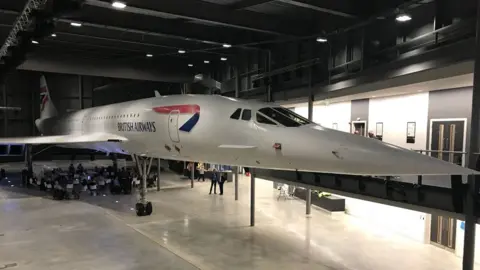
BBCThe last Concorde to take flight will once again be able to turn its nose up - and down - when one of its most famous features is restored.
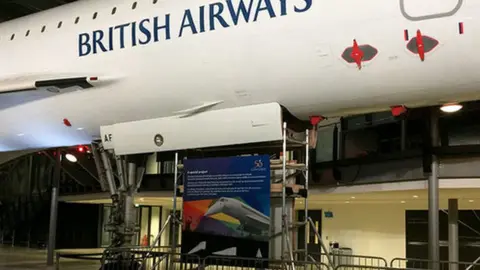
A purpose-built hangar at Aerospace Bristol has housed the Alpha Foxtrot since its final flight in 2003.
Its pivoting droop-nose - designed to provide greater visibility - was disabled when the plane was retired.
Exhibitors hope to have the nose moving again in time for the 50th anniversary of the first British flight on 9 April.
It was operated by the pilot from a single button on the control panel in the cockpit.
"First the visor came down, then the pilot could select from five degrees of nose down or fully down," said Conservation manager Paul Jones.
 Aerospace Bristol
It was used when the aircraft was taxiing or coming into land.
"The front end of the Concorde is a very sharp pointy end and the pilot had very little visibility so that's what it was for," said Mr Jones.
 Aerospace Bristol
The droop-nose has not operated since the aircraft engines were shut down and it was decommissioned.
Hydraulic fluid was then drained following its final flight in November 2003.
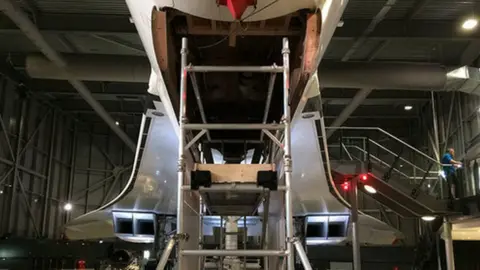
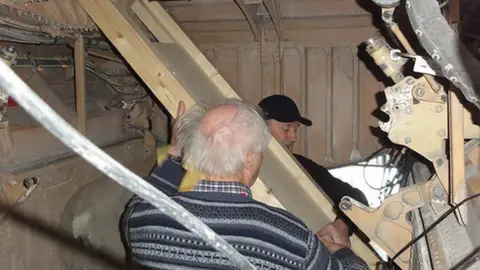
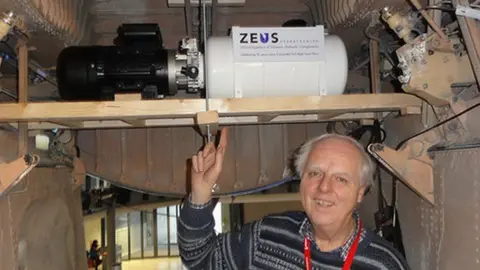
A team at the museum is working on a way of getting the hydraulic system for the droop nose working without affecting any other systems on the aircraft.
 Aerospace Bristol
This means limiting hydraulic fluid to the nose area to prevent it causing seals in other parts of the aircraft from degrading and leaking.
If hydraulic fluid reaches other automatic parts of the aircraft, it could cause the equipment to move.
A bespoke motor and power pack will supply 3000psi of hydraulic pressure to the droop nose system.
It will be housed in the nose landing gear bay so that it will not be visible to the public.
"Getting the nose moving and being able to show that to visitors will be fantastic," said Mr Jones.
 Aerospace Bristol