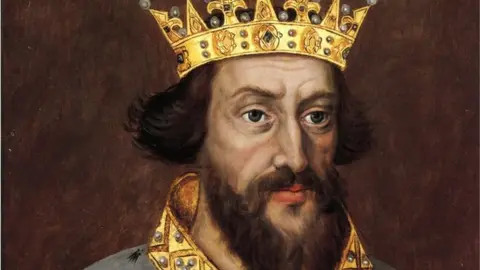
Historian visits Reading in search of burial site of Henry I

 None
NoneA historian searching for King Henry I has visited a town where it is believed he could be buried.
Philippa Langley, who was involved in finding the remains of Richard III, travelled to Reading to meet with politicians and history enthusiasts.
Henry's body was transferred from Normandy to Reading Abbey after his death in 1135.
Labour MP Matt Rodda thinks the king could now be buried in the grounds of Reading Prison.
King Henry I founded Reading Abbey, which was built in the wake of The White Ship disaster of 1120.
The abbey was destroyed during the Dissolution of the Monasteries, and the king's exact burial spot remains unknown.
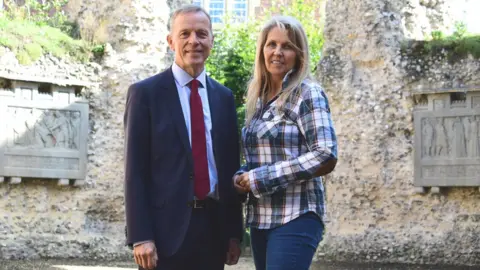
Ms Langley met the Mayor of Reading Tony Page and Labour MP for Reading East Matt Rodda on 29 September.
 Office of Matt Rodda MP
Mr Rodda described the visit as "incredibly positive".
"She is absolutely passionate about the history of Reading, particularly its medieval history," he said.
"There are some local documentary sources on where he is buried. It could be under part of the Abbey Ruins or at the back of St James' Church."
Mr Rodda has been campaigning for Reading Prison to be sold to Reading Borough Council or a local community bidder for theatre, arts and heritage use.
He said: "Henry I could be buried under the prison, it's quite possible his remains may still be in Reading."
His petition has gained 13,061 signatures.
However, the prospect is looking increasingly unlikely, as the government have confirmed that the sale of the historic jail to a developer is progressing.
Meanwhile, efforts to find the King's burial place are being undertaken by Mrs Langley's The Hidden Abbey Project, which states that excavation works to attempt to find the King's body would cost £55,000.

