Nasa's Perseverance rover landed on Mars at 20:55 GMT on 18 February after almost seven months travelling from Earth.
Since then, it has sent back some amazing images from around its landing site, Jezero Crater, a 49km (30-mile) wide impact depression just north of the Red Planet's equator.
Here is a selection of the pictures sent back from the mission, as Perseverance hunts for signs of past microbial life, seeks to characterise the planet's geology and past climate, and collects Martian rock.
Nasa/JPL-Caltech/MSSS
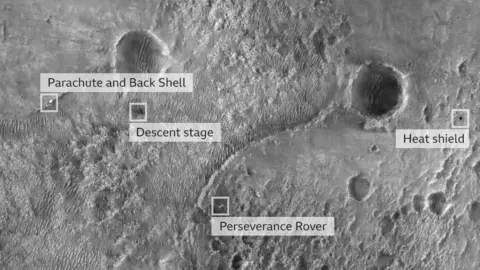
The first image of the Perseverance rover on the surface was taken from the High Resolution Imaging Experiment camera aboard Nasa's Mars Reconnaissance Orbiter.
Nasa/JPL-Caltech
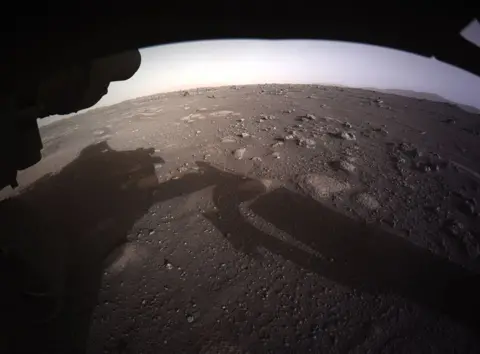
This is the first high-resolution, colour image to be sent back by the cameras on the underside of the rover after its landing.
Nasa/JPL-Caltech/UArizona
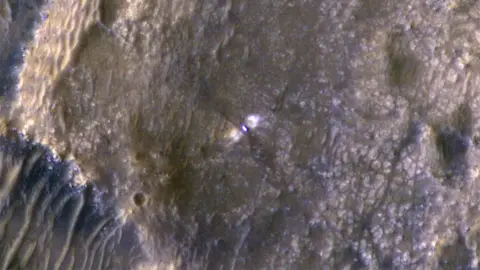
Perseverance can be seen in this enhanced colour image at its landing site, six days after touchdown. You can see the two bright zones to the sides of the rover that have been scoured clear by the descent stage rockets and the dark material appears to have been funnelled outward both in front and behind the rover.
Nasa/JPL-Caltech
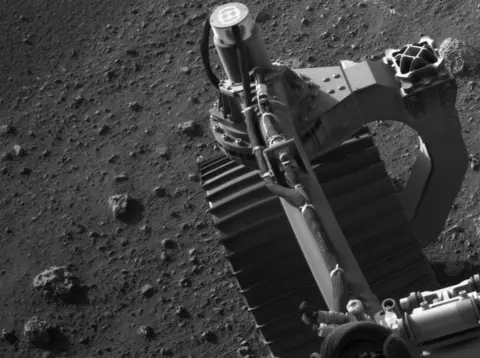
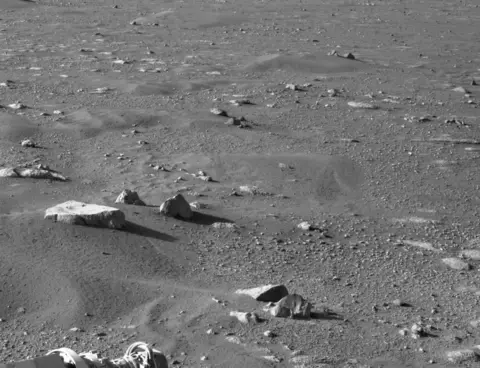
Perseverance is carrying an advanced payload of science instruments to gather information about the planet's geology, atmosphere and environmental conditions. The camera that took this image is located high on the rover's mast and aids in driving.
Nasa/JPL-Caltech
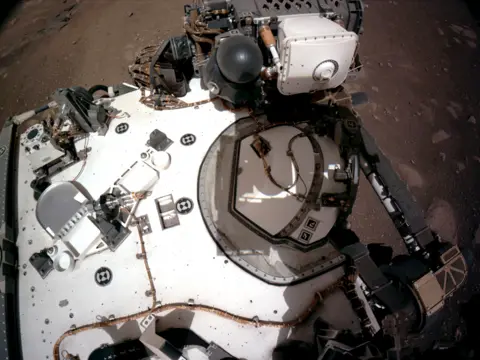
This is a view of the rover's deck and provides a good look at PIXL, one of the instruments on the rover's stowed arm that will be used to identify chemical elements.
Nasa/JPL-Caltech
PIXL also includes a camera that takes close-up images of rock and soil textures.
Nasa/JPL-Caltech/ASU/MSSS
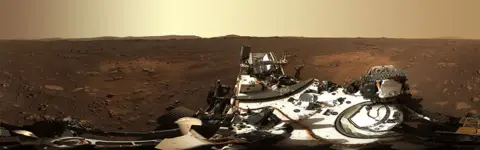
This is the first 360-degree panorama taken by Mastcam-Z, the rover's zoomable pair of cameras. The picture was stitched together on Earth from 142 individual images.
Nasa/JPL-Caltech/ASU/MSS
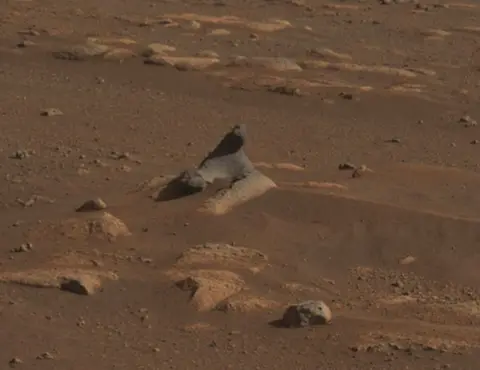
This wind-carved rock seen in the panorama shows just how much detail is captured by the camera systems. The rock has been informally named the "harbour seal", for obvious reasons.
Nasa/JPL-Caltech/ASU/MSSS
A detail taken from the top of the panorama shows the rim of Jezero Crater, Perseverance's landing site. The rim is several kilometres away.
Nasa/JPL-Caltech/ASU
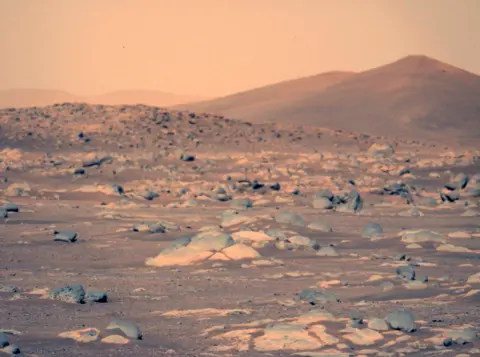
This image was taken by the "left eye" of Mastcam-Z. The left and right cameras are next to each other and point in the same direction, providing a stereo view similar to what human eyes would see.
Nasa/JPL-Caltech/ASU
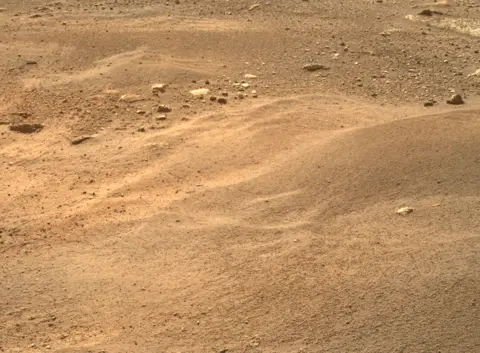
Taken a couple of days earlier, using the same camera, this image was selected by public vote and featured as "Image of the Week" for Week 2 of the Perseverance rover mission.
NASA/JPL-Caltech/ASU
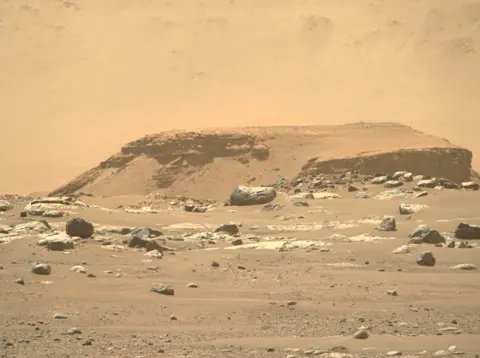
In this image, the "right eye" of Mastcam-Z has zoomed in on what is probably a section of the ancient delta in Jezero that has become isolated from the main formation as a result of erosion over time. The layered sediments of the delta are one of the key science targets for the rover in its search for signs of ancient life.
NASA/JPL-Caltech
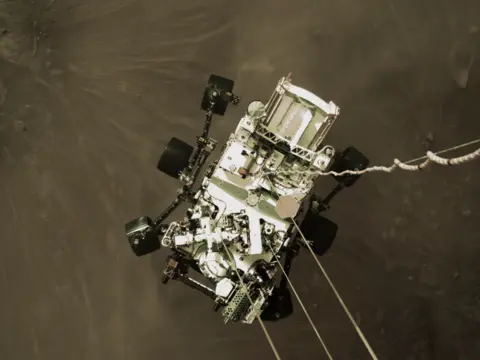
The earliest pictures sent back were made during the rover's descent. Here, Perseverance is being lowered on three nylon ropes and an "umbilical cord". When the rover's wheels touched the ground, the tethers were severed.
Nasa/JPL-Caltech
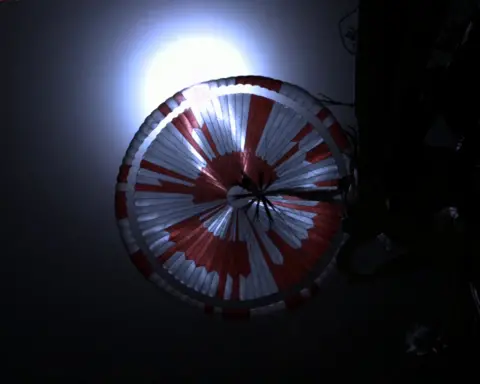
This image was also made during the descent. When the rover was about 11km (7 miles) above the ground, the spacecraft deployed the supersonic parachute to slow its fall.
NASA/JPL-Caltech
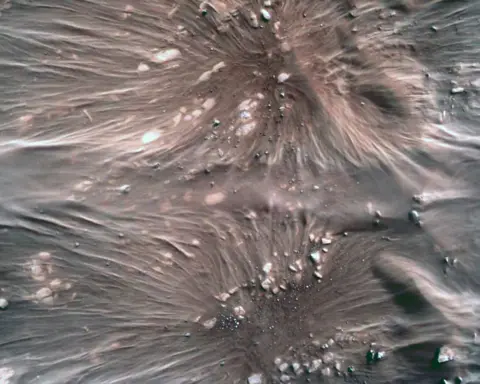
The surface of Mars directly below the rover in the final moments before touchdown. This picture shows streams of surface dust being pushed away from the vehicle by exhaust plumes.
NASA/JPL-Caltech
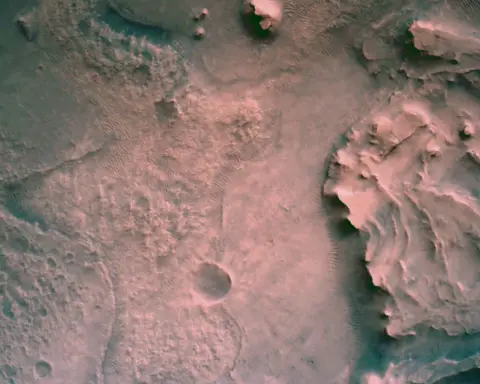
Another image looking down on Jezero during the descent. The rover eventually touched down towards the centre-left of this picture. The raised ground to the right is the remnant delta formed when an ancient river flowed into the lake-filled crater and dropped its sediment. Rock and soil samples from the delta will be encased in tubes, and left on the ground to be returned to Earth at a future date.
The Perseverance rover has initial funding to operate for one Mars year, roughly two Earth years.

 Nasa/JPL-Caltech
 Nasa/JPL-Caltech/MSSS
 Nasa/JPL-Caltech
 Nasa/JPL-Caltech/UArizona
 Nasa/JPL-Caltech
 Nasa/JPL-Caltech
 Nasa/JPL-Caltech
 Nasa/JPL-Caltech/ASU/MSSS
 Nasa/JPL-Caltech/ASU/MSS
 Nasa/JPL-Caltech/ASU/MSSS
 Nasa/JPL-Caltech/ASU
 Nasa/JPL-Caltech/ASU
 NASA/JPL-Caltech/ASU
 NASA/JPL-Caltech
 Nasa/JPL-Caltech
 NASA/JPL-Caltech
 NASA/JPL-Caltech