Nasa astronauts train in underwater space station
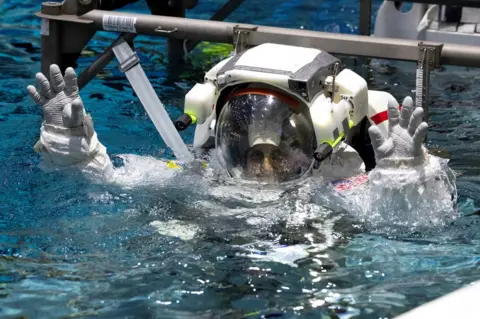
Astronauts have been training at the Johnson Space Center in Houston, Texas, to prepare for flying on Boeing's Starliner spacecraft, which could one day take tourists into space.

 Mike Blake / Reuters
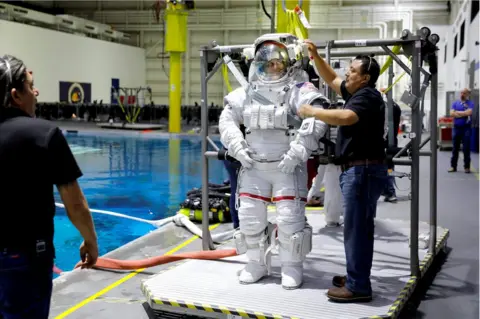
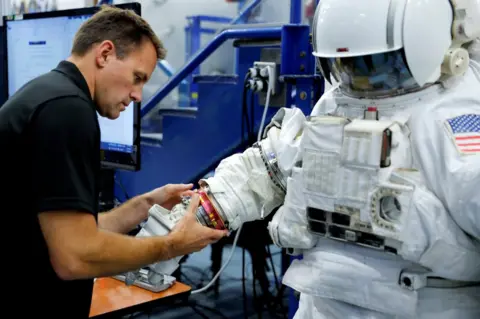
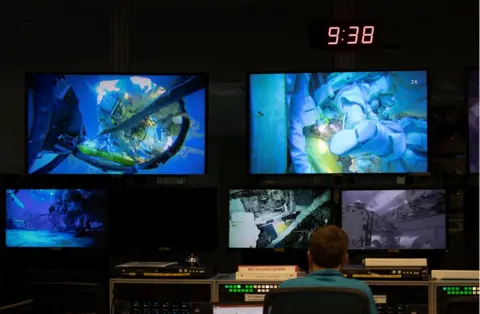
Reuters news agency was given access to the space centre to see the astronauts put through training for the planned flight.
 Mike Blake / Reuters
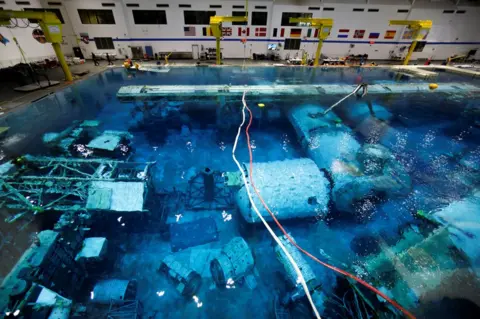
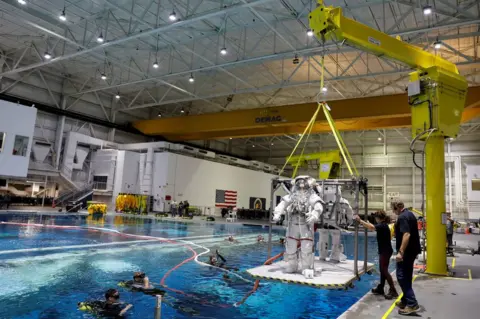
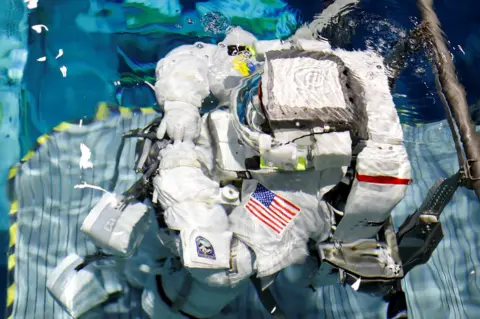
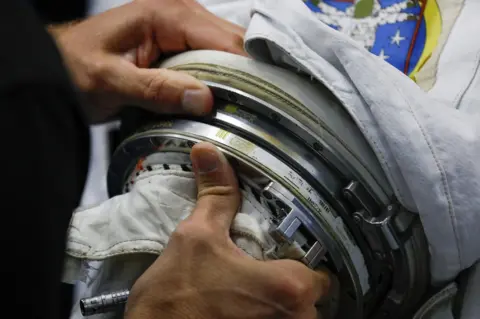
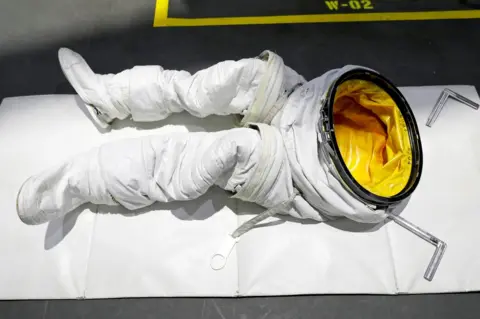
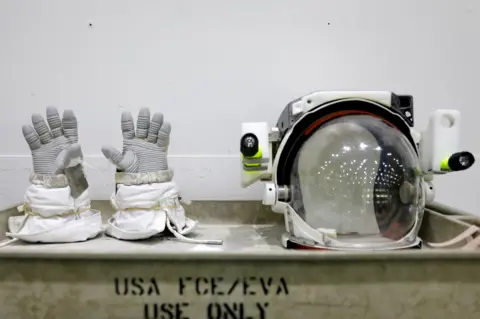
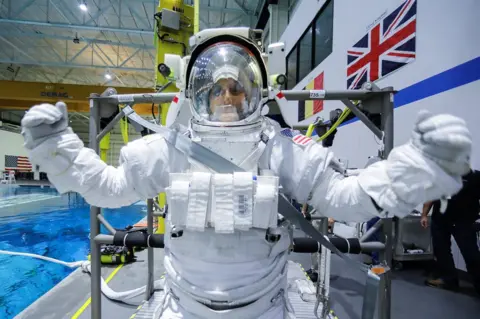
The experience included wearing a space suit and exploring an underwater mock-up of the space station.
 Mike Blake / Reuters
 Mike Blake / Reuters
It is a neutral-buoyancy lab, designed to simulate the feeling of weightlessness in space.
 Mike Blake / Reuters
Boeing is competing with Elon Musk's SpaceX to become the first private company to provide human space flights from the US, following the end of the space shuttle programme in 2011.
 Mike Blake / Reuters
Nasa is paying the two companies nearly $7bn (£5.7bn) combined to build rocket-and-capsule launch systems which will have Nasa astronauts on board.
 Mike Blake / Reuters
 Mike Blake / Reuters
The space flights are only for professionals at the moment, but future missions may be open to tourists.
 Mike Blake / Reuters
"So far, we've only had about 500 people go to space. That's so few compared to the seven or eight billion people on planet Earth," said astronaut Mike Fincke.
"Hopefully, in the next 10 years it'll go from 500 to 5,000. And [in] the next 20 years, maybe even 50,000 or more. It'll be great to have more people see what I've seen."
 Mike Blake / Reuters
Fellow astronaut Suni Williams said: "I wish everybody on the planet would have the ability to take a lap around the planet once, just to see it from that perspective ... [to] see our planet and recognize that we actually do just have one home, probably we should take care of it and probably we should be a little bit nicer to each other."
 Mike Blake / Reuters
Photos by Mike Blake.
