Street photography reveals China in the 1980s
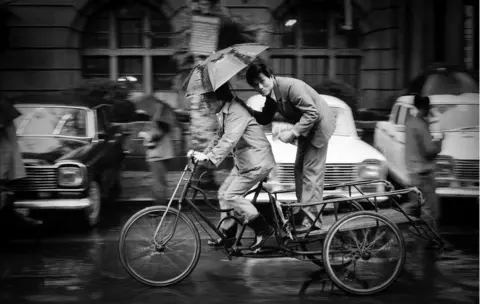
British photographer Adrian Bradshaw arrived in Beijing in 1984, going on to spend three decades documenting China's changing culture.

 ADRIAN BRADSHAW
In his new book, The Door Opened: 1980s China, Bradshaw shares scenes of everyday life in China, drawing from his archive of almost two million photos.
Here is a selection of images, with captions and descriptions from the photographer.
 ADRIAN BRADSHAW
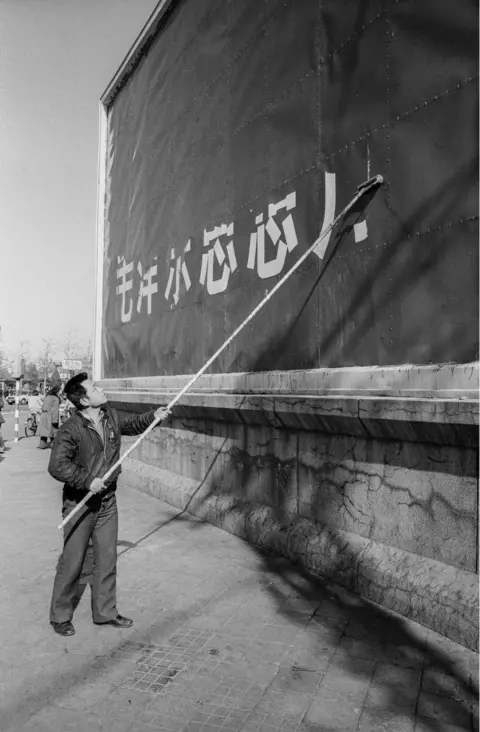
Bradshaw says of the photo above: "The big red propaganda boards typically at main intersections were gradually replaced by advertising, often for overseas brands of electronics that were not even available in the shops.
"The idea was to build awareness for the time China would be rich enough to buy imported items.
 ADRIAN BRADSHAW
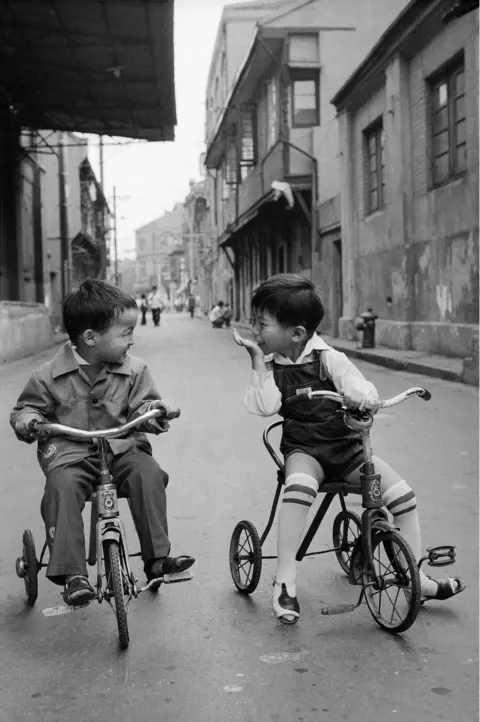
"The sight of a foreigner was very unusual at that time even in Shanghai, formerly the most cosmopolitan of Chinese cities."
 ADRIAN BRADSHAW
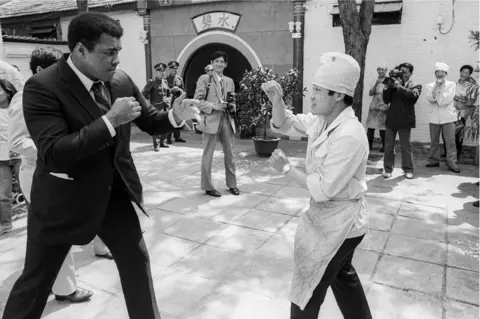
In 1985, Bradshaw spent a week with former world heavyweight champion boxer Muhammad Ali and his entourage, an experience that helped him make the decision to stay in China.
"One of the first visitors to China I was asked to photograph was the great Muhammad Ali, who was being sounded out as an adviser for Beijing's desire to host the Olympic Games in the future," he says.
"Undimmed by early signs of Parkinson's disease, he was universally recognised, with his good humour, sparring and deft sleight of hand - member of The Magic Circle no less - Ali brought smiles and cheers wherever he went.
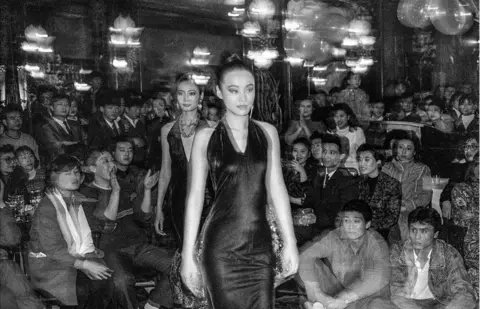 ADRIAN BRADSHAW
"This was possibly the first fashion show in reform-era China. The looks on the faces of the audience are priceless.
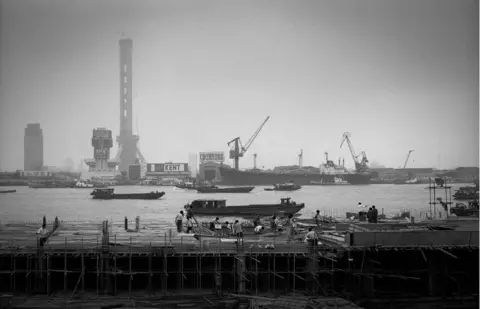 ADRIAN BRADSHAW
"It's amazing to me how derelict the other side of the river in Shanghai was. There wasn't even a bridge.
"Now, there are multiple bridges, tunnels, underground lines and a skyline that competes with Manhattan.
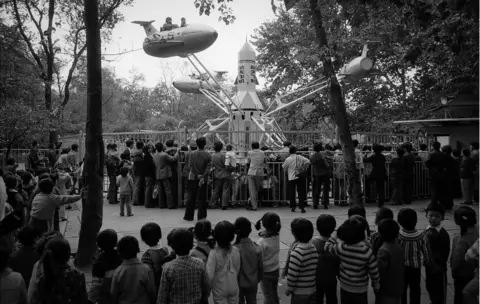 ADRIAN BRADSHAW
"Who knows, one of these children may have grown up to be a real astronaut. No-one imagined this could be possible at that time.
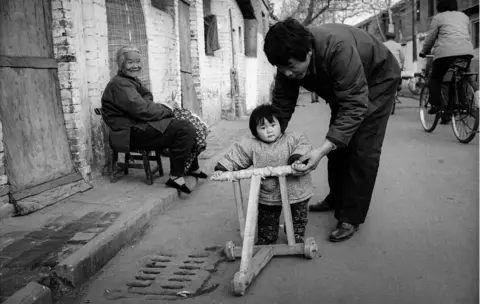 ADRIAN BRADSHAW
"The tenderness of this moment is all the more striking when one considers the presence of the granny who was born at a time when it was normal for women to be intentionally crippled with bound feet.
 ADRIAN BRADSHAW
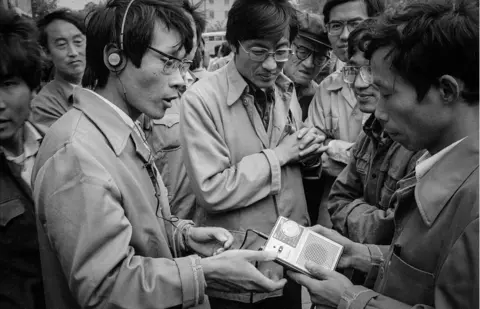
"Consumer electronics were enormous status symbols in China and everywhere I went I would be asked how much my camera cost.
 ADRIAN BRADSHAW
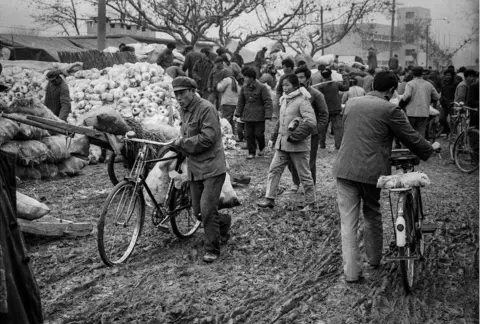
"Street markets tended to be dominated by large quantities of the same produce and all prices were negotiable.
"This is where the new economic era really started, with farmers able to make extra money if they were more productive.
 ADRIAN BRADSHAW
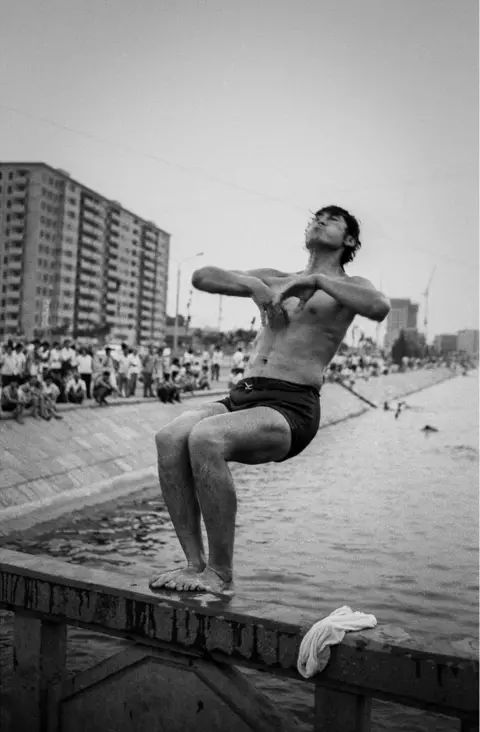
"Air conditioning was almost unheard of in most of China in the 1980s.
"So, with summer temperatures reaching 40C, people stayed out late and jumped in any convenient body of water.
 ADRIAN BRADSHAW
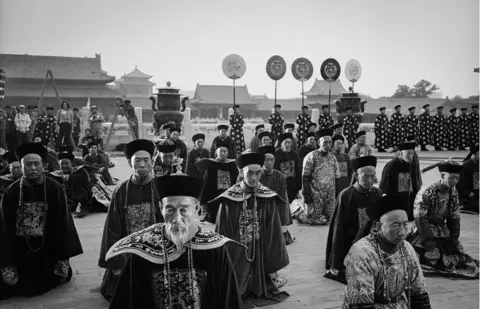
"I met [director Bernardo] Bertolucci on his first exploratory trip to Beijing to negotiate access to the Forbidden City to make [The Last Emperor].
"We walked around the Imperial Palace and he explained how since a child he had been fascinated by the story of an emperor who was deposed and rehabilitated in a new system.
"He was particularly keen to show me the passageway where the last emperor, Pu Yi, had learned to ride a bicycle, which would become a significant moment in the film."
Photos are copyright.
