World Earth Day: The women working for change
Photographers at female-run non-profit Lensational have explored the untold stories of women in Africa making a living from environmental preservation.


The plastic collector
 Doreen Ntumy/Fibi Afloe/Lensational
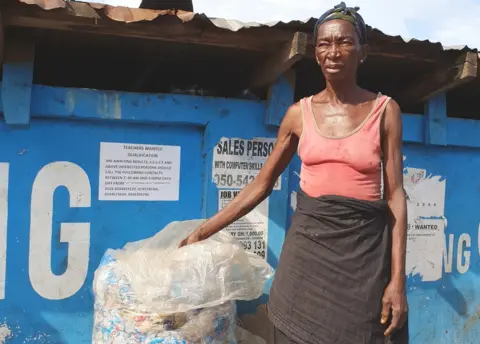
In Accra, Ghana, water is readily available but it is sold in individual plastic sachets which now litter the city's streets. Yaa Sule, 45, picks the sachets off the street and fills around five big bags a day with them, which she then sells to a recycling company to support her children and grandchildren.
 Doreen Ntumy/Fibi Afloe/Lensational
She says she is glad to contribute to resolving Accra's plastic problem.
 Lensational/Doreen Ntumy
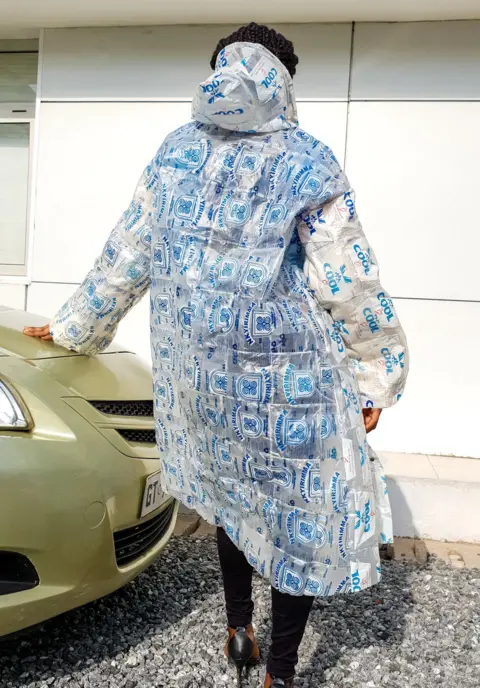
The recycled sachets are then used to make raincoats and other products by a social enterprise company.
Seeds of Change
 Victoria Akeere/Lensational
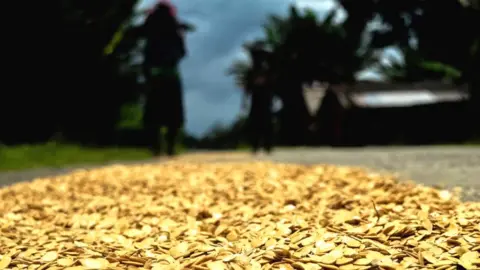
Egusi melon seeds being sun-dried in Port Harcourt, Nigeria. In Nigeria, women are often the ones harvesting, processing, and selling these seeds, which are known to improve soil quality and have many nutritional benefits.
A recent UN report has shown that the unique agricultural knowledge acquired by women in small-scale farming will be vital in helping promote biodiversity and limit food shortages caused by climate change.
From beads to conservation
 Tetek Manina/Lensational
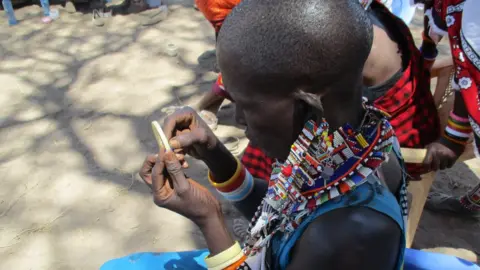
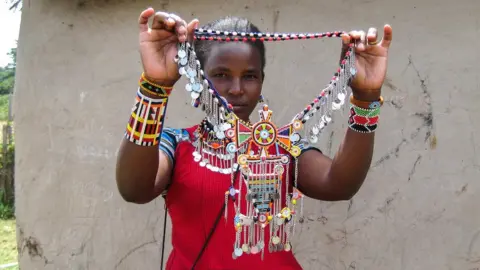
A Maasai woman carries out beading work in Amboseli, Kenya. Women in the area use the revenue from selling their beadwork to buy lights, which in turn ward off wildlife at night and make it less likely that the wildlife will be shot and killed.
 Nuruantai Keuwa/Lensational
 Lensational/Leina Lalaito
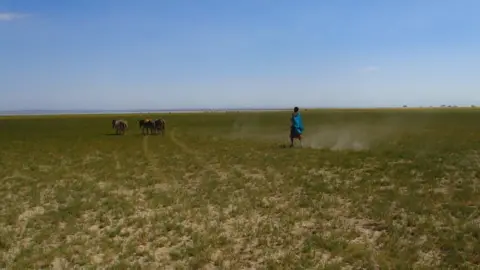
In Maasai culture, women are the traditional guardians of cattle, and as such are well placed to monitor wildlife. The women in this photo belong to special engagement teams who work alongside the International Fund for Animal Welfare (IFAW) to do this.
All photographs are from Our Shared Forest published by the non-profit group Lensational.

What is 100 Women?
BBC 100 Women names 100 influential and inspirational women around the world every year and shares their stories.
Read more:
