Newspaper headlines: 'Lockdown 3 fear' and Oxford jab 'before new year'


 PA Media
"It's beginning to look a lot like lockdown" is the Daily Mail's front page headline, with the paper saying ministers are considering introducing a fourth tier of coronavirus restrictions in England to tackle a surge in cases in the South East.
The Daily Telegraph reports that emergency measures limiting travel and closing non-essential shops in the region could be announced later on Saturday.
Writing in the paper, Juliet Samuel questions whether tightening restrictions will cause infections to decline given the lack of evidence that the autumn lockdowns in England and Wales worked.
Dr Nick Scriven, from the Society for Acute Medicine, tells the Daily Mirror that another national lockdown now seems unavoidable and the relaxation of restrictions over Christmas "strikes fear" into front-line medical staff.
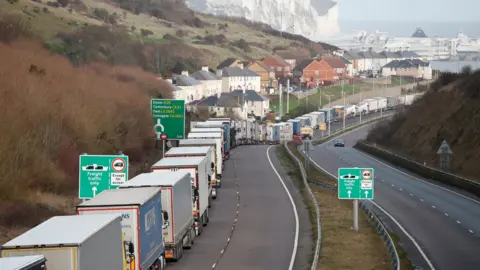
The FT Weekend says French customs officials will patrol Eurostar trains to ensure new rules on the movement of goods between the UK and the EU are observed when the Brexit transition period ends.
The Guardian reveals that lorry drivers and holidaymakers will no longer be allowed to cross the Channel with ham and cheese sandwiches, even if they intend to eat them during the journey.
The government guidance on products containing meat or dairy has been met with anger by some haulage workers, with one telling the paper: "God help the poor customs bloke who is going to turf out the driver's food box."
 Reuters
The Times reports that the fashion chain Next is planning a deal to rescue Arcadia, which entered administration earlier this month.
The paper says it is one of around 30 firms interested in buying the owner of Topshop, with Boohoo, Mike Ashley's Frasers Group, and the Chinese fashion company Shein believed to also be preparing bids.
Scientists have used carbon-dating technology to create the world's first age-verification process for whisky, according to the i weekend.
Researchers from the Scottish Universities Environmental Research Centre hope the discovery will combat the growing problem of vintage whisky fraud, with experts believing that as many as 40% of bottles being traded are actually fake.


