The 24-hour gritting operation keeping roads clear

 BBC
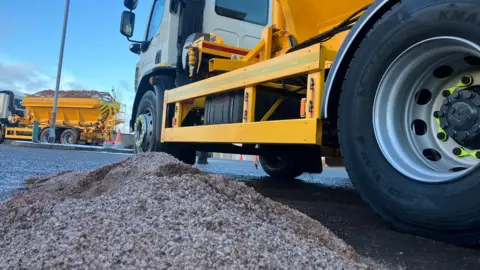
BBCWhen temperatures fell and road conditions became treacherous over the last week, the flashing orange lights of gritters could be spotted across Berkshire.
As Storm Goretti approached the South, Reading Borough Council's highways teams worked around the clock to keep roads safe and usable.
The rock salt that they spread reacts with rainwater or snow to form a brine solution, lowering the freezing point of water and preventing icy conditions.
Karen Rowland, lead councillor for environmental services, said the gritting operation ran on a "24-hour basis".
"There's a lot of technicalities in so far as cloud cover, in so far as when we reach the freezing point that can tell us we've got to be out gritting," she says.
When the temperatures drop the decision to grit falls to the contractor used by Reading and Wokingham Borough Councils, depending on the weather forecast.
Ideally, gritting should be carried out once it has stopped raining but before freezing conditions start.
Rowland says: "We're constantly out looking at forecasting, we're looking at radar information, information on the ground, to understand when we need to grit and then we get going.
"Probably our most popular times for being busy are 03:00."

Once the decision has been made, gritters are expected to be on Reading's roads within one hour.
The council has four gritters and will use 3,300 tonnes of salt between October and May.
The council does not normally grit pavements, but if pedestrian areas become too slippery it will hand grit the area, as happened on Broad Street last week.
