'I have 45 children applying to my special school each week'

 Martin Giles/BBC
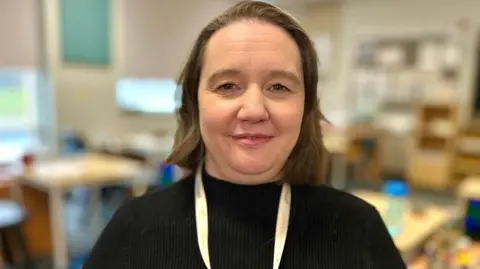
Every week, about 45 new names land on Steph Smith's desk, all hoping for a place at her school.
Sadly, most will be disappointed. The Cavendish School, in Impington on the outskirts of Cambridge, was originally built for 80 pupils but now has 129 on roll.
It was designed for autistic children unable to manage in mainstream school, but for whom special school might not be the right place.
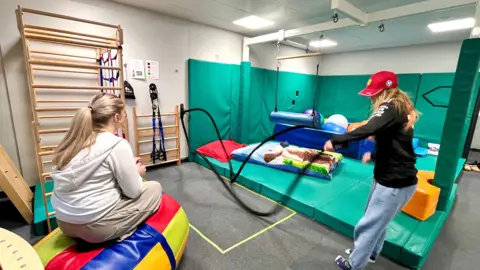
"We've already had to make adaptations to our building, which is quite costly," says Smith, head teacher since it opened in September 2021.
"The sheer number of children within the school is getting to a point where it then affects the children already in the school because they're here because [of] loud bustling environments, lots of children; those are the things that they find difficult and we're starting to recreate that now."
So, what is life at the coalface of the special educational needs and disabilities (Send) system like, and what pressure is it placing on council budgets?
 Martin Giles/BBC
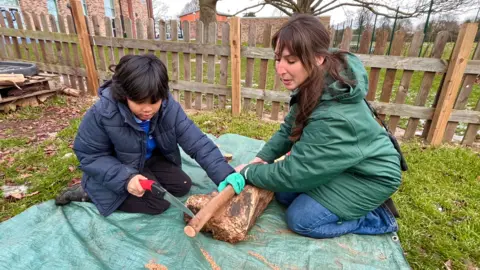
The school takes in pupils from seven different local authority areas: North Northamptonshire, Central Bedfordshire, Hertfordshire, Peterborough, Cambridgeshire, Suffolk and Essex.
Ofsted rates it as outstanding, noting "pupils flourish at this school".
One family even moved from Wales to get their child a place but demand certainly outstrips supply.
"For me, that says that there is not enough of these types of school and it's not just down to 'Well, can we make mainstream better?'" says Smith.
"There is a place for these provisions that are needed by these young people if we want them to succeed.
"Just last year, we had our first set of GCSE results and those children absolutely showed that they don't deserve the mainstream system to have written them off."
 Martin Giles/BBC
Smith herself is neurodivergent, which "helps me question the status quo", she says.
"Some schools insist on the colour of the socks being part of their policy, but here, one of the things we say is 'Why?'
"There's not many life reasons or employment reasons why you need to wear black socks.
"That's created a safe place where they feel they can be themselves. And when they feel safe, then they can learn."
Ali, 14, was non-verbal in her previous school, using a whiteboard and a tablet to communicate, but is now hoping for a career in performing arts.
"I can speak in this school," she says. "I feel a lot more confident in school and there's more ways for me to cope. I can leave and go on walks."
But this comes at a financial cost to local authorities. A place at the school starts at £16,000 a year, while one at an independent school would typically cost more.
Nationally, the number of children needing support is growing. In 2024, 4.8% of pupils had an education, health and care plan, a legal document setting out their needs and how they should be met.
By 2025, that had increased to 5.3%, according to Department for Education (DfE) figures.
 Phil Shepka/BBC
The government currently has a "statutory override" over councils' Send high-needs spending until March 2028, which means deficits do not sit on their budgets.
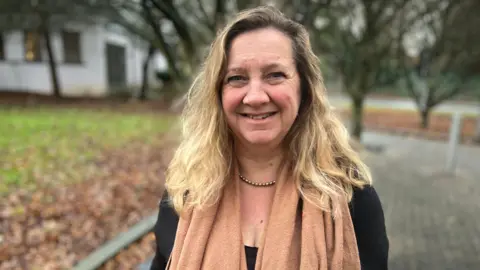
"Somebody at some point will have to pay it, but at the moment it's sitting in a sort of strange financial black hole," says Lucy Nethsingha, Cambridgeshire County Council's Liberal Democrat leader.
The DfE says any "deficit from 2028-29 onwards will be absorbed within the overall government budget".
This high-needs deficit in Cambridgeshire stands at £98m. If the council was to become responsible for this, Nethsingha says it would leave the authority "in section 114 territory", where councils effectively declare themselves bankrupt.
"That would be true for about 100 councils across the country, if that statutory override was suddenly taken away," she says.
She admits it keeps her up at night, and says the costs relate to "nearly always very, very high-cost individual placements for children who need independent schools to provide for their needs".
High demand is a major factor, she says, with independent providers knowing they can charge "very high fees – and they do".
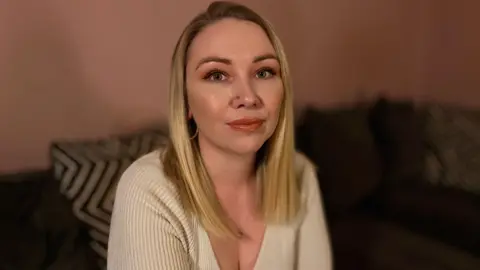
Abbie, from Cambridge, is currently navigating the Send system.
Her six-year-old son was on the waiting list for an educational psychologist assessment for nine months, before he was excluded.
He remains out of school but does have alternative provision.
 Martin Giles/BBC
"It's a struggle," says Abbie. "It's not for the faint-hearted. Having to battle every day for what your child is entitled to is something people shouldn't have to go through."
She remembers a time when she "wasn't going a day" without speaking to the local authority, schools or professionals.
"It's awful. Why are my baby's needs not being met? He's got every right to an education, but I have to fight for it every single day," she says.
The government has acknowledged the system "is in dire need of reform". A White Paper addressing the needs of 1.7 million Send pupils in England was due to be published in the autumn, but has been delayed.
Nethsingha says: "I think the frustrations are felt by everybody across the whole system and I hate that our children and their families are having such an awful time ... not just in Cambridgeshire, across the whole country. The system is failing everybody."
Smith says children's services, social care, the NHS and education all need funding.
"At the end of the day all we're doing, if we don't get it right for these young people, is meaning that they just cost more as adults because then the adult services need to pick them up," she says.
"Whitney Houston said the children are our future and they really are, and if we look after them then they'll be OK when they're adults."
A DfE spokesperson says: "For too long, families have been failed by the Send system – with parents across the country forced to fight for every scrap of support and rising demand meaning children's needs are spiralling to crisis point.
"Our changes will make sure children get support at the earliest stage, while bringing about financial sustainability for councils."
Follow Cambridgeshire news on BBC Sounds, Facebook, Instagram and X.
