Shoppers warned after fake Labubu and KPop Demon Hunters toys seized

 Department for the Economy
Christmas shoppers have been urged to buy from trusted retailers after £22,000 worth of fake toys and products were seized.
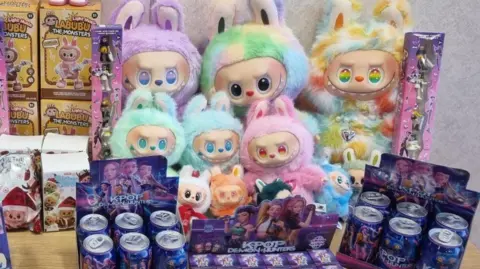
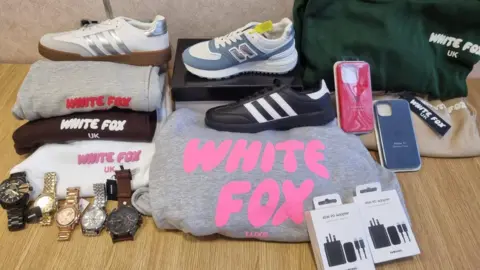
The Trading Standards Service (TSS), which operates under Stormont's Department for the Economy, said among the counterfeit goods were Labubu dolls, KPop Demon Hunters merchandise, Lego figures and Lilo and Stitch products.
They were seized from some high street stores as well as shopping centres, with some products being sold for £80 - potentially misleading customers into thinking they were genuine.
TSS Area Inspector Nicholas Lane said fake toys are unsafe and poorly made, with profits often funding organised crime.
"With Christmas shopping in full swing, cheaper alternatives may tempt families, but counterfeit toys carry hidden risks," he added.
"Counterfeiting funds organised crime, including money laundering and forced labour, harming communities."
 Department for the Economy
Mr Lane said the TSS will "not hesitate" to take action against traders selling counterfeit items.
Statistics from the Intellectual Property Office (IPO) show about 259,000 fake toys - worth about £3.5m - have been seized at the UK border this year, with fake Labubu dolls making up 90% of this number.
It also found that 75% of seized toys fail safety tests, with banned chemicals and choking hazards discovered.
How to spot fake goods
The TSS said there are actions consumers can take to avoid buying fake goods.
These include:
- Buying from reputable traders
- Checking the quality of the goods
- Looking out for spelling mistakes or poorly printed logos on the labels or packaging
- Checking spelling and grammar on online websites, and looking to see where an online trader is based
- Asking the trader if there is a returns policy or guarantee
