Orchid habitat 'destroyed' in logging track works

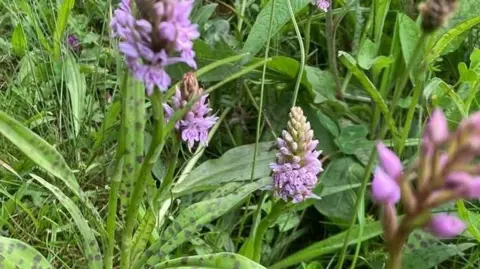 Andy Richardson
An abundant patch of orchids has been "destroyed" during work by Forestry England to improve a track for logging operations.
The work to create ditches and resurface the route to Mayland Bank in Hamsterley Forest, County Durham, took place in November.
Local resident Andy Richardson and his fellow dog walkers are "angry" the work could not avoid the abundance of common spotted and northern marsh orchids during the work.
Forestry England said on-site surveys "identified no concerns about protected orchid species", however they said there are orchid species throughout the forest.
Mr Richardson said the plants had been "destroyed" and "chopped down to the clay".
"It is such a shame that Forestry England has not properly considered preserving and protecting that area the orchids were growing in," he said.
"It attracts a lot of insects and lots of dog walkers use the track and take photographs of the flowers."
A Forestry England spokesperson said: "The resurfacing was a routine piece of work to prepare the forest road for harvesting operations and all our normal procedures were followed.
"Forestry England employs experienced and professional ecologists who support planning and delivering our forestry work so that important wildlife is protected and enhanced wherever possible."
The organisation said forest road maintenance is important to ensure access is available for emergency services when responding to fires, accidents or missing person searches.
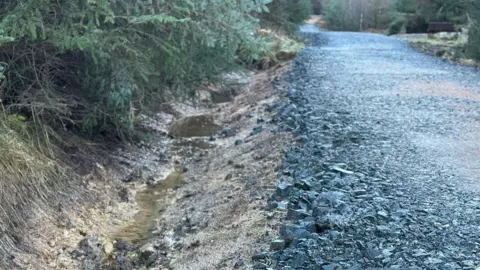 Andy Richardson
A spokesperson for the Botanical Society of Britain said it is "always sad when people lose wildflower habitat in their area and seeing lovely native orchids is always a treat".
"The common spotted orchid is, as the name suggests, the most common wild orchid across Britain and Ireland and it is actually quite good at colonising new habitats, so it might even crop up again nearby.
"We'd urge people to keep their eyes peeled when they're out walking in the area.
"The northern marsh orchid only really occurs north of a line running from the Severn to the Humber."
The society described it as a "stunning" plant which has increased in Britain over the last century, but there have been losses due to "habitat destruction".
