Campaign challenges language around mental health

 Synolos
A community leader and author has launched a campaign to challenge the way people use language around mental health.
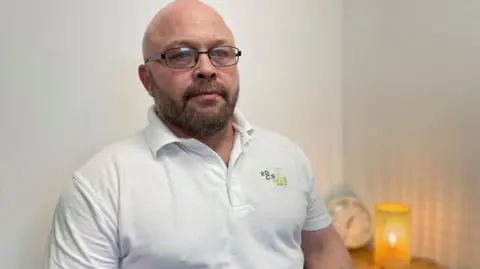
Barry Ingleton, from Oxfordshire, lives with bipolar disorder and said he believes the line between everyday emotion and clinical illness has become increasingly blurred.
The "confusion" has contributed to rising pressure on the NHS and left some people unable to talk about their feelings without using medical labels, he said.
The Mental Health Foundation charity said more people seeking support with mental distress due to a greater awareness of mental health "isn't a bad thing".
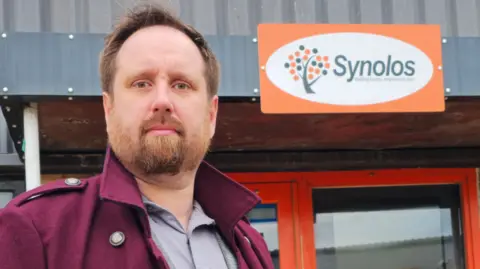
Ingleton, founder of Witney-based social enterprise Synolos, said he wants to see greater "clarity and compassion" in national conversations about mental health.
The launch of his campaign follows the government's announcement of an independent review into growing demand for mental health, ADHD and autism services.
The review, announced by Health Secretary Wes Streeting, will explore the possibility of over-diagnosis and examine any gaps in support.
NHS figures show rates of mental health problems and ADHD have increased significantly over the past two decades and the government has said some people who do not require support are being referred for assessments.
Ingleton said: "For more than 30 years, awareness campaigns have done vital work in reducing stigma and helping people understand that mental illness is real and not a sign of weakness.
"But, somewhere along the way, we have started to treat every emotion as illness, or at least that is how many people now feel.
"This confusion is placing growing pressure on the NHS and no amount of funding will ever keep up with the current demand.
"It is also leaving many unsure how to express ordinary feelings without a label, something we see often, especially among young people.
"All of this risks undermining the progress of the past three decades and, with it, the lives and wellbeing of many."
Ingleton's campaign is calling for clearer language on mental health in policy and a national awareness programme.
"This is about protecting those with serious conditions, while giving everyone else permission to feel deeply without assuming they are unwell," he said.
The Mental Health Foundation said people should not be discouraged from reaching out for support.
Alexa Knight, the charity's director of policy, said: "There's no evidence that the UK's highly trained doctors are misdiagnosing people with mental health problems.
"In fact, the latest adult psychiatric morbidity survey show that many more people have levels of mental health difficulties that warrant a clinical diagnosis."
She said a greater level of awareness of mental health and changes to how we talk about the subject had "almost certainly" led to more people seeking support from their GP when experiencing mental distress "but this isn't a bad thing".
Knight said Ingleton's campaign "highlights [that] every emotion deserves to be heard and it's important that when someone's emotions are impacting their life that they reach out for support".
People should not feel discouraged from doing so, she said, even if they don't think they have a diagnosable mental health problem, "particularly as poor mental health is much easier to address at an early stage".
The charity director said there were a number of factors contributing to a rise in mental health conditions, including the Covid pandemic, the cost of living crisis and global tensions.
"Ultimately, we need to be thinking about how people who are struggling with their mental health can be helped best, whether this be through more funding for services, tackling the root causes or finding novel ways of supporting people," she said.
You can follow BBC Oxfordshire on Facebook, X (Twitter), or Instagram.