Babies' eyes tracked in scientific study

 Josh McLaughlin/BBC
New research into the way babies perceive colours and patterns is taking place at Brighton's Royal Pavilion.
The attraction has launched a new Baby Colour Trail, which the organisers claim as the first of its kind in the UK.
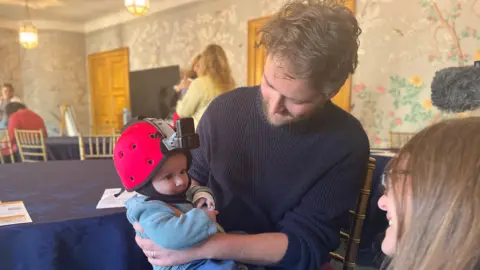
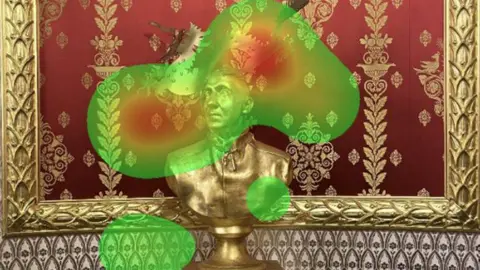
It follows scientific research at the University of Sussex, which includes attaching infrared head cameras to infants to track their eye movements.
The technology explores what babies notice most, reshaping how museums and galleries can engage their youngest visitors.
 The Sussex Baby Lab / University of Sussex
'Surprisingly sophisticated'
Professor Anna Franklin, of the university's Sussex Baby Lab, says the research has shown that babies are far more visually capable than previously thought.
She said: "They can see colour from birth and by four months their colour vision is already surprisingly sophisticated.
"The pavilion is the perfect place to put this science into practice because it's bursting with the colour, contrast and patterns that babies love to look at."
 Josh McLaughlin/BBC
Built in 1787 as the extravagant seaside palace of Prince George the Prince Regent, later George IV, the Royal Pavilion is famous for its exotic patterned designs and painted ceilings.
The Baby Trail highlights the features that fascinate infants the most, including human and animal faces, reflective surfaces and bright colours.
A special baby basket has been installed in the pavilion's music room, allowing infants to look up at the colourful ceiling.
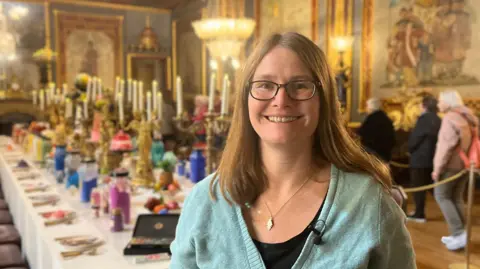
Head of learning and engagement, Su Hepburn, said: "This project combines cutting-edge science with our extraordinary building to create something unique for families.
"The research shows that the colours, objects and patterns in the pavilion's remarkable interior spark curiosity, wonder and joy in babies."
 Josh McLaughlin/BBC