Chinese embassy opponents to seek judicial review

 EPA
EPAOpponents of a huge new Chinese embassy next to the Tower of London say they will soon begin legal action in an attempt to block the scheme.
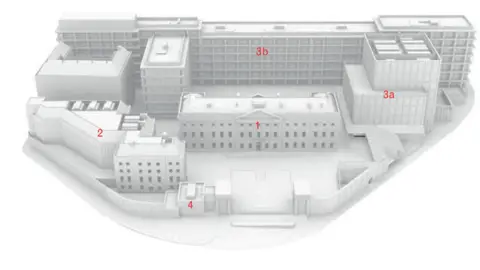
On Tuesday, the government approved China's proposal to redevelop the former Royal Mint site into a vast 215,300 sq ft (20,000 sq m) UK headquarters, despite opposition from politicians and campaigners.
About 200 people live in Royal Mint Court, a complex of flats on the site, with many fearing a loss of privacy, disruption caused by protests and eviction.
The government said the development brought "clear national security advantages", by consolidating China's diplomatic premises from seven sites into a single location.
On Tuesday evening, Royal Mint Court Resident's Association announced they had reached their target of £145,000 in donations, jumping from £35,000 12 hours earlier.
Planning law specialist Lord Charles Banner KC has been instructed to act for the association, they added.

Royal Mint Court resident and treasurer for the group, Mark Nygate, said they had received donations from people across the UK.
"We are humbled that so many of those persecuted by the CCP (Chinese Communist Party), together with ordinary Brits up and down the country, have placed their faith in us, and stood by residents.
"We won't waste a single penny in ensuring that this embassy plan crashes on the solid rock of our judicial system."
The residents' campaign has the support of the Inter-Parliamentary Alliance on China (IPAC), a group set up to hold China to account on democracy and human rights issues.
Luke de Pulford, from the group, said: "The blistering speed with which this crowdfunder has reached its target is a clear indication of the sheer unpopularity of this mega-embassy.
"It remains to be seen if the world's second superpower is a match for UK planning law."
 David Chipperfield architects
The Chinese government bought the site in 2018 for £255m with the aim of building a new UK headquarters.
The plans were initially rejected by Tower Hamlets Council in 2022 over safety concerns, but when China resubmitted its application in 2024 the government took over the decision.
The embassy would be the biggest of its kind in Europe and would sit in close proximity with the financial district as well as fibre optic cables carrying sensitive information.
Opponents have warned it could serve as a base for spying and pose security risks.
In its decision letter, the government said there was no suggestion the use of the site as an embassy would interfere with the cables, and added that no bodies with responsibility for national security, including the Home Office and the Foreign Office, had raised concerns or objected to the proposal on the basis of the proximity of the cables.
In a joint letter to the home secretary and foreign secretary about the embassy plans, MI5 director general Sir Ken McCallum and GCHQ's director Anne Keast-Butler said it was "not realistic to expect to be able wholly to eliminate each and every potential risk".
However, they added a "proportionate" package of national security mitigations had been developed for the site.
Conditions on the planning approval include that the development must begin within three years, and a steering group of local bodies should be established to manage protests outside the site.
Listen to the best of BBC Radio London on Sounds and follow BBC London on Facebook, X and Instagram. Send your story ideas to [email protected]