'There's a lot to be positive about in Walsall'

 BBC
BBCIs Walsall a bad or depressing place to live?
A survey of measures which looked at job availability, high streets and housing affordability named the West Midlands town the most deprived in the UK this week.
A Metro report suggested living in the town was like "a real-life" episode of tv programme Shameless and a "war-zone".
But what did residents have to say?
The Demos-PwC Good Growth for Cities Index 2025 placed the Black Country town at the bottom of a list of 50, two places below its near neighbour Birmingham.
The index measured both towns and cities' economic growth, and Walsall came up particularly short on factors such as its jobs and the state of the high street.
The town's annual growth rate for 2025 was calculated to be -0.32%, compared to 0.73% for York, which scored the highest.
"The Black Country ranks bottom of the rural areas, one place lower than last year's ranking, due to consistently below average performances across all indicators," the report said.
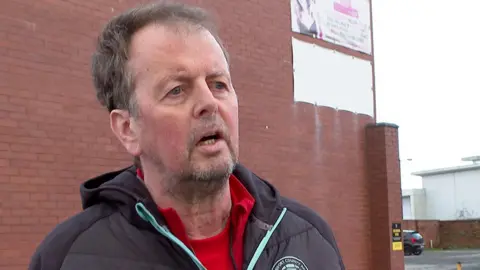
But many residents told the BBC there was a lot to be positive about, mentioning the town's "beautiful" arboretum and historic architecture.
"I'm not sure where all this doom and gloom is coming from," said Adrian Walker, the co-owner of Scabby Oss Cafe in Darlaston. "The area is improving."
He highlighted how volunteers had recently worked together on a free community funfair and wrapped Christmas presents for underprivileged children.
"There's also a lot of money being reinvested in the area and there's a lot of good people out there," he said.
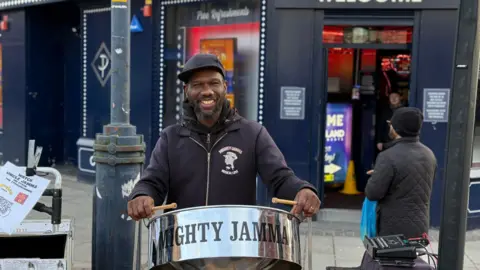
Street artist the Mighty Jamma, who has been playing in the area for 30 years, said while he had seen economic decline and poverty, it was no worse than elsewhere.
"I think people need to come here for themselves and see and probably their opinions will change," he said.
"Whenever I play you see a lot of people smiling, a lot of people dancing."
Meanwhile Ray Barker from The Table community cafe said: "We are actively fighting unemployment here in Walsall by providing skills like cheffing, hospitality, customer service, barista, community engagement skills admin and skills for life."
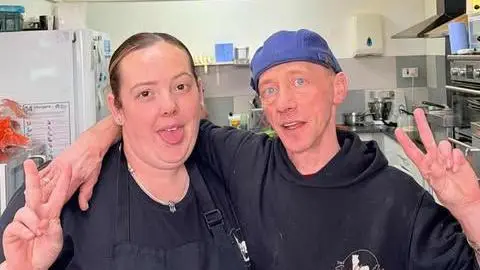 Adrian Walker
'Economic recovery slow'
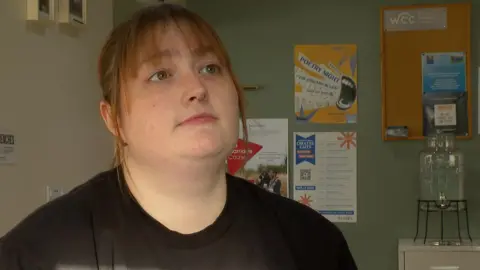
However, others told the BBC they were concerned about local crime levels and did not feel safe in the area.
Matthew Herbert said he usually chose to visit nearby Bloxwich instead, because in Walsall: "I fear for my safety every time."
Ali Abbas said, while he thought there were worst places, the town had "gone downhill" in the last 20 years and it was easier to pop into Birmingham to shop.
He added: "Would I come round here in the evenings? No. Do I feel safe in the town after dark? No. So I don't think the council helps make it a nice place."
However Mark Rowberry, who had just chased down a thief who robbed a shopper in the street, nonetheless described it as a "really nice place" with a good community.
He said he had been supported by other residents who presumed he was the one being robbed. "People really try and stick together and help each other."
Of the thief, he said: "If he'd have said he needed something, I'd have given him a sandwich."
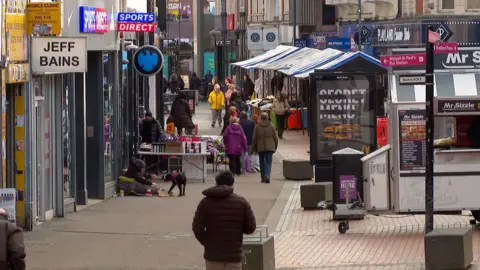
Figures from last year suggested nearly one in four Walsall residents were economically inactive, and that the borough needed 3,125 more businesses to reach its potential.
A £1.5bn project to regenerate the town centre, including redevelopment of the Saddlers Centre, is due to start early this year.
The town has a prominent modern art gallery and a new location for the Leather Museum, which nods to its industrial past and which has had to move due to the redevelopment, will be announced shortly.
Two new railway stations are being built in Darlaston and Willenhall.
Leader of Walsall Council Mike Bird told BBC Radio WM he did not recognise the negative comments about the town.
"Walsall always comes in one of the most deprived areas in the country, but not the worst," he said.
"In our town we've got a fantastic amount of investment... and we've got some very thriving international businesses.
"Economic recovery is a slow process and people have to wait and look how we are making that investment and how we are going to make a difference."
Follow BBC Birmingham on BBC Sounds, Facebook, X and Instagram.
