Get Carter and Flash Gordon director 'felt forgotten'

 Getty Images
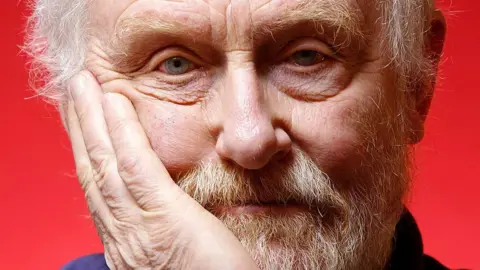
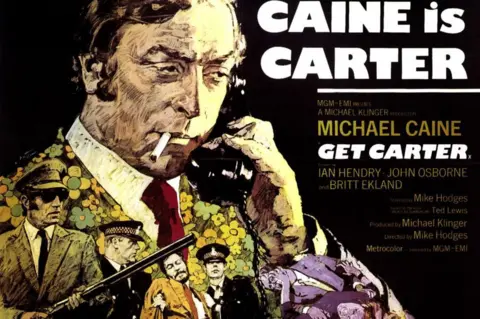
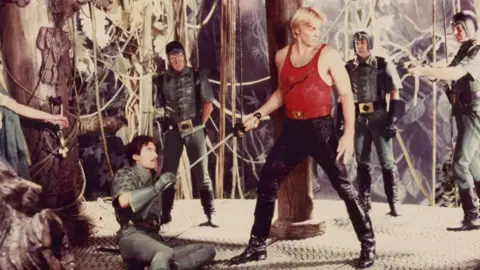
Get Carter and Flash Gordon director Mike Hodges "felt very forgotten" and was frustrated that he could not get another film made, a new book will reveal.
I'll Settle For Nothingness: Conversations with Mike Hodges by Oxford filmmaker Jon Spira compiles several years of unseen interviews.
According to Spira, who hopes to finish and release Hodges' final unfinished film, when he approached him with his idea for the book, his response was: "I fear my name counts for little"."
"He's one of those directors who people who really love film know the name, but he was not a public figure," Spira says about Hodges, who died at his home in Dorset in 2022, aged 90.
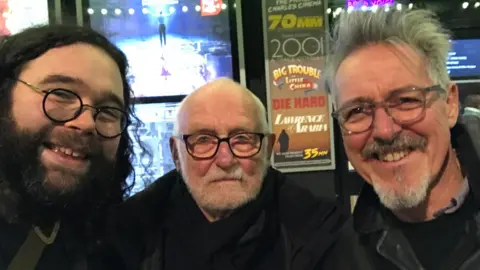
Spira originally met Hodges while filming interviews for the British Film Institute (BFI) science fiction season in 2013.
They became regular penpals after Spira wrote a book about cult film and box office flop Morons from Outer Space and organised a sold out screening at the Prince Charles Cinema.
The new book comes from a series of interviews conducted with Hodges over email in his final years, when he was in failing health.
"He knew he was coming to the end and was just very aware of this notion of legacy," Spira explains.
 Jon Spira
Hodges had been unable to get a film off the ground but "would spend a lot of the day just writing because he didn't know how to do anything else", Spira recalls.
"That's how he processed the world and expressed his feelings.
"It was really frustrating for him. His last two films – Croupier and I'll Sleep When I'm Dead, which both starred Clive Owen – were really good films.
"There was no reason for his career to fizzle out, but the industry had changed and the people coming in were more like business people than film people.
"If someone said to them 'we've got Mike Hodges to make a film' their response was 'Who's Mike Hodges?' because his most famous work at that point was 30 years prior."
 Getty Images
Hodges directed only nine films during his career.
While proud of his successes, he told Spira movies such as Pulp, Black Rainbow, and his "most overlooked film" The Terminal Man should be more widely available, feeling they "deserved reappraisal but weren't getting it".
"He was telling me 'we are running against time here, I want these films to be restored and I want these films to be released'."
The Terminal Man, based on the novel by Jurassic Park author Michael Crichton, is "amazing", Spira says.
"It's a real unsettling, dark film, and he knew it was good and Warner Bros didn't know what to do with it.
"Kubrick listed it as one of his favourite films and wrote a letter saying 'this film is stunning'.
"Mike sent me a scan of a letter he got from [director] Terence Malick [calling it a] stunning piece of work."
 Getty Images
Hodges' incomplete last project, All at Sea, was envisioned as a feature-length autobiographical video essay about his life and career, which he fully narrated before his death.
"He talks about himself, he talks about life, he talks about the modern world and modern politics, and it's really beautiful," Spira explains.
A very rough cut of the film was shown at a retrospective of the director's films at the BFI in 2022, but Spira says the project is in "limbo", and his dream is to finish it for him.
"It was his last testimonial, definitely," he says.
"To some degree I think the book kind of became that... you see him at his angriest, and you see him at his kindest and funniest."
A crowdfunding campaign to publish the book is currently under way, with more than £4,500 already raised.
 Getty Images
Spira confirms the book covers a time when Hodges felt dispirited about his place within popular culture.
He remembers the filmmaker telling him: "'I regret that I didn't have much of a career… look at other directors who in the same amount of time made 40 films, and I only made nine'."
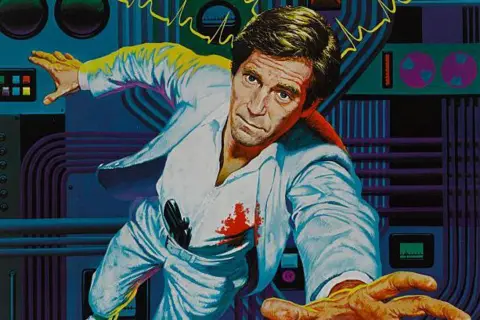
Spira says the director of Get Carter and Flash Gordon "had every right - having made those two films - to carry himself with a bit of swagger, but you would never meet a more unassuming person than Mike".
"There was no arrogance about him whatsoever," he added.
You can follow BBC Oxfordshire on Facebook, X (Twitter), or Instagram.
