Relocated Loch Ryan oysters thriving in new Firth of Forth home

 Getty Images
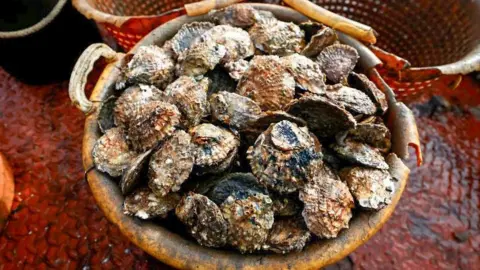
Oysters relocated from Loch Ryan in south-west Scotland to the Firth of Forth appear to be thriving in their new home.
Nearly 47,000 European flat oysters have been moved to four sites in the area since 2023 as part of the Restoration Forth project.
Monitoring by a dive team from Heriot-Watt University has shown a high average survival rate of about 88%.
The university's Dr Naomi Kennon said the latest results from their monitoring were "very exciting".
 Dr Naomi Kennon
Loch Ryan in Dumfries and Galloway has retained a population of oysters - which are celebrated with an annual festival - but numbers have vastly reduced everywhere since the 1800s.
Oyster beds once existed along the east coast of Scotland, including the Firth of Forth and on to the River Dee, but WWF Scotland said there had been no verified records of oysters in the Forth since 1957.
Dr Kennon said the results had been very encouraging.
 Colin Hattersley
"It's a huge boost to everyone who has been involved in the project, from the volunteers cleaning the oysters ahead of deployment, to the team involved in 'scattering' them into the Forth," she said.
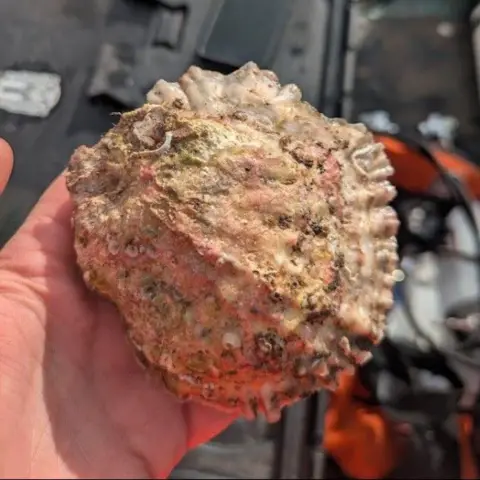
"One oyster has grown 2.1cm in one year, which is hugely promising as in good environmental conditions we would expect growth of 1cm a year.
"Oysters are incredible underwater engineers: they filter water, store carbon and enhance biodiversity by providing shelter for countless marine species.
"We're a long way off from the millions of oysters that once thrived in these waters, but these results are promising and show the value of restoration work."
'Ocean recovery'
Caitlin Godfrey, from the Marine Conservation Society, said it was "thrilled" to see such a high survival rate.
"This success is only possible thanks to the incredible support from volunteers, local communities, and partners who share our vision for ocean recovery," she said.
"These oysters aren't just surviving - they're thriving, laying the groundwork for a healthier marine ecosystem and a brighter future for our seas.
"It's an inspiring step forward in restoring hero species that protect and purify our ocean."
