Popeye the seal 'living best life' after rescue

 Robson & Prescott Vets
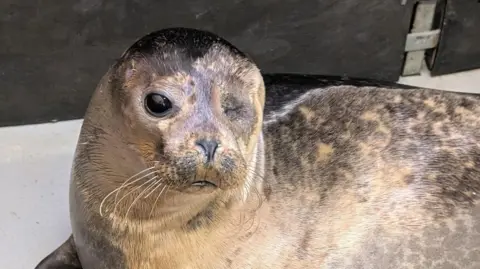
Rescuers are delighted a one-eyed seal nicknamed Popeye is doing well after he was spotted "nibbling" on fishing ropes.
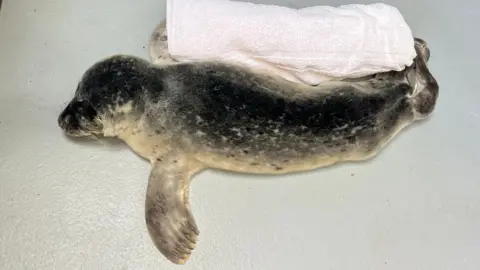
Popeye was about 10 days old when he was rescued on Crimdon Beach, near Hartlepool, and found to be suffering from mouth rot disease and an eye infection.
He was cared for by vets at Tynemouth Seal Hospital for four months before being released back into the wild in Newbiggin, Northumberland, but it was unclear how the young seal would cope on its own.
But Debbie Harrison from the British Divers Marine Life Rescue said a sighting of a one-eyed seal in Northumberland meant Popeye was "probably living his best life".
"He was seen possibly two days later in Seaton Sluice nibbling on some fishing boat ropes apparently," she said.
"The tides were kind of pushing him south, so it's more than likely him."
 British Divers Marine Life Rescue
When Popeye was rescued he was severely dehydrated, malnourished and weighed about 8kg (1st 3lb).
He had grown to a healthy 39kg (6st 1lb) by the time he was released.
But during his hospital stay, his infected eye ruptured and he was readmitted to the North East Seal Triage facility, where the damaged eye was removed.
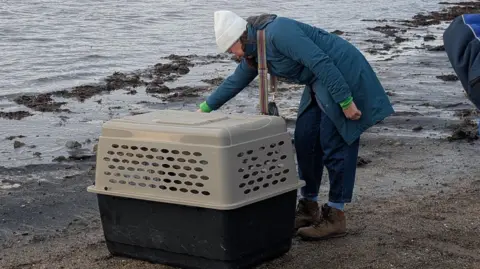
Melanie Scott was one of the veterinary nurses who treated Popeye and was given the honour of opening his crate during his release.
"What was special about Popeye was, because he's had a four-month period in captivity, he'd really had captured the hearts," she said.
"We said it was the sand but there was hardly a dry eye."
Popeye has been given an identification tag with the number 0081, which means locals may be able to spot him close to the shore.
 Robson & Prescott Vets
Popeye was originally going to be released at the same time as two other seal pups, Olive and Pebble, who had also been treated for mouth rot but his poor health meant he was kept in hospital for longer.
The disease, which can be treated if caught early, recently killed nearly all of the common seal pups in the Tees Estuary.
But the two young pups were quickly treated, allowing them to make a full recovery and to be released back into the North Sea.
The veterinary team was initially concerned Popeye might have struggled to swim on his own due to his young age but all signs suggest he is doing well.
"He's got every chance out there in the world now," said Ms Harrison.
