Public to be urged to help care for defibrillators

 BBC
BBCA public awareness campaign helping the community understand "how to maintain and use defibrillators effectively" is expected to begin in the spring, Jersey's public health has said.
It comes after a hotel surpassed its fundraising target of £3,000 for a new Automated External Defibrillator (AED) on Gorey Pier after a guest at the venue had a suspected cardiac arrest on Christmas Eve.
The Mooring Hotel thought the nearest defibrillator was in a neighbouring business - but found no device available when they went to get it.
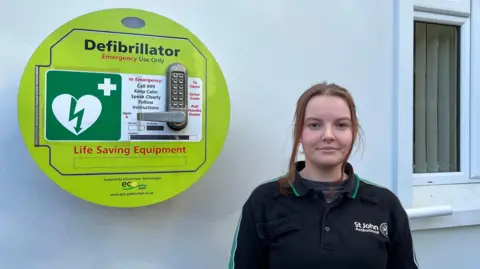
Natalie Swift, from St John Ambulance, said it maintained many of the AEDs and it was working with charities to create an island-wide map showing where they were.
The government said it did not currently have a list of where AEDs were but it was working with Defib.je and Jersey Heart Support (JHS) to "discuss how best to optimise their resources to support the public".
It added it did not own or maintain "the majority" of AEDs around the island and that many were purchased by businesses or community groups.
"It is the responsibility of the device's owner to ensure that it is fit for purpose and remains accessible and functional - it should be noted that both the batteries and pads have a shelf life and need to be updated."
The government added that guidance and registration options for AEDs were currently available through Defib.je and JHS, "which provide resources to support maintenance and accessibility".
Swift said charities were coming together to share "the load" of responsibility.
She said: "One of the biggest issues that we have with AED machines is everyone pointing fingers, that's not my job, that's not my job, that's not my job.
"Realistically, it's everybody's job - if you walk past a lockbox and hear a machine beeping - get in contact with the person who owns the building.
"It's so important that we look after those machines because that's where the biggest downfall comes from."
Ian Blackburn, from JHS, said the use of defibrillators was the difference "between life or death" and they needed to be maintained.
Follow BBC Jersey on X and Facebook. Send your story ideas to [email protected].
