Maternity ward to pilot new cataract technology

 Getty Images
An innovative new device which could help diagnose cataracts in newborn babies is being trialled in a Dorset maternity unit.
The Neocam, a handheld camera, will be piloted by paediatric staff at Poole Hospital.
About one in 3,000 babies are affected by cloudiness of the eye’s lens, known as cataracts, according to the NHS.
It is hoped the tool will be more accurate than the current technique, which involves using a medical eye torch called an ophthalmoscope.
 University Hospitals Dorset
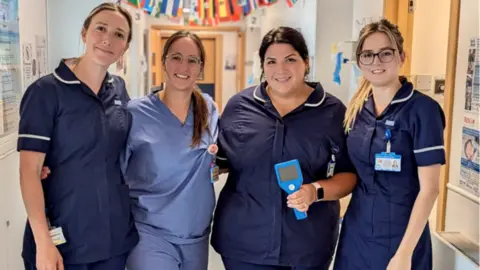
Led by University Hospitals Dorset (UHD), the study will be open for a year and aims to assess about 1,200 babies.
Explaining how the device works, Nina Vanner, paediatric research nurse at Poole Hospital said: "The camera takes a picture of babies’ eyes using both infrared and green light.
"Previous small-scale studies have shown that this photoscreening technique can make childhood cataract detection easier."
If successful, it will enable faster diagnosis, referral, and surgery if required.
All babies born in the UK are screened for cataracts twice.
“Despite this, late diagnosis of a cataract continues to be a problem, causing avoidable visual impairment in some affected children," Ms Vanner added.
You can follow BBC Dorset on Facebook, X (Twitter), or Instagram.