'My wife knew she wouldn't see our kids grow up'

 Jonny Coxon
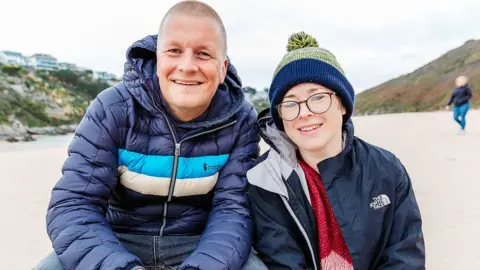
Jonny Coxon said his family's future was "pulled away" from them when his wife Charlotte was diagnosed with a terminal brain tumour.
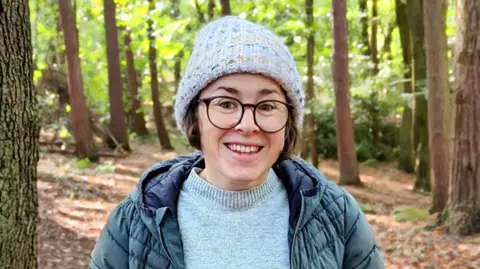
The mother of two was told she had a glioblastoma, a grade four brain tumour, in January 2022 and died in July 2024.
Jonny, 40, said the diagnosis meant the couple "knew we wouldn't be able to grow old together".
Jonny has said he is now hopeful that scientists at a new research centre at the University of Nottingham will help families access "crucial" information about the disease.
Doctors first diagnosed Charlotte, who lived in Burton on the Wolds, Leicestershire, after she complained of feeling unwell in late 2021.
She had surgery to remove as much of the tumour as possible before receiving radiotherapy and chemotherapy.
The cancer recurred in March 2024, and Charlotte died four months later aged 39.
 Jonny Coxon
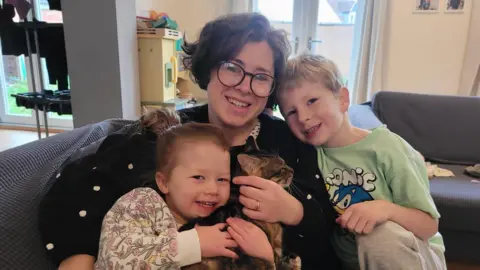
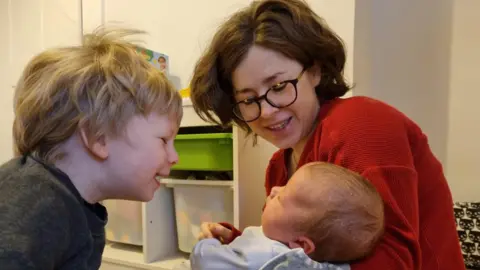
"With Charlotte, she knew that she wouldn't see the children grow up, potentially start school, have children, get married," Jonny said.
"Charlotte was fantastically funny and clever, a smart woman with lots of friends.
"She was an incredible mother."
Glioblastoma is a tumour which is located in the brain, and charity Brain Tumour Research said the average survival time of someone diagnosed with the disease was 12 to 18 months.
"It is incurable and there has been no advancement in treatments for two decades," the charity added.
 Jonny Coxon
However, a new brain tumour research centre, which aims to improve the understanding and treatment of glioblastoma, has opened at the University of Nottingham.
The new centre of excellence aims to use artificial intelligence, along with advanced MRI (magnetic resonance imaging), to detect tumour recurrence earlier and change outcomes for patients.
Jonny said having more information about the disease would have given the family a better chance to plan ahead.
He said: "This centre moves towards how these tumours will recur and when they will reoccur to give families some sort of prognosis or idea about how their subsequent years may play out.
"It's something we didn't have at the time, but it would have been so crucial."
 Jonny Coxon
The new centre is funded by Brain Tumour Research, which announced it would be investing £2.6m into the research last year.
It said brain tumours killed more children and adults under the age of 40 than any other cancer, but just 1% of the national spend on cancer research had been allocated to brain tumours since records began in 2002.
Prof Ruman Rahman, director of the centre, said: "Our aim is to identify the biological signals that are in the bits of the cancer that are left behind after surgery.
"By doing so we hope to identify a new avenue of therapies and drugs that will target the remaining disease.
"The reality is that the outcomes for brain cancer are extremely poor, it is one of the deadliest cancers, so funding from the charity is so crucial to help redress that balance."
Follow BBC Leicester on Facebook, on X, or on Instagram. Send your story ideas to [email protected] or via WhatsApp on 0808 100 2210.
