Dear Green Place author gets 'limelight he deserves'

 University of Strathclyde
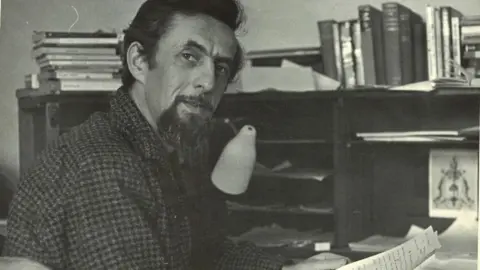
Archie Hind only published one complete novel in his lifetime but it was an important one.
The Dear Green Place won a string of awards in the 1960s including the Guardian Fiction prize and is regarded as a key work in the teaching of Scottish literature.
Dr Eleanor Bell, a senior lecturer in English Studies at Strathclyde University, says the book is vital to the class she teaches on the Glasgow novel.
She says she has been teaching Archie Hind’s work for 20 years - but there was very little material which would tell them anything about the author.
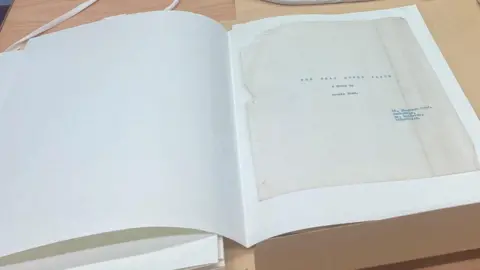
“The manuscript of his novel was assumed to be lost, or perhaps burned," she says.
"It felt like he was a real mystery.”
But the manuscript wasn’t lost, or destroyed.
And now it, and other papers, photographs and letters, have been donated to the university as the basis of an archive.
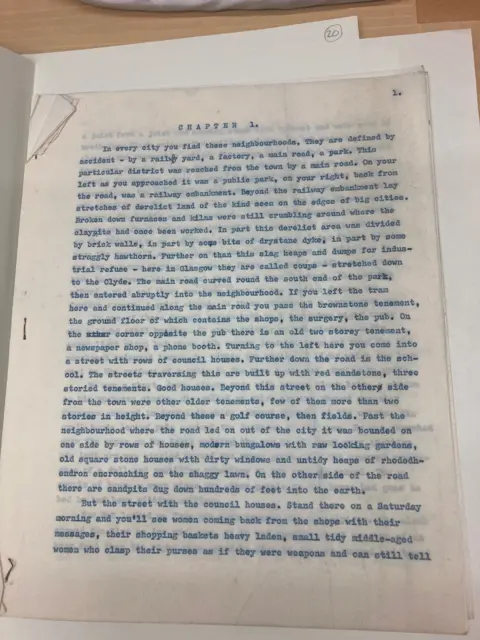
Sheila Hind, Archie’s youngest daughter, says: "The manuscript for The Dear Green Place was kept in a filing box in our home so it was safe but it wasn’t necessarily protected. It would be moved around from the top of the piano to behind the sofa.”
When her father died in 2008, and her mother moved house, she began to gather material together.
“They wanted to keep everything but it was haphazard," Sheila says.
"Mum dated them and put them aside, but that could be anywhere from the top of the fridge to the back of the sofa. We even found a play script in amongst sheets of piano music."
The family filled seven boxes with cuttings, manuscripts, photographs and personal papers.
There were letters between Archie and the many writers he met and encouraged.
One of his closest friends was the writer and artist Alasdair Gray.
 National Galleries of Scotland
While Archie published in 1966, it was another 15 years before Alasdair Gray published his novel, Lanark.
"The other people who came through in the end – Carl Macdougall, James Kelman. Could I say that my dad mentored them and helped them along? I probably could,” Sheila says.
Archie and his wife Eleanor also championed lesser-known artists and writers like Betty Clark - who published poetry and plays under the pen name Joan Ure.
It is only posthumously that her contribution to Scottish culture has been recognised.
Archie began a second novel, Fur Sadie, which was never completed.
His eldest daughter Helen needed 24-hour care from the age of 11 after treatment for epilepsy left her brain-damaged. His son Gavin was killed in a road accident in 1974.
"We had a lot of personal tragedies,” says Sheila.
“You can see that's when he stopped writing. It was already difficult for him to write anyway but he didn’t have the resilience to keep going.”
But while Archie Hind may only be known for one novel, the archive reveals a much bigger picture.
He worked in newspapers and wrote 10 plays, including one - a version of the novel The Ragged-Trousered Philanthropists - which 7:84 theatre company toured around Scotland.
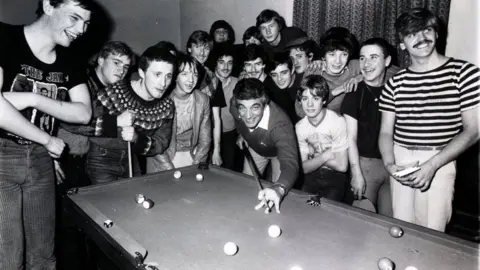
Along with Graham Noble, he founded the Easterhouse project, a social justice youth programme which was short-lived but famous for bringing the singer Frankie Vaughan to the housing scheme to persuade gangs to end violence.
 Getty Images
The project ran from 1968 to 1970 but Archie continued to maintain a close friendship with many of the young people for years afterwards.
The archive includes telegrams and letters from a number of the youths who took part in the project, who were by then in Barlinnie Prison.
“There are still many people out there who knew and worked with Archie,” says Dr Bell.
"I approach much of my work through oral history so I hope to go out and capture some of those stories and inter-connections between writers, artists, people who were involved in the Easterhouse project, people who were involved in the theatre. It tells a fascinating story about Scottish culture.”
She also points to another example of Archie’s influence.
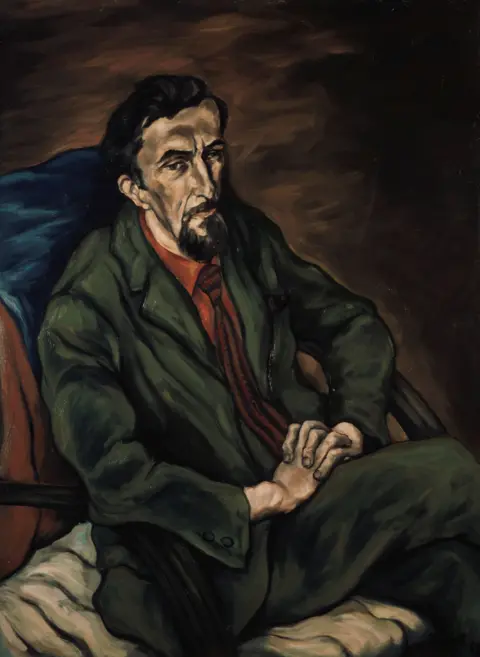
A portrait painted by the artist Sandy Moffat in 1968 which now belongs to the National Galleries of Scotland.
Archie’s portrait was the first of a series of paintings Moffat made of Scottish cultural figures.
She hopes the archive will remind people that he was more than a one-novel hit.
"I think it gives a really good sense of who Archie Hind was but it also tells a really interesting cultural history of Scotland during the time," Dr Bell says.
"It will be great to make a map of all his collections and give him a little of the limelight he deserves."
